
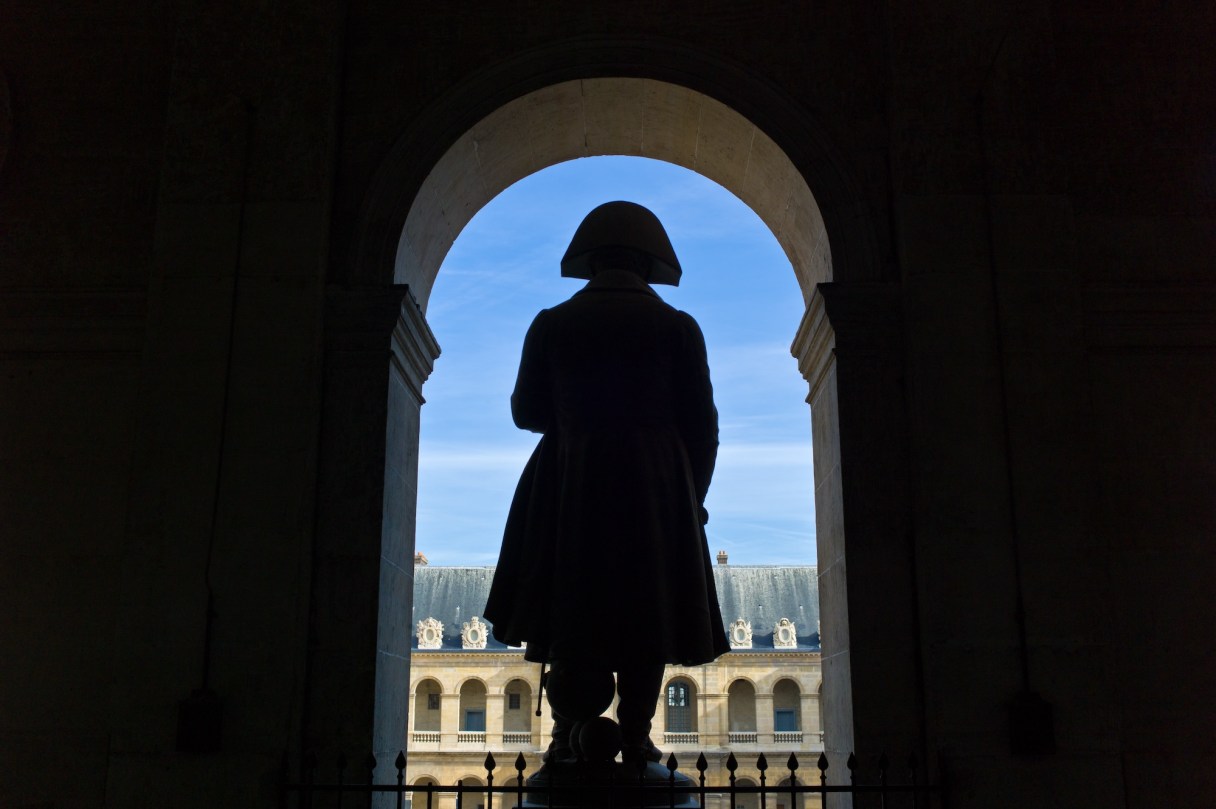
The president of the United States recently posted a possibly apocryphal quote often attributed to Napoleon Bonaparte on social media: “He who saves his Country does not violate any Law.”
This is an indefensibly stupid thing for a president to say – at least absent the sort of situation in which a lawyer has told him, “Mr. President, you can’t fire a nuke on that planet-destroying asteroid without first getting an environmental impact statement and allowing for the legally required 90-day public comment period.”
I don’t mean to be unduly glib. An American president implying he’s above the law because he’s “saving” his country is a serious thing. It’s even more serious when the notion that we face an existential crisis requiring a hero on a white horse to save us has been manufactured by the president and his allies.
The best defense of President Trump’s cerebral flatulence is that he was the one being glib. Reince Priebus, who served as White House chief of staff during Trump’s first term, said as much on ABC News’ “This Week”: “It’s entertainment for Trump. It’s a distraction.”
“I’ve lived through this,” Priebus added. “In good times, in bad times, the president enjoys taking a grenade out on a Saturday afternoon, throwing it on the floor and watching everybody react. … There’s no downside.”
I said it was the best defense; I did not say it was a good defense.
I honestly don’t know what Priebus means in saying “there’s no downside” to Trump’s trolling. Giving millions of Americans – friends and foes alike – the impression that the president is megalomaniacally contemptuous of the law is not good for anybody.
Presidents – all presidents – rely on a certain amount of trust and goodwill, not just from their allies but from their opponents as well. In a real crisis, the public and the opposition party need to believe that presidential authority is being exercised for unselfish reasons. Insinuating that you crave crises to maximize your power makes people less likely to trust you with the power to deal with an actual crisis.
Still, because Priebus may be right that Trump was motivated chiefly by boredom, it’s impossible to be confident of the intent of his Napoleonic statement. But it coincided with a far more serious controversy: Trump’s decision to suspend a public corruption prosecution against the mayor of New York City, Eric Adams.
Danielle Sassoon, until recently Manhattan’s top federal prosecutor, alleged that Trump ordered the suspension of the case because Adams’ lawyers floated a political quid pro quo: If the Justice Department would drop the case, the Adams administration would vigorously support the White House’s mass deportation plans. Indeed, Trump’s political henchman at Justice, acting Deputy Attorney General Emil Bove, argued that continuing the prosecution “would interfere with the defendant’s ability to govern in New York City” and restrict Adams’ ability to deal with “illegal immigration and violent crime” – a top priority in the president’s efforts to, as he would put it, save America.
Sassoon, whom Trump had promoted to interim U.S. attorney just weeks earlier, resigned rather than comply with the department’s orders, and she was joined by six other federal prosecutors.
The Trump administration wants the case against Adams merely suspended so that it can still be dangled over the mayor as a sword of Damocles to ensure his obedience, which is the very definition of weaponization of the criminal justice system. So is Bove’s threat to investigate the resigning prosecutors for their refusal to comply.
This is the crucial context of Trump’s claim that the president cannot break the law if he is “saving” the country. He may well have thought it was just an entertaining quote, as Priebus suggests. But given what we know, it looks less like trolling and more like a confession.