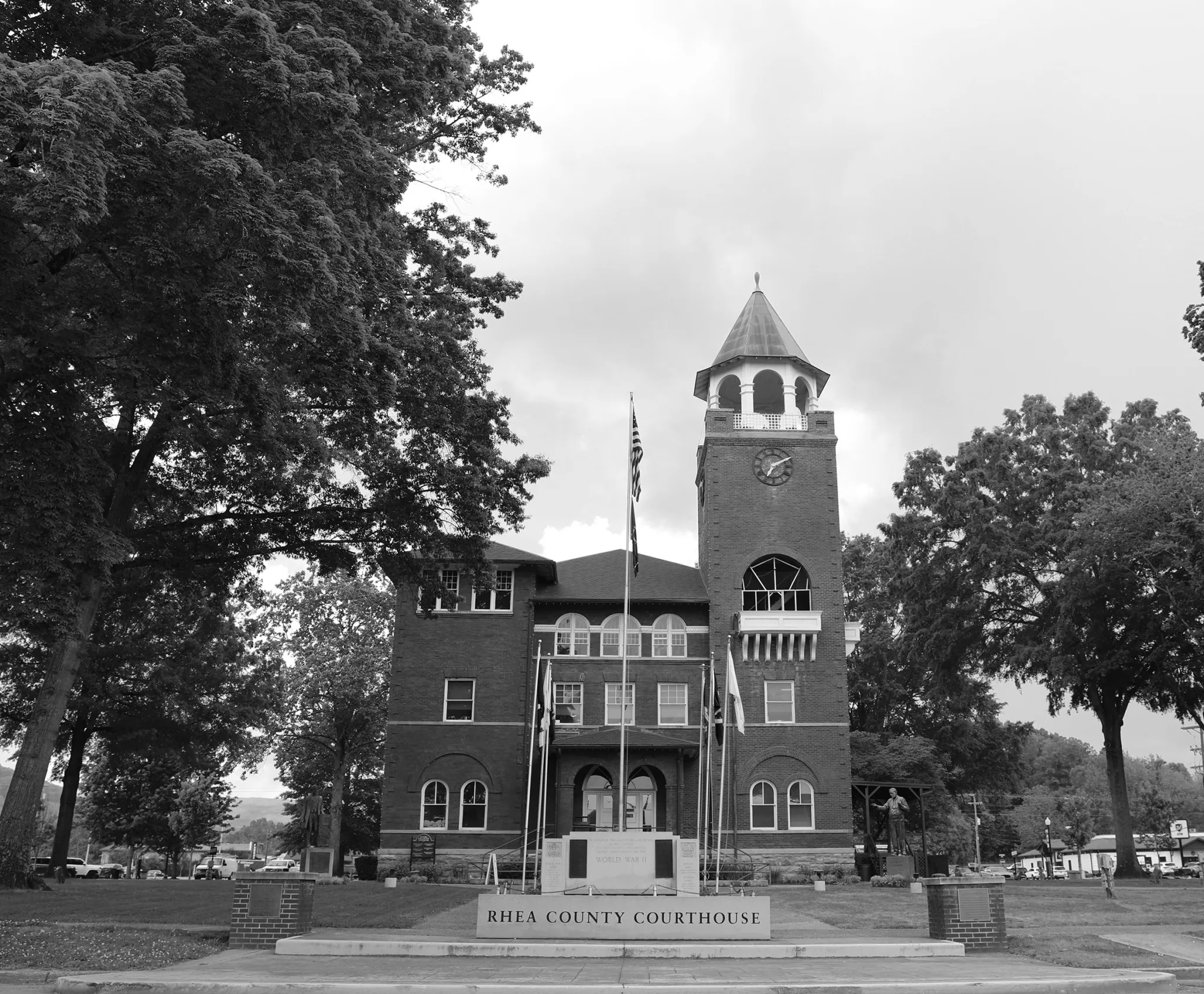
DAYTON — What occurred a century ago this month in the courtroom of the Rhea County Courthouse refuses to be forgotten. The utterance of a name — Scopes — is a reminder of those two torrid weeks in July 1925 when the world’s eyes were on Dayton.
Through the decades, the State of Tennessee v. John T. Scopes assumed the mantle of “the most famous trial in America.” Academics explored the subject in thousands of theses and dissertations. Hundreds of nonfiction writers and documentarians plumbed trial transcripts and personal records of the trial’s major (and minor) participants to craft explanatory narratives. Broadway and Hollywood paid tribute with “Inherit the Wind.”
A century ago, the country was still reeling from the Spanish influenza pandemic and World War I, even as the populace was becoming accustomed to the wonder and ubiquity of mass communication via radio. In the current age, the U.S. is fresh from two decades of conflict in Afghanistan and Iraq and a novel coronavirus that killed hundreds of thousands. Meanwhile, Americans are bombarded moment-to-moment with algorithmically driven information (and misinformation) that feeds high levels of anxiety.
Both eras represent times of immense change. Historian Brenda Wineapple, who wrote a 2024 book, “Keeping the Faith: God, Democracy, and the Trial That Riveted a Nation,” described the frazzled ethos of 1925 America this way: “The old order was indeed changing, and to many Americans change was defined as capricious, unpredictable, and if not stopped, wholly sinister.”
In the face of changes that futurists predict — with artificial intelligence and its attendant disruption standing front and center — it’s easy to apply that same line to 2025.
What happened in Dayton so long ago wasn’t just “monkey business.” It could be interpreted as a premonition for this modern age. As William Faulkner wrote, “The past is never dead. It’s not even past.”
THE BUTLER ACT
Ostensibly, the trial was convened to determine if Scopes, a 24-year-old teacher at Dayton High School, taught evolution in defiance of the Butler Act, which was signed into state law earlier in the year. The case quickly evolved (no pun intended) into a media-fueled frenzy, featuring the first trial broadcast live on radio. The press corps swelled to more than 150 newspaper reporters and photographers. A simple question about one teacher’s actions turned into a battle royale, in which figurative dividing lines were drawn in the mountain loam; where celebrity lawyers — Clarence Darrow and William Jennings Bryan — pitted modernity against old-time religion.
Throw in a sideshow of street corner preachers bellowing fire and brimstone, end-of-the world prophets holding signs declaring impending doom, opportunistic vendors hawking lemonade, hot dogs, ice cream, anti-evolution books and trial souvenirs, thousands of curious spectators milling about and a suit-wearing chimpanzee named Jo Mendi strolling the tree-lined sidewalks and you have an overview of the Scopes trial of 1925.
But let’s not get ahead of the story.
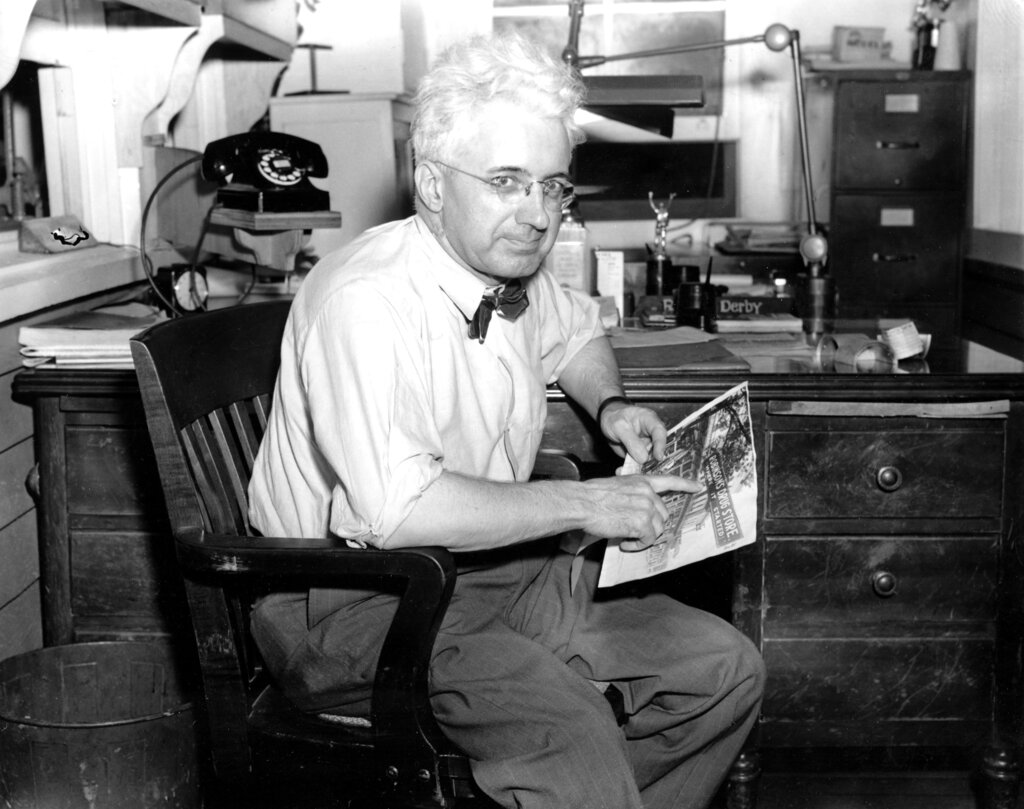
A visit to ground zero of the 1925 anti-evolution bill requires a trip off the beaten path to Macon County. There, on a 75-acre farm three miles from the county seat of Lafayette, John Washington Butler lived in a white clapboard home his grandfather built in the late 1800s.
RELATED
— Tennessee professor seeks to let science, faith coexist
— In Dayton, evolution means change over time
Butler, who was 49 in the summer of the Scopes trial, was a farmer and respected citizen. He and his wife, Nola (short for Magnolia) raised two daughters and three sons. For several years in young adulthood, Butler served as a schoolteacher. In those days, classes were only held for three or four months during the winter so that crops could be tended. Although he left teaching, concern for youth, and their future, remained a driving force in Butler’s life.
In the summer of 1922, friends urged him to run for state representative, and Butler was elected that fall to represent his home county as well as Trousdale and Sumner counties. In 1927, he moved to the Senate. Although serving for only a trio of two-year terms — 1923 to 1929 — he made his mark on history.
(READ MORE: The Scopes monkey trial took place 100 years ago, but the fight isn’t over)
Butler was a tall man, in the range of six feet, with broad shoulders, large hands and a firm jaw that always seemed to be locked in position. In the many photographs taken of him in 1925, he never cracked a smile. That’s not to say he wasn’t friendly. Several weeks before the court proceedings, a Nashville Banner reporter spent the day with Butler on his farm.
“He is not the hard-faced, unrelenting zealot of popular conception. To the contrary, he is a good-natured, companionable, jovial fellow,” the reporter observed in a thousand-word piece that took up most of an inside page.
Regarding evolution, however, Butler found nothing to smile about.
“I look upon that theory as infidelity and opposed to the Bible,” he explained to the reporter.
Butler made clear he could not accept that “man is descended from the lower order of animals.” The state representative’s journey of faith did not stray from the precepts he was taught as a child at nearby Testament Primitive Baptist Church.
“I believe in the Bible just as it was printed and that it was written with the divine inspiration of God,” he told the reporter, adding that although he didn’t “claim to understand all of it,” Butler accepted the holy book as “true, every word of it.”
Including the timetable of creation in Genesis.
Butler acknowledged to The New York Times in a 1925 interview that he “didn’t know anything about evolution” when he submitted his anti-evolution bill for consideration. The impetus for the legislation came from newspaper reports — Butler was an avid reader of newspapers — that told of students returning from college changed by their acquaintance with Darwin’s “On the Origin of the Species.”
“Boys and girls were returning home from school and telling their mothers and fathers that the Bible was all nonsense,” he told the Times. “I didn’t think that was right.”
Butler contemplated the matter for several months before deciding the state of Tennessee should intervene.
On a cold January day before the legislature convened for its 1925 session, Butler reached for a pencil and paper and settled into a chair in front of a blazing fire at his home. He was determined to write an anti-evolution bill that would prohibit the teaching of evolutionary thought in all public schools, including universities. Just as important to him was a second provision: to prohibit the teaching of any theory “that denies the story of the divine creation of man as taught in the Bible.”
“I wrote the bill myself, making six or seven trials at it before it suited me,” he told the Banner reporter.
On Tuesday, Jan. 27, the Butler Act received overwhelming acceptance in the lower chamber of the General Assembly, less than a week after the measure was introduced.
The Senate, on the other hand, took its time. After being rejected by the Senate Judiciary Committee, the bill appeared beyond resuscitation, but an external force, namely the charismatic evangelist Billy Sunday, revived it. In a series of revival meetings throughout February in Memphis, the fundamentalist attracted tens of thousands who were exhorted to resist the ways of the world and to turn to God. On several occasions, Sunday fixed evolution in his sights, bellowing to the faithful that “education today is chained to the devil’s throne.” He praised the Tennessee House of Representatives for taking “action against that God forsaken gang of evolutionary cutthroats.” The crowd roared with applause and shouts of “Amen.”
The Tennessee Senate minded their cues received from Bluff City. The “evolution bill” was returned to committee, where it was promptly referred to the full body for a vote on March 13, a Friday. A chorus of hecklers, mostly Vanderbilt students, filled the galleries to shout their opposition, but the measure was handily approved.
Gov. Austin Peay signed the Butler Act without reservation. He expressed confidence that “the law will never be applied.” State Rep. Butler believed the same. He assumed “everybody would abide by it (and) we wouldn’t hear any more about evolution in Tennessee.”
Scopes, the amiable science teacher and football coach at Dayton High, was charged with teaching evolution about six weeks later.
The game was on.
WHERE IT ALL STARTED
It should be stated that Scopes may have never mentioned “evolution” to Dayton High students, much less taught the controversial science behind the word. Yet, as incongruent as it sounds, he agreed to say he did, was charged and, soon enough, his name and photo appeared in newspapers from Poughkeepsie to Sacramento.
That happened because of the confluence of specific actors and factors.
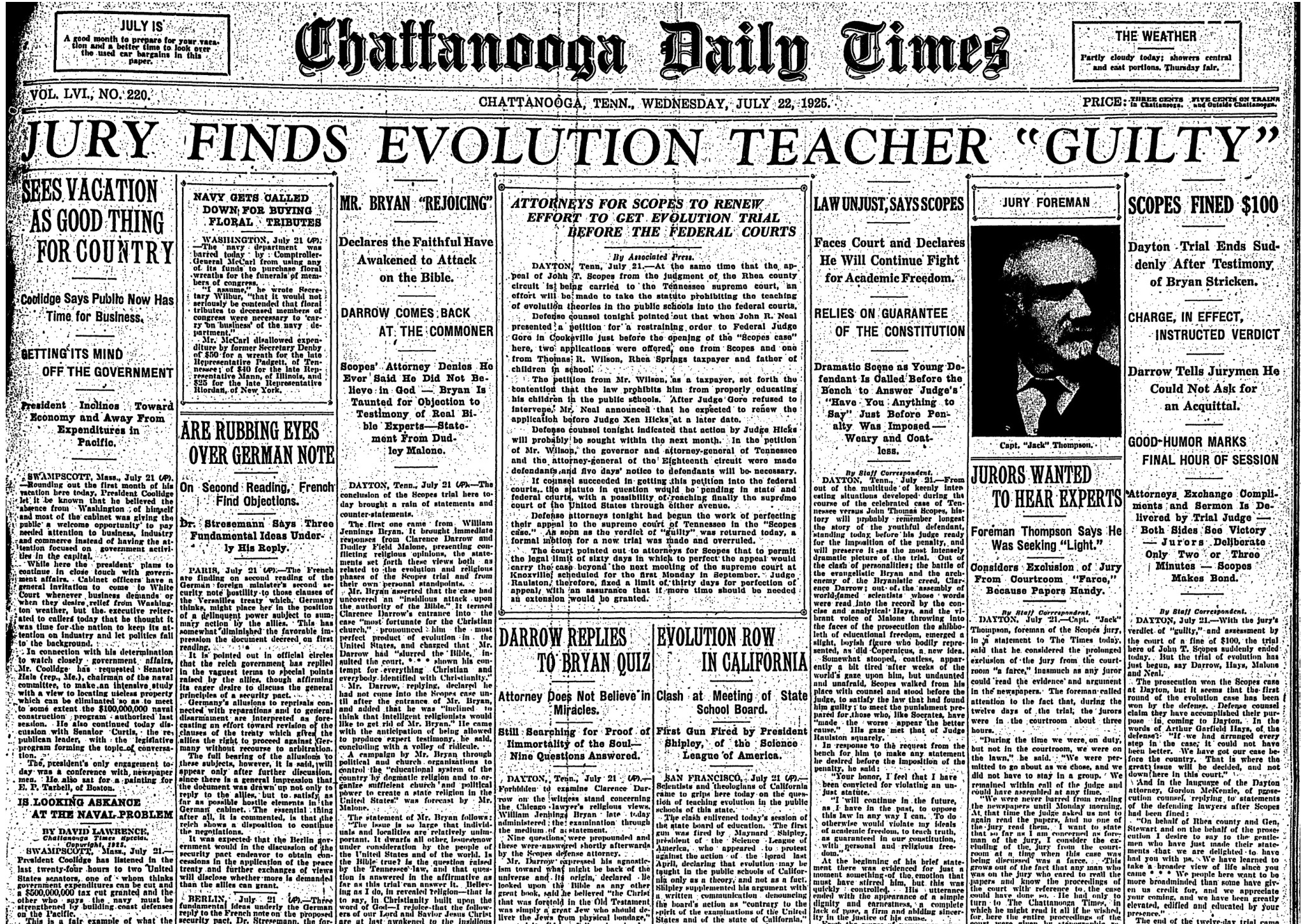
After the Butler Act was signed by Peay in March 1925, the fledgling American Civil Liberties Union decided to test the law’s constitutionality. The organization circulated an appeal in newspapers for a biology teacher who had taught evolution. On Monday, May 4, the Chattanooga Daily Times published the ACLU’s notice. A representative of the New York-based organization stated the “law strikes so serious a blow at scientific teaching that we cannot let the issue rest until it has been passed upon by the highest courts.”
It was the Chattanooga paper, which circulated in Dayton, that caught the attention of George Washington Rappleyea, a civil engineer with expertise in metallurgy. He had moved to Dayton, his wife’s hometown, to manage the faltering Cumberland Coal and Iron Co. At one time, the company had been the economic engine of the county, but by 1925, the enterprise was hampered by outdated equipment and reduced output from its mine. Effects of the company’s downturn rippled through the community.
Rappleyea (rhymes with “apple-yay”) was an improbable instigator of the Scopes affair. He was a transplanted New York City native. He didn’t sound like other Daytonians or look like them — short, swarthy, with a head of bushy dark hair. Despite these differences, the town accepted him. He was active in the Methodist church, a member of community clubs and was friendly with the town’s movers and shakers.
(SCOPES 100: Read more about the centennial of the evolution trial)
On May 5 Rappleyea entered Robinson’s Drug Store with the Daily Times in hand. There, Frank Earl Robinson, owner of the store, and other members of the town’s Progressive Club frequently gathered to confab. Rappleyea broached his big idea of using a legal proceeding on evolution to draw thousands of visitors to Dayton. The attention, he predicted, might linger beyond the hoopla of the trial. Those present liked the sound of it.
For the role of the evolution-teaching instructor, Rappleyea suggested Scopes. According to one account, a high school student was at the store’s soda fountain and Walter White, the school superintendent, sent the young man to fetch Scopes.
When Scopes answered his summons to the drug store, he faced a contingent of the town’s leading businessmen and his boss. The group was engrossed in a dispute about evolution. Rappleyea directed the attention to Scopes, asking if biology could be taught without mentioning evolution. No, the teacher answered.
To prove his point, he moved to a shelf where state-approved textbooks were displayed (students had to buy their own in 1925) and pulled a volume titled “Civic Biology” by George Hunter. He noted the book’s “Evolution” section.
That’s when Rappleyea sprang the trap. He explained the ACLU’s offer to fund a test case and asked Scopes if he would be the bait. The blue-eyed young man, a year out of college from the University of Kentucky and in his first year of employment at Dayton High, was not eager to accept. Nor did he think his teaching experience was applicable. Scopes didn’t normally teach biology, but he had been called to substitute earlier in the semester.
And, as stated earlier, Scopes wasn’t sure evolution came up in class.
No one present, save the teacher, saw that as a problem.
Everyone warmed to Rappleyea’s plan. Before the group dismissed, Scopes, who supported the teaching of evolution, also agreed to participate. He would later regret being thrust into the spotlight, but on that spring day in 1925, everyone gathered around the café tables at the drug store was of one accord: the evolution debate would be brought to Dayton.
As the trial date neared, Robinson hung a banner outside his drug store. It read: “Where it all started.”
He couldn’t imagine that a century later his sign would still be remembered, if only as an epitaph for a season of strangeness.
‘I WILL DO IT’
Michael Lienesch, a retired professor from the University of North Carolina Chapel Hill, said the issues that divide America in 2025 echo concerns from the era of the Scopes trial.
Education, particularly higher education, was a much-discussed topic then as now, said Lienesch, author of the 2007 book, “In the Beginning: Fundamentalism, the Scopes Trial and the Making of the Antievolution Movement.”
“Academia was an issue. This was a strategy that was good politics for the conservatives in the fundamentalist movement,” Lienesch said. “It all began with how to read the Bible and understand it, and that led to the question of whether the Bible was being taught in schools.”
Bryan was an early critic of colleges and universities about what was being taught.
“He was debating college presidents all over the country,” Lienesch said. “Years before he was in Dayton, Tennessee, he was traveling. I think Bryan lived a lot of his life on trains.”
Bryan and others called for investigations of college curricula. He focused on evolution, especially human evolution, as a subject that could engage and enrage the masses, the retired professor noted.
Numerous college presidents buckled under pressure to make changes. A few professors lost their jobs.
News of a Tennessee educator being charged with teaching evolution flowed through the country with the rapidity of a wildfire blown by constant winds.
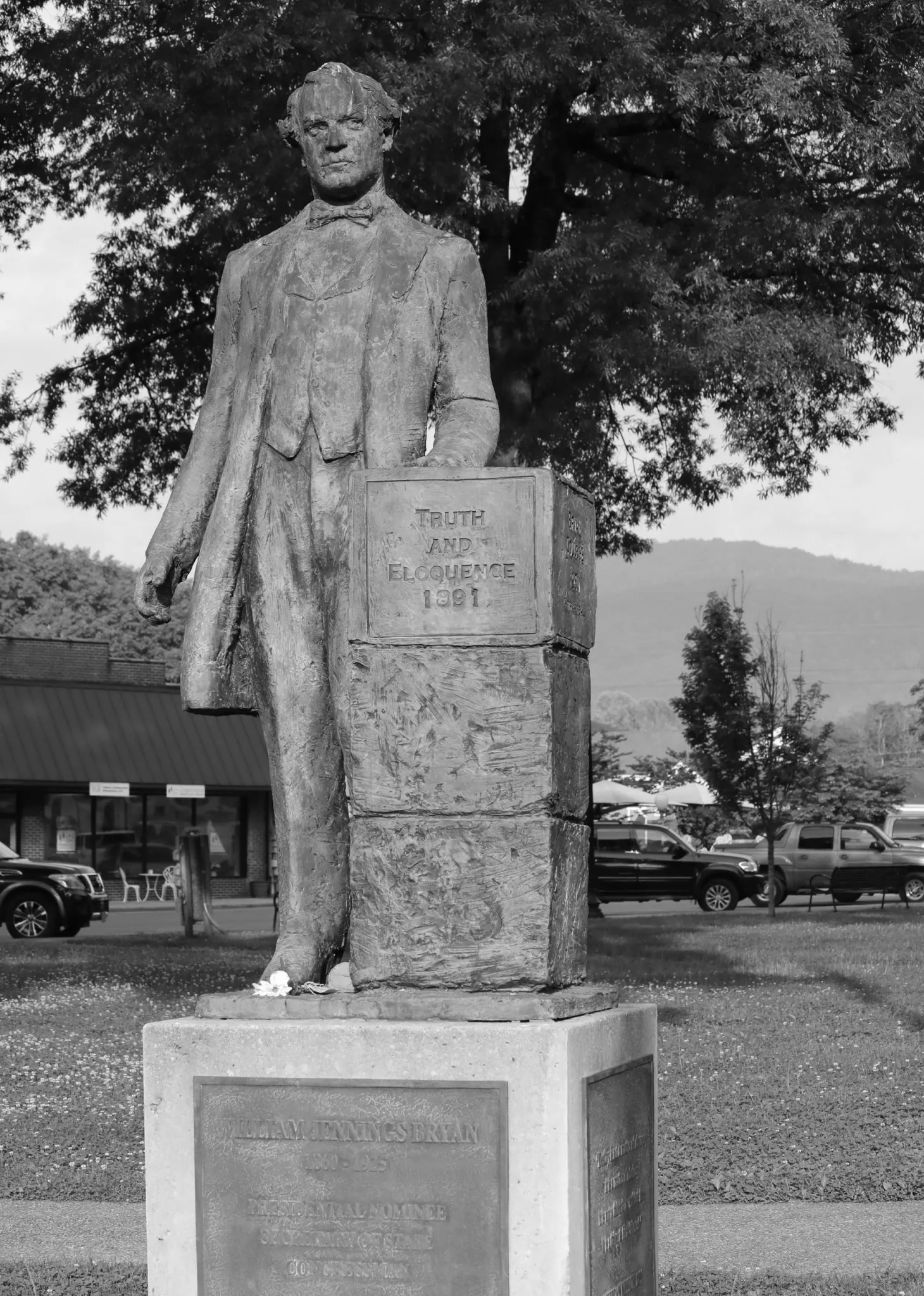
The story caused a stir in Memphis because the World’s Christian Fundamentals Association, an organization created in 1919 to defend traditional Biblical values from the influence of modernism, was having its annual convention there. The group’s keynote speaker was Bryan, three-time candidate for president, ardent fundamentalist and one who had been denouncing evolution for years at outdoor Sunday school sessions he held in Florida, where he lived.
A day after Bryan’s appearance at the convention, the organization named him to “represent their interests” at the Scopes trial, notwithstanding the fact that the group had no legal standing in the Rhea County matter. Having already moved on to his next speaking engagements in Ohio and Pennsylvania, Bryan took a day or so to consider the offer before replying with a telegram from Pittsburgh.
“I will do it,” the Great Commoner told reporters. “We cannot afford to have a system of education that destroys the religious faith of 75% of our children.”
The matter of whether Bryan, who had not litigated a case in 30 years, could officially join the prosecutor’s team was resolved by an open-arms invitation on May 13 from Sue K. Hicks and Wallace C. Haggard, Dayton attorneys who were the lead prosecutors. Such was his popularity, Bryan’s entry into the fray brought exponential interest in the case nationwide.
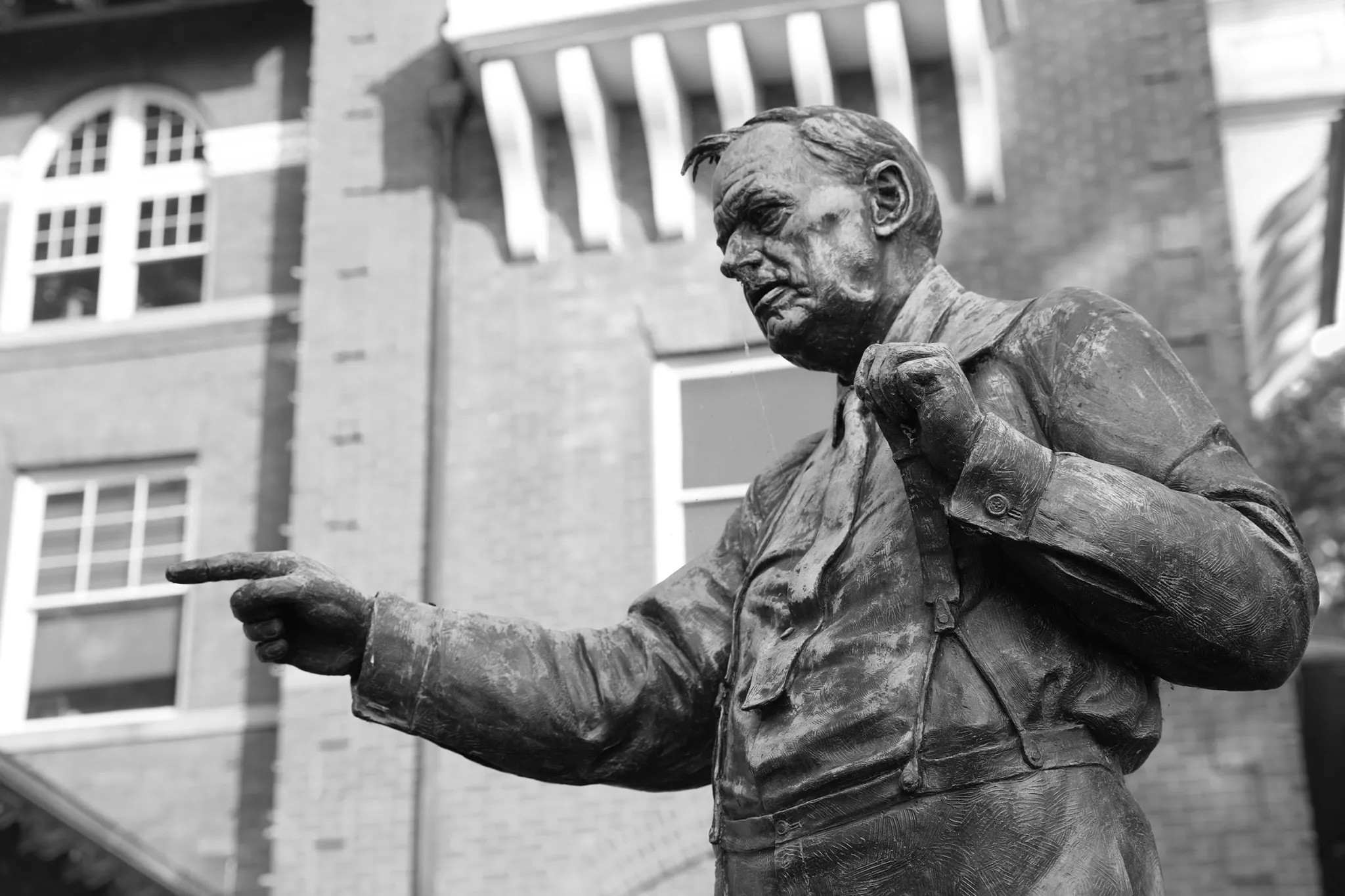
(READ MORE: ‘Scopes monkey trial’ town erects evolution figure’s statue)
Two days later came another shock: the defense announced that Chicago-based attorney Darrow had joined the fight. The inclusion of the sharp-tongued Darrow, who was considered by many to be the best defense lawyer in the nation, made clear the dividing line between the two camps.
Darrow offered an irreligious counterpoint to Bryan’s unabashed devotion to Christendom. Headlines pitting the two against one another, as if they were heavyweights vying for a championship, appeared with regularity in newspapers large and small.
“Civilization and not a schoolteacher are going on trial,” Darrow told The Associated Press.
Even before word arrived that Bryan and Darrow were coming to Dayton, townspeople began sprucing up. The interior of the courthouse received new coats of paint. Lights and benches were installed on the grassy area bordering the square. To quench the thirst of visitors, drinking fountains were installed. To house the phalanx of reporters who didn’t secure lodging at the hotel or in boarding rooms, cots were assembled in large upstairs storage rooms at two downtown businesses, Bailey’s Hardware and Morgan Furniture.
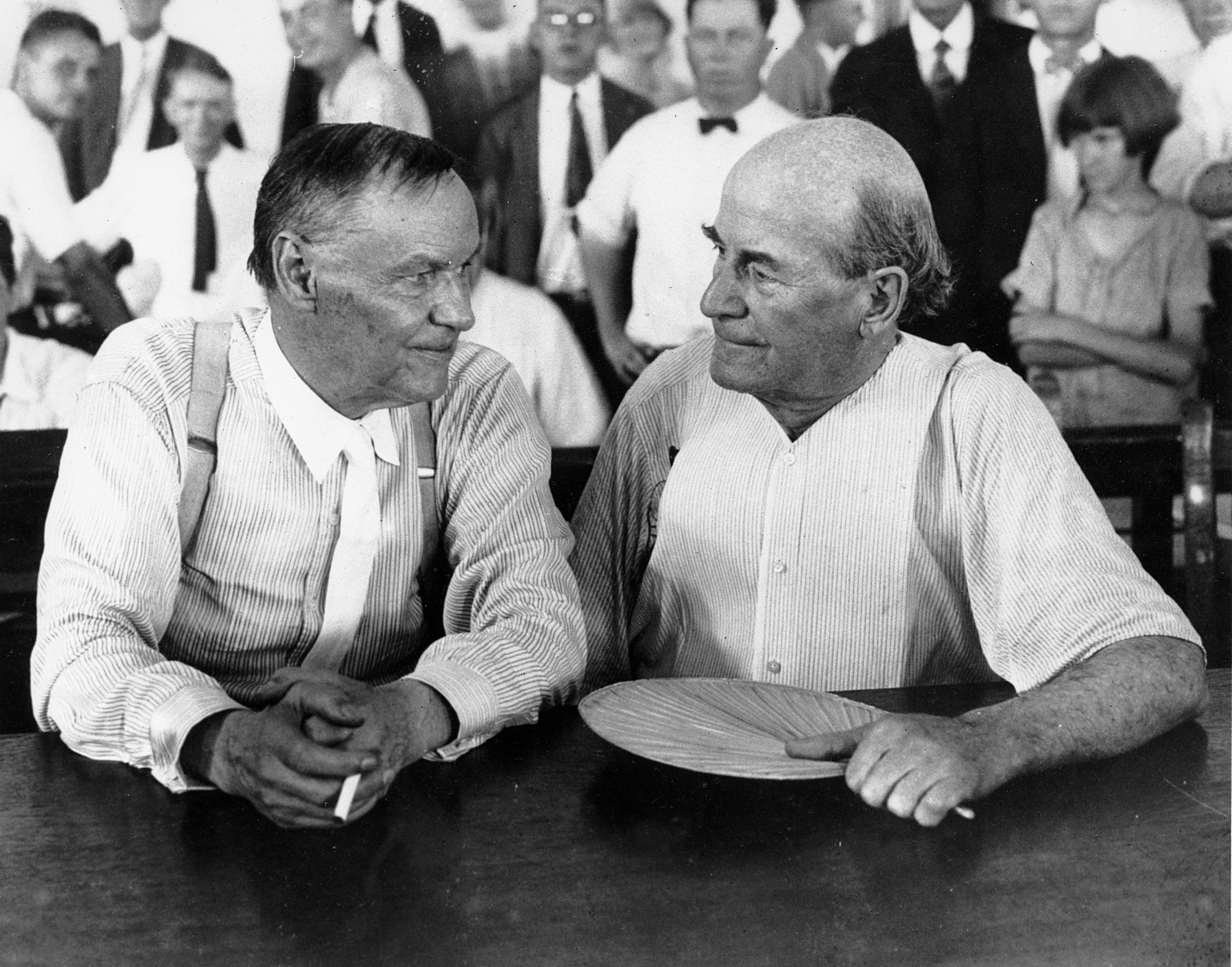
The tall windows inside the courtroom were cleaned of dust and grime. Technicians from WGN in Chicago unspooled hundreds of feet of cable to connect their mobile studio in the courtroom to the local telephone exchange and to install speakers on the courthouse lawn.
‘NOT A CIRCUS’
The trial began on July 10, a Friday, and ended on July 21, a Tuesday. Judge John T. Raulston would preside. He was born in rural Marion County in 1868, just three years after the Confederacy surrendered at the Appomattox Courthouse. After college, he studied law under the tutelage of an attorney in Chattanooga and passed the bar exam in 1896 at the age of 28. He established a practice in Winchester, the county seat of Franklin, before being sworn in as judge in 1924.
Raulston, 56, was excited the trial was coming into his jurisdiction. If he had doubts or concerns about the unusual case about to unfold in his courtroom, he kept them to himself.
Genesis describes the world being created in six days, with God resting on the seventh. The monkey trial of 1925 took eight days, with two weekends interrupting court, offering a respite from the legal jockeying and the oppressive temperatures and giving preachers two Sundays to focus their homilies on the evils of evolution. Outside, the thermometer hovered in the 90s. Inside the standing-room-only courtroom, the heat felt like 100 and above. Overheated spectators in the gallery fainted with regularity.
The first day was spent selecting a jury, 12 men, mostly churchgoers and farmers. Days two and three mostly involved the nine lawyers jawing back and forth on legal issues: whether the defense leaked information to the press (they did not), whether to quash Scope’s indictment (it was not), whether it was appropriate for prayer to open each day’s gathering (yes, said the judge).
It wasn’t until the fourth day, Wednesday, July 16, that Scopes pleaded not guilty and the state presented its case. The first witnesses called were the school superintendent and two students who attended the biology class in which evolution was allegedly taught.
On the fifth day, the prosecution entered a motion to exclude testimony from expert witnesses (geologists, biologists, chemists, among others) that the defense had arranged to be in Dayton for the trial.
On the sixth day, Raulston ignited a firestorm as he ruled the scientists ineligible to testify. Convincing the judge to change his mind was a futile enterprise for Darrow and company, but they tried, nevertheless. They sought to enter affidavits of the scientists into the record, but the prosecution objected all along the way, and Raulston mostly agreed with their objections, which peeved Darrow. He muttered a string of sarcastic rejoinders, interrupting the jurist several times. The defense attorney questioned why “anything that is perfectly competent on our part should be immediately overruled.”
“I hope you do not mean to reflect upon the court,” Raulston replied, his words, no doubt, freighted with rising anger.
“Well, your honor has the right to hope,” Darrow shot back.
First thing on Monday morning, day seven, the judge charged the Chicago lawyer with contempt of court and set a bond of $5,000. Darrow was unsure if he could quickly secure funds, but a Chattanooga lawyer, Frank Spurlock, piped up that he would cover the bond. This revelation prompted chattering among the hundreds of spectators. Kelso Rice, a young Chattanooga police officer on loan to Dayton, bellowed a demand for quiet.
“This is not a circus,” he exclaimed.
Following lunch, Darrow offered an apology that was accepted by Raulston. They solemnized the moment by halting court business long enough to be photographed shaking hands.
Afterwards, the judge told the overflow crowd that the trial was moving to the courthouse lawn for the rest of the day.
“I am afraid of the building,” explained Raulston, who had been made aware that pieces of plaster were falling onto the floor beneath the courtroom. The cause seemed to be stress from the weight of hundreds of standing spectators who refused to leave.
Consequently, the most important lawyer-witness exchange in the Scopes trial came to be held in the midday light, beneath a summer blue sky.
The matchup was improbable: “The defense desires to call Mr. Bryan as a witness.”
All the headlines promoting a clash of titans were coming true.
‘YOUR FOOL IDEAS’
Why William Jennings Bryan agreed to testify isn’t clear. Perhaps he was overconfident, even cocky. Perhaps he felt a providential calling to set the infidel Darrow straight.
Regardless, the afternoon came to grief for the Great Commoner in the temporary open-air courtroom. For more than two hours, Bryan, fanning himself with the pages of a King James Bible, was peppered with questions that tested his allegiance to biblical infallibility.
Was Jonah swallowed by a whale? Did Joshua make the sun stand still? How old is the earth?
When many people think of this scene, they recall a clip from “Inherit the Wind,” the stage play based on the Scopes trial that was made into a movie in 1960 starring Spencer Tracy and Frederic March as the characters patterned after Darrow and Bryan, respectively. The movie version is a clear takedown of Bryan, a man of conviction who blinks first, a man for whom a seed of doubt was planted. The scene ends with close-ups — Bryan struggling to find words to repair the damage, Darrow smug and quiet.
Many Daytonians do not like the movie, particularly the depiction of locals as slow-talking, ignorant and uncertain of the world beyond the mountains.
A close reading of the trial transcript reveals Bryan delivered many stinging rebukes of Darrow, but it was the answer to one question that turned the tide: Do you think the earth was made in six days?
“Not six days of 24 hours,” was Bryan’s reply.
For many in the press, these six words were interpreted as a seismic rendering. Bryan appeared to have disturbed a fault line, leading to a view that the world was much older than the faithful believed, older than Bryan had testified less than an hour earlier. Even though Bryan had expressed this distinction when he was on the speaking circuit, most of the secular press in attendance took no notice and judged Darrow the winner. Many of their readers did, too.
The seventh day of the trial ended with the protagonists shouting at each other in tandem.
Bryan: “I want the world to know that this man, who does not believe in a God, is trying to use a court in Tennessee…”
Darrow: “I object to that…”
Bryan: “…to slur at it and…I am willing to take it.”
But Darrow was through with his witness.
“I am exempting you on your fool ideas that no intelligent Christian on earth believes,” he said, returning to his seat.
After which the judge adjourned court until the following morning.
On the last day of court, Tuesday, July 21, blessed rain fell from the skies and mist hid the verdant hills surrounding Dayton. The trial resumed in the courtroom, where welcomed breezes streamed through the tall windows.
Bryan did not get to question Darrow or make a closing speech, which he had been preparing for days. The reason? Defense attorneys asked that their client, John T. Scopes, be found guilty so the matter could be appealed. Raulston accepted the request, charged the jury and sent them out to deliberate, which they did for a total of nine minutes, returning at 11:23 a.m.
Scopes was fined $100 by the judge, not the jury, and it was based on this technicality that the Supreme Court of Tennessee later overturned the fine even as it ruled the Butler Act was constitutional. Instead of remanding the case to Rhea County, the justices noted “that nothing is to be gained by prolonging the life of this case.” Instead, they urged the prosecutor to withdraw the matter from further prosecution, and that’s what happened.
THE RIGHT TO THINK
The teacher and football coach never had to pay the fine. He left Dayton, went to college in Chicago and became a geologist for the gas and oil industry, living in South America for a time before settling in Louisiana.
In April of 1970, Scopes accepted an invitation to address students at Peabody College in Nashville. The occasion was the upcoming 45th anniversary of the trial. Three years after his autobiography had been published, Scopes was content to reminisce and offer commentary, especially to aspiring teachers.
On that spring day, he spoke his mind.
“The only place a teacher should ever be interfered with is when the child begins to think for himself,” he said “Then that child should be consulted about his own education.”
Scopes advised the packed auditorium to hold strong against “outside pressure groups and government controls (that) have dictated to the schools to the point where they do not exercise the one thing man has above other animals — the right to think.”
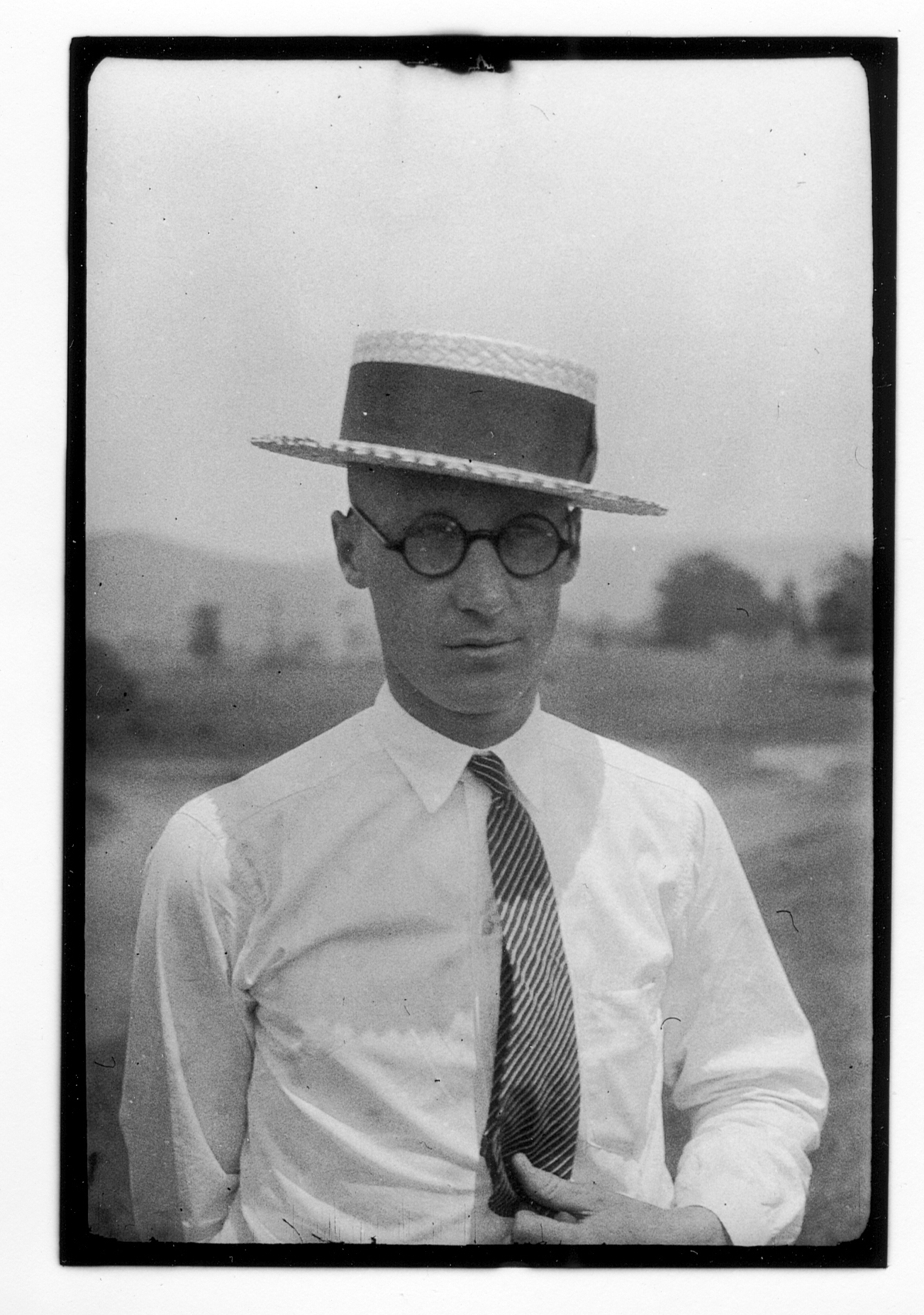
According to newspaper reports, students rose to their feet and cheered, the ovation continuing for several minutes. A photo shows Scopes, leaning on a lectern, hand on his hip. No longer was he the wide-eyed Dayton High teacher, his head topped by a straw hat, his eyes framed by round spectacles, his face the image of youth. Here was a slightly stooped man of 69, assessing lessons he’s learned.
On the question of whether he taught evolution at Dayton High, Scopes told the audience he was at the mercy of a faulty mind — his.
“I substituted for 10 days for the biology teacher,” he said, “and during that time, I didn’t want to start on any new chapter, so I just reviewed what the class had been over. It may have included evolution. I just don’t remember. But I don’t see how I could have reviewed for 10 days and not touched on evolution.”
That was likely his final word on the subject because the Peabody College visit was his last public appearance. On July 1, Scopes was hospitalized for gall bladder surgery, and the diagnosis was soon changed to terminal cancer. He died Oct. 21, 1970.
The next day, his photo once again appeared in newspapers from coast to coast.
A MATTER OF CHOICE
As for Bryan and Darrow, by definition of being members of the human race, they were flawed. The many examinations of their lives and letters reveal instances where they succumbed to ego and narcissism. Perhaps it is better to learn from the purest of their aspirations for the America they both loved.
Bryan is remembered for this quote: “Destiny is not a matter of chance, it is a matter of choice; it is not a thing to be waited for, it is a thing to be achieved.”
Darrow, often clever with his aphorisms, said this: “The pursuit of truth will set you free, even if you never catch up with it.”
Implied in both is a call for action. In a democracy, action requires deliberation. To arrive at a consensus requires people of different faiths, partisan beliefs, races and genders to look each other in the eye — as did Bryan and Darrow a century ago — and hear one another.
This is why that long-ago trial that was about one thing, but really was about so much more, still matters. It’s why history refuses to let it be forgotten.
Leon Alligood is a retired Middle Tennessee State University journalism professor. For 30 years before joining academia, he was a reporter, most of that time at The Nashville Banner and The Tennessean. He is the co-author (with Kathy Bingham Turner) of “Boss Brooks: A True Story of Fraud, Family and Forgiveness from Tennessee to Texas,” which will be published by the University of Tennessee Press in November.
This article first appeared on Nashville Banner and is republished here under a Creative Commons Attribution-NoDerivatives 4.0 International License.