
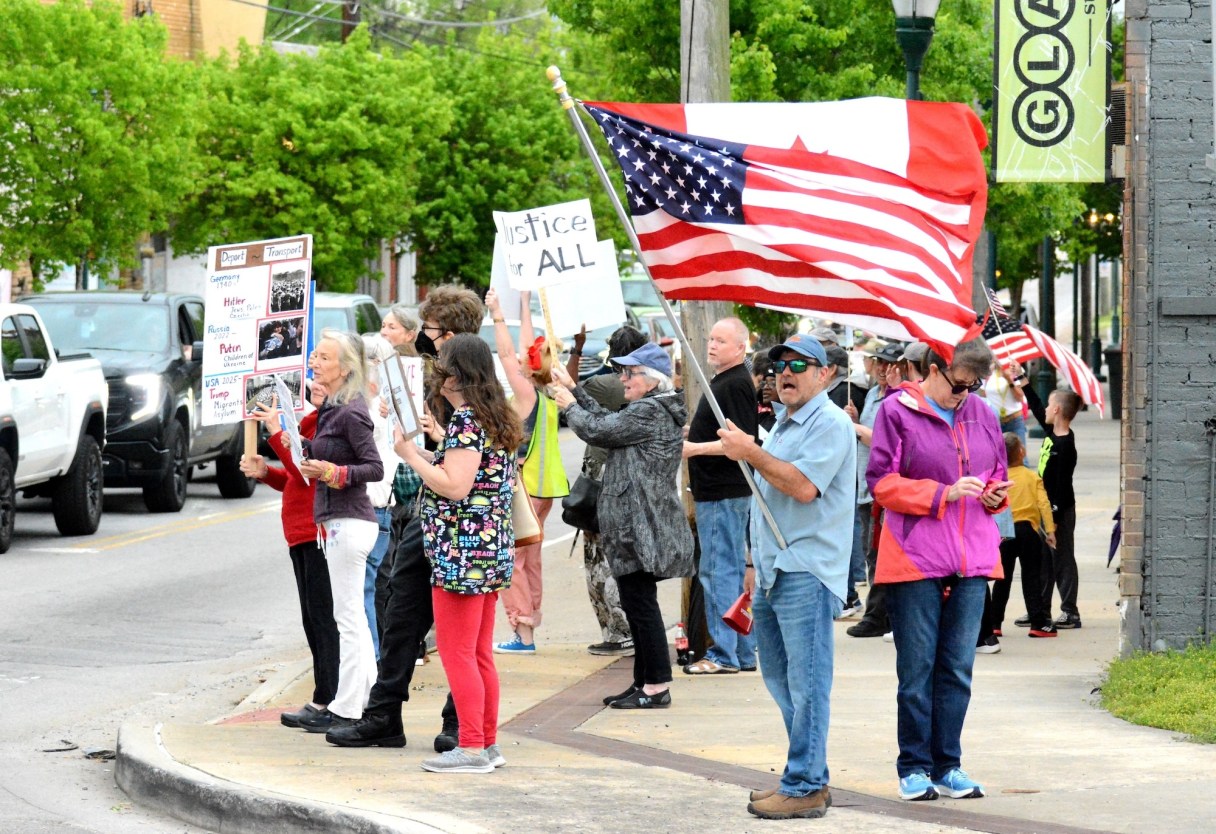
For the last several months, I have organized a weekly “Stand-Up for Democracy” rally/protest on the busiest street corner in my hometown. On Fridays at 5:30 pm., students, teachers, townspeople, and senior citizens come together, hold signs, and wave at passing drivers, some of whom honk their horns in solidarity.
I live in a very progressive town, where last November, Kamala Harris, the Democratic presidential candidate, beat President Donald Trump by a margin of more than nine to one. Some of my friends ask, “Why bother?” They think that we are preaching to the choir or that the president and his colleagues are impervious.
These are, in a sense, the wrong questions. Protest is a democratic practice, valuable everywhere, regardless of its immediate impact.
That is why it was so important that millions of Americans did their own Stand Up for Democracy events on June 14. While liberals took heart at those numbers, some conservative commentators called them “utter nonsense.”
Writing in The Hill, law professor Jonathan Turley argued, “The well-funded protests are being fueled by Democratic leaders, who are resuming their claims that citizens must either protest… or accept tyranny in the U.S. Turley went on to call the No Kings day rallying cry, ‘Democracy is dying’… an absurdity…., since every indication is that our constitutional system is operating precisely as designed.”