
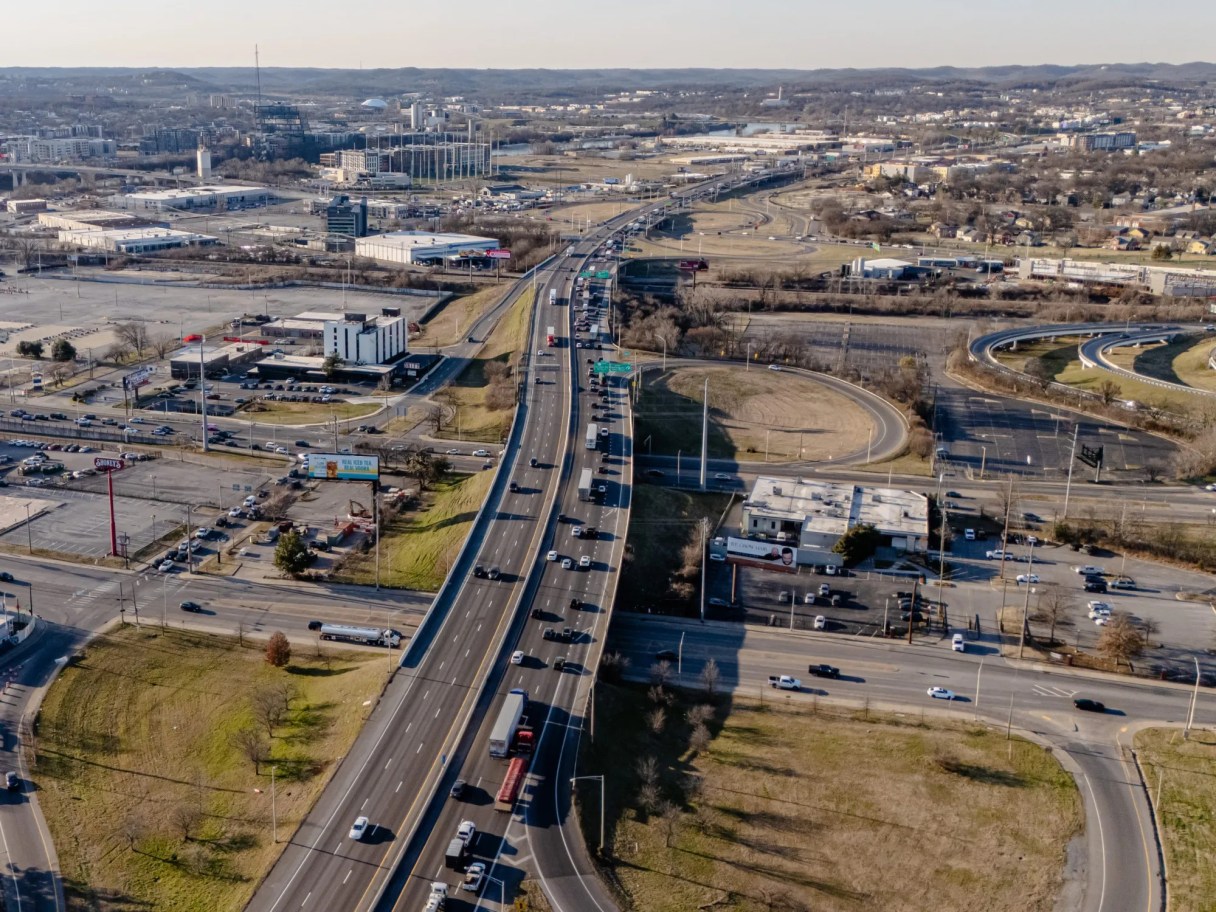
Both sides of the long Fourth of July weekend were marked by death on Nashville roads.
On the morning of July 3, a 19-year-old motorcyclist named Daniel Poole was killed after he was sideswiped by the driver of a Honda Accord exiting a parking lot. Police said there was no indication of impairment and identified the Accord driver’s failure to yield as a contributing factor.
On July 7, 67-year-old Kenneth Fulson died after he ran a stop sign near Tennessee State University, then crashed into a water main structure and the corner of a brick wall. That evening, 10-year-old Dsiyahn Whitmore was riding a gasoline-powered minibike when he rode into Main Street and crashed into the side of a gasoline tanker truck. The young boy died at the scene after he was run over by the truck’s rear tires.
Last month, the Nashville Banner reported on the thousands of hit-and-run crashes Nashville sees every year and how the two full-time detectives assigned to them conduct their investigations. However, the issue of car crashes and how we respond to them inevitably raises the question of how we might prevent them from happening so frequently in the first place. And they do happen with alarming frequency.
In 2024, the Metro Nashville Police Department recorded 26,152 vehicle crashes, with more than 8,000 resulting in injuries. The death toll for the year was 103, about two people killed on the road for every week of the year, albeit a drop from the 140 who died in 2023. Annual pedestrian deaths have also been on a downward trajectory for several years but remain higher than they were a decade ago. The U.S. Department of Transportation’s National Highway Traffic Safety Administration estimates that 39,345 people died in traffic crashes nationwide last year.
In 2022, then-Nashville Mayor John Cooper signed off on the Vision Zero Implementation Plan, which detailed the steps Metro would take over the next five years to achieve the goal of zero roadway deaths by 2050. Mayor Freddie O’Connell’s Choose How You Move transit plan could also play a significant role in reducing the amount of time Nashvillians spend in their cars. Broadly speaking, advocates said the problem has to be approached from multiple directions simultaneously.
“There are two sides to this issue,” Meredith Montgomery, executive director of Walk Bike Nashville, told the Banner. “Number one is we have an infrastructure problem, the way that our streets are built. But number two, we have a culture problem, the way people think about and interact with our streets.”
DANGEROUS DESIGN
In discussions with roadway safety advocates, one is unlikely to hear references to “traffic accidents.” That’s because, rather than a fluke mistake in an otherwise reasonable system, they view car crashes, fatal or not, as the obvious result of the way many of our cities and roads have been designed. While an individual incident may well be the result of a driver’s mistake, they argue, the millions of injuries and tens of thousands of deaths that happen on the nation’s roads each year are essentially a policy choice.
One leading, and obvious, cause of car crashes is speed. As part of Vision Zero, Metro’s Traffic and Parking Commission last year approved speed limit reductions on 10 collector roads and local streets. That followed a 2023 bill from the Metro Council that lowered speed limits on neighborhood streets. According to the National Highway Traffic Safety Administration, decades of studies have arrived at the same broad conclusion — lower speed limits result in fewer crashes, fewer injuries and fewer deaths.
“You’re playing an odds game,” said Neil Kornutick, a Traffic and Parking Commission member and active online safety advocate. “There are gonna be mistakes that happen. All you’re really trying to do is limit the outcomes.”
Lowering speed limits, Kornutick said, also makes it possible to add other traffic calming measures, such as speed bumps, raised pedestrian crosswalks or roundabouts. He said he’d like to see Metro move faster to get recommended speed limit reductions and the other measures that follow approved and implemented.
Peter Robison, who chairs the Vision Zero Advisory Committee, expressed some frustration about the lag time between plans and action. While noting that he could only speak for himself and not the committee as a whole, he acknowledged the challenges of coordinating with the state on roads controlled by the Tennessee Department of Transportation and making changes to old car-centric infrastructure.
“But even on the roads that NDOT controls, we hoped and expected to see more progress than we currently have,” Robison wrote in an email to the Banner. “Big chunks of the ambitious plans announced by Metro that were supposed to be completed by now are still in the planning stages. Some projects have been opposed by business owners, resulting in further risk to citizens. When we go back and look at locations where fatal crashes have occurred, we often see that there were previous fatal crashes at those locations and the recommendations made by NDOT consultants have not been made. We’ve seen traffic calming requests be extremely popular in many neighborhoods, but the wait list is months or years long.”
In March, the Nashville Department of Transportation and Multimodal Infrastructure announced 25 new traffic calming projects in neighborhoods around the city.
Those additional engineering steps are crucial, Montgomery said, because many people drive according to the atmosphere around them more than they do by speed limit on a sign.
“If a road still feels like an interstate, it’s just our human nature, we’re going to drive fast down it,” she said. “When we narrow those lanes and when we put things in there, it makes you pay attention and slow down.”
Chris Bowe, a civil engineer and Vision Zero Advisory Committee member, said looking at some of Nashville’s main arteries shows how the city’s design has effectively forced its residents away from alternative modes of transportation and into cars, with all of the dangers that come with them.
“If we have a road like Gallatin Pike that’s 50 feet wide and all 50 feet are for cars, there’s no way you’re going to get anything but people driving,” he said. “But if you can slice that up a little bit — even if it’s inconvenient for people who would prefer to drive through the area — you can sort of reduce the volume, reduce the speed of the vehicles.”
Lighting and visibility can also be a contributing factor to crashes, particularly those involving pedestrians or cyclists. Toward that end, the Nashville Streetlight Retrofit Project is a collaboration between the Nashville Department of Transportation and Nashville Electric Service to replace 55,000 streetlights with brighter, more efficient and longer-lasting LED lights. Nashville Electric Service announced in February that the project was ahead of schedule, with nearly 23,000 lights already converted.
NEED FOR AWARENESS
Along with pointing to tangible infrastructure improvements that could reduce the danger of Nashville’s roads, advocates expressed a frustration about the way death and injury related to cars can become little more than background noise. As much time as they spend on potential solutions to the problem, they said it often feels like many people don’t think there’s really a problem at all. Even among people who are well aware of the numbers, the amount of death and injury on our roads is sometimes viewed as a reasonable trade-off.
“There have been some folks in the transport industry that will even say things like, ‘we have to accept some level of traffic violence because people’s mobility is so important to economic activity and their independence and freedom.'” Bowe said. “Yeah, there’s this side-effect, but what are we going to do?”
Perhaps that line of thinking is part of the reason for the apparent difference between public reaction to violent crime and public reaction to roadway fatalities. Whereas a spike in homicides can determine election results and spur policy change, advocates feel it’s harder to motivate action around traffic deaths. In Nashville last year, 103 people died in car crashes compared to 104 who were killed in homicides.
For Bowe, stints living in cities with robust public transportation piqued his interest in urban design and transit. But it was a confrontation with the stark statistics of American roadways that pushed him toward safety advocacy.
“Once you’re mentally open to the idea that 40,000 people a year (are) dying just trying to get around is crazy, it’s really compelling,” he said.
For many local news consumers, he said, awareness of car crashes — even serious ones — often comes in the form of traffic reports about the delays they will experience as a result. Even after joining the Vision Zero Advisory Committee, he found he had a hard time grasping the statistics the body was reviewing every month. So at the beginning of this year, he started a Bluesky account called the Nashville Fatal Crash Tracker on which he manually does just that.
For each fatal car crash that occurs in the city, he posts the date, time, location and known information about what happened. It does take a psychological toll, he said — there are times when he will step away from it for a bit before coming back to keep the account current — but in a way, that is the point.
“The cadence at which these things are happening is important for people to understand,” he said.
Charlie Weingartner, also a Vision Zero Advisory Committee member, maintains a dashboard of all fatal crash reports as well.
Their goal is to make roadway dangers more salient to average Nashvillians who use their cars every day without giving it much thought. They hope it will make drivers more cautious and also, perhaps, more open to infrastructure changes down the line that trade convenience for safety.
“It’s just so easy for us to get in our cars and not remember the sense of responsibility that we have when we’re behind the wheel,” Montgomery said.
This article first appeared on Nashville Banner and is republished here under a Creative Commons Attribution-NoDerivatives 4.0 International License.