
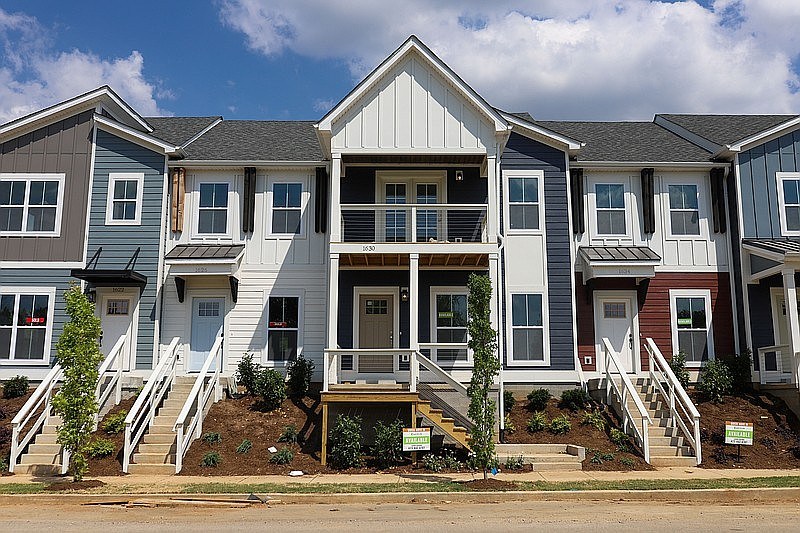
Every four years in Tennessee, each county in the state appraises all property within its borders — whether residential or commercial — for any change in value. While a seemingly mundane process, for any homeowner or renter in Hamilton County, it is seen as highly consequential to the bottom line of a household budget.
But it depends on the decisions of local elected officials. That’s because, in Tennessee, a county or city must lower its property tax rate so as to not gain any added revenue from reappraisal — unless a local governing body votes to maintain the current rate.
For instance, look at Chattanooga. After a historic rise in home values over the past four years, the city’s annual property tax rate was automatically lowered from 2.25% to 1.55%. But to help fund raises for police and firefighters, Mayor Tim Kelly wants to push that rate to 1.65%, prompting some pushback from the Chattanooga City Council.
As reported by the Chattanooga Times Free Press, council member Chip Henderson, who represents Lookout Valley, countered Kelly’s proposal. He suggested the city end its recycling pickup service — a move that would cut city budget costs by 1% — and minimize tax rate increases for homeowners.
The political calculus from Henderson here is to be expected. Especially in a city like Chattanooga and a state like Tennessee, higher taxes are seen as a burden among many.