The Passage and other waterfront art enhance Chattanooga’s beauty
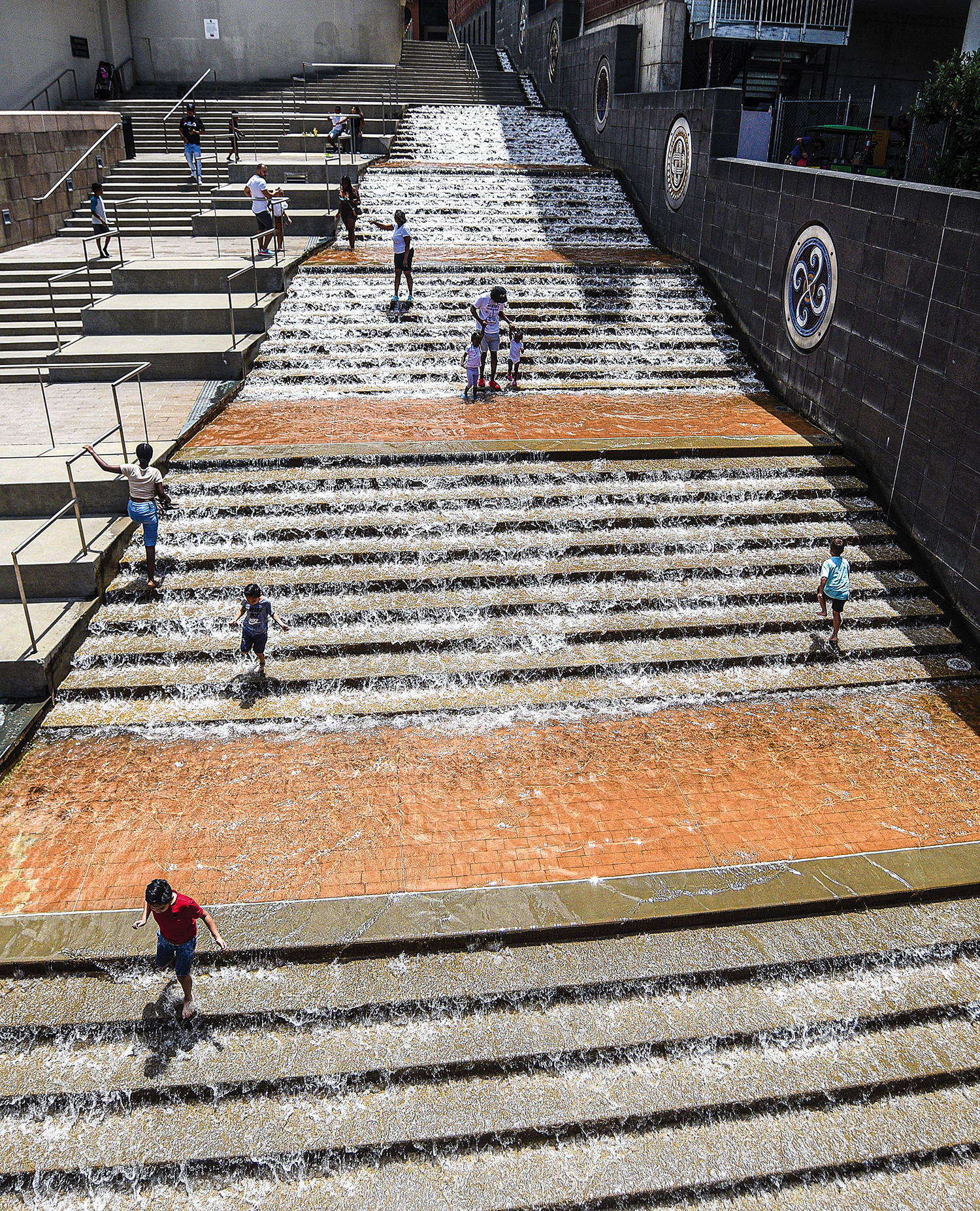
Staff file photo / Madison and Mason Nunley splash through the waters of The Passage. Staff file photo / Madison and Mason Nunley splash through the waters of The Passage.
By Sam Still 8 min read
It was May 13, 2005, and “after a 167-year absence, the culture of the Cherokee people” had returned to Ross’s Landing, the Chattanooga Times Free Press reported.
With dancers, a Cherokee choir, stickball games, a torch lighting and a flying eagle, that Friday in May was filled with cultural revelry as the city of Chattanooga, joined by the principal chiefs of the three federally recognized Cherokee tribes, marked the opening of The Passage, a riverfront public artwork built by a team of Cherokee artists that celebrates and honors Cherokee culture.
In the late 1830s, Ross’s Landing was where the U.S. government had first removed the Cherokee from the Southeast, forcing them westward along the Trail of Tears, according to the National Park Service. The Passage serves as a reminder of the Cherokee people’s historical presence in Chattanooga.
“We wanted to just portray some of our ancient designs that were found in that vicinity around Chattanooga, or the surrounding area, to show that we were there at one time,” says Bill Glass Jr.
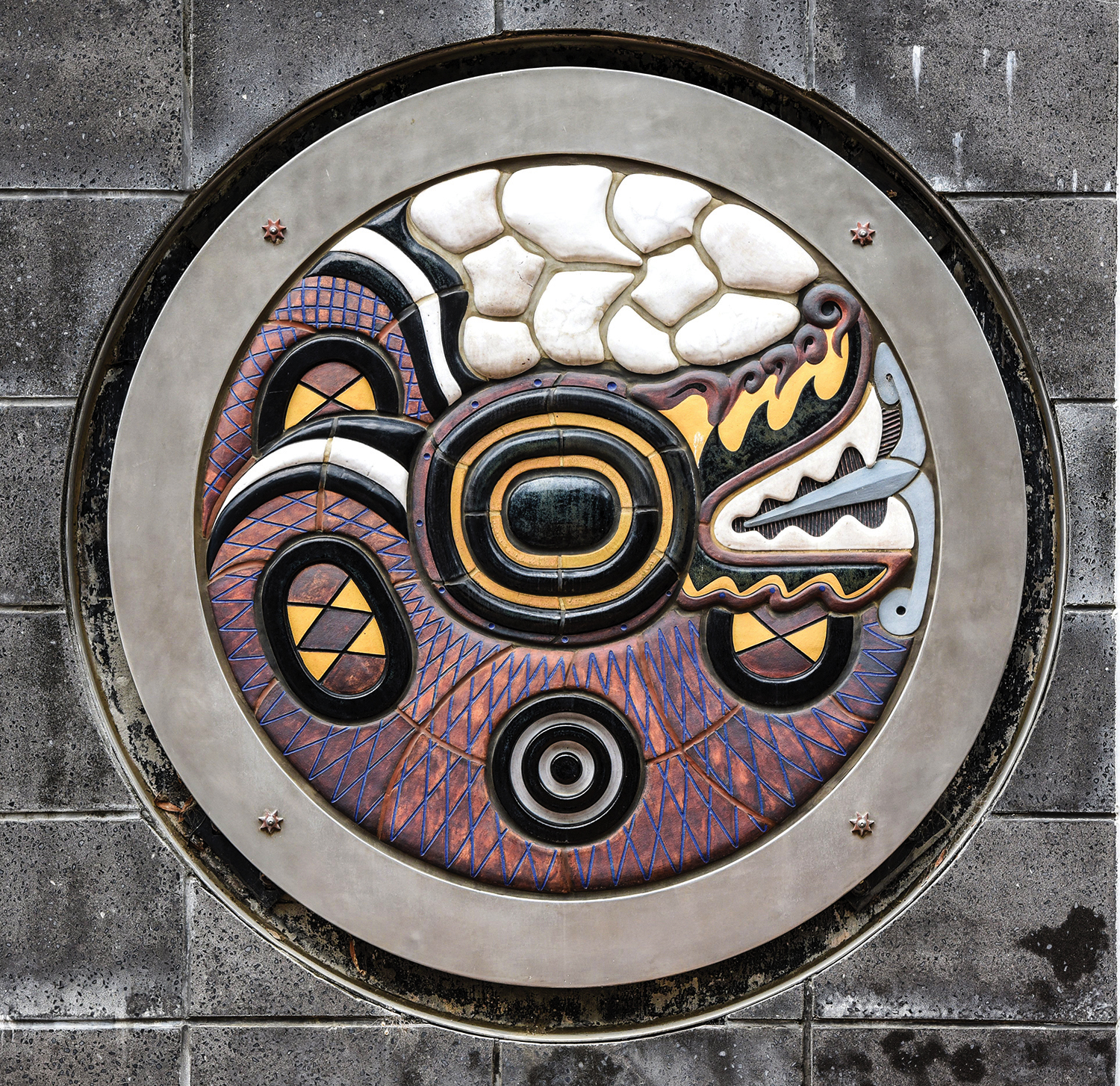
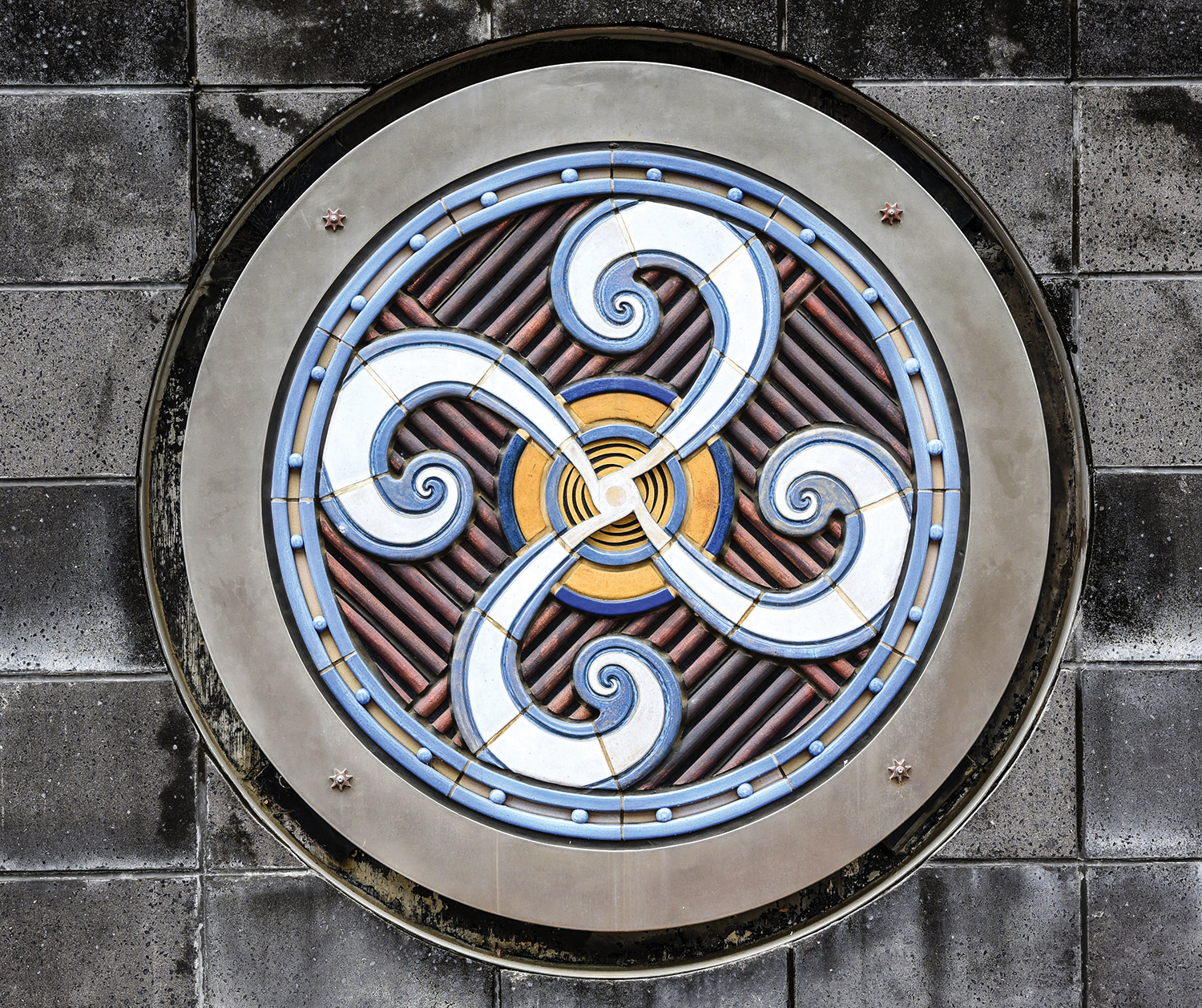
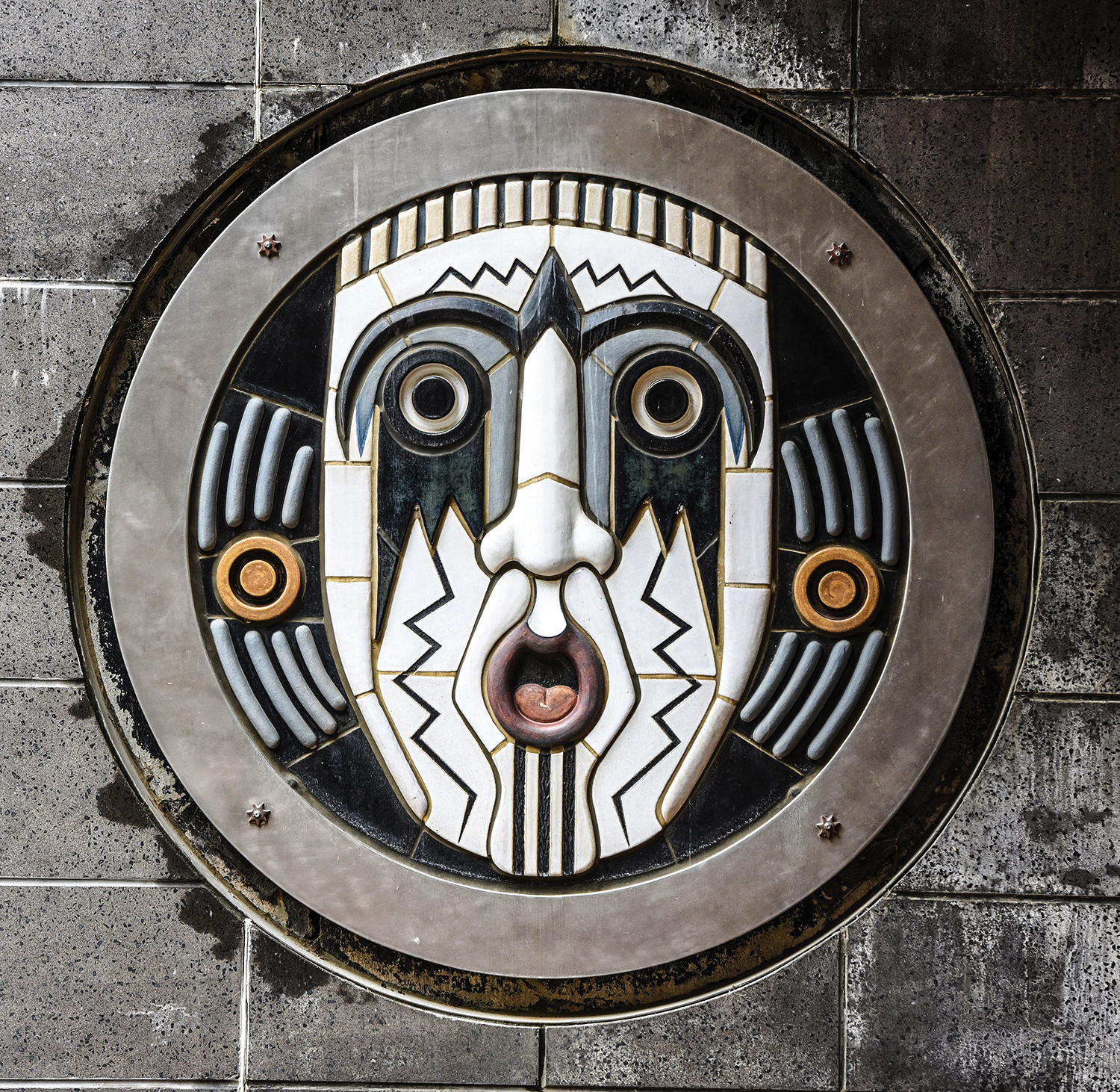
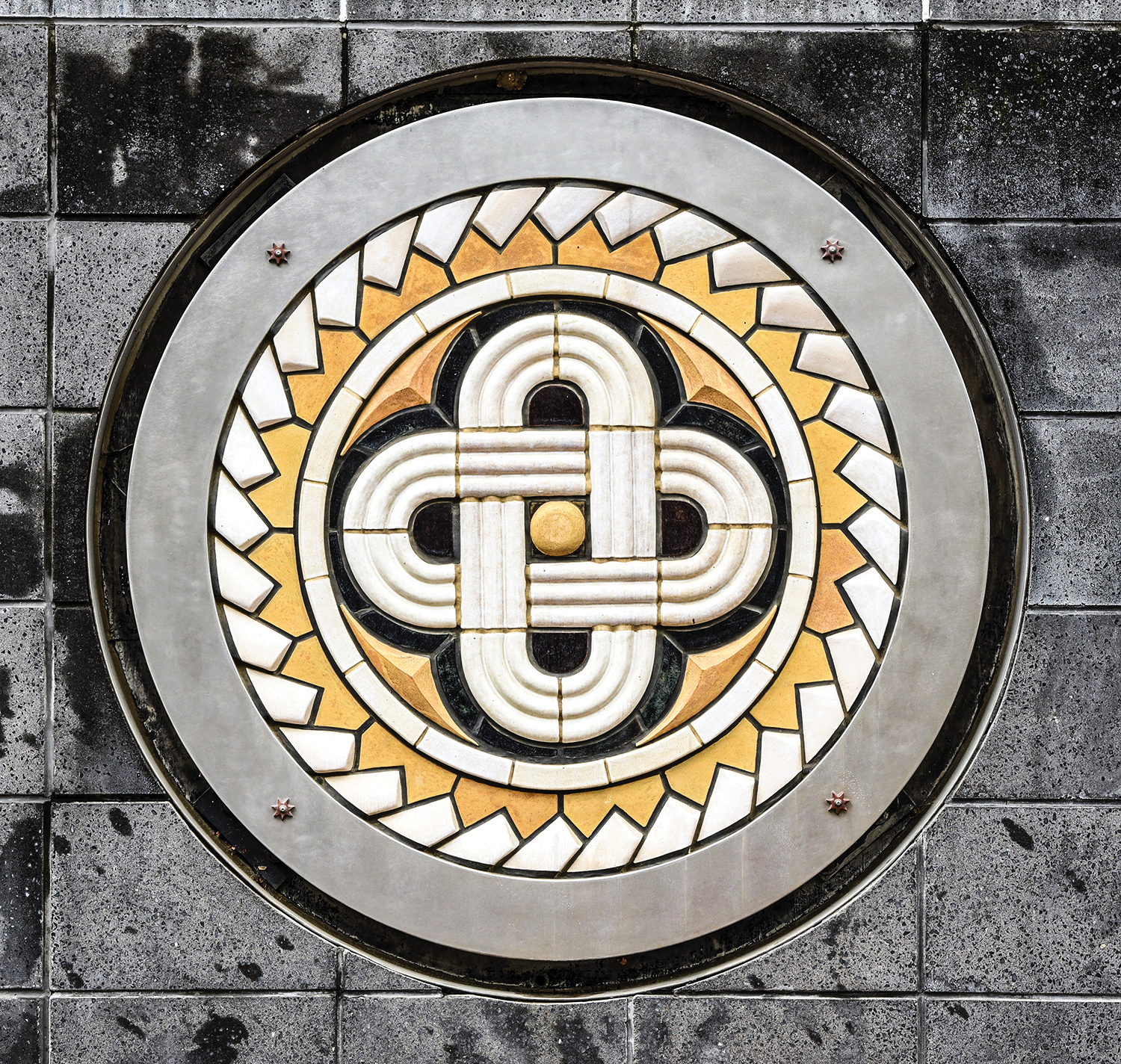
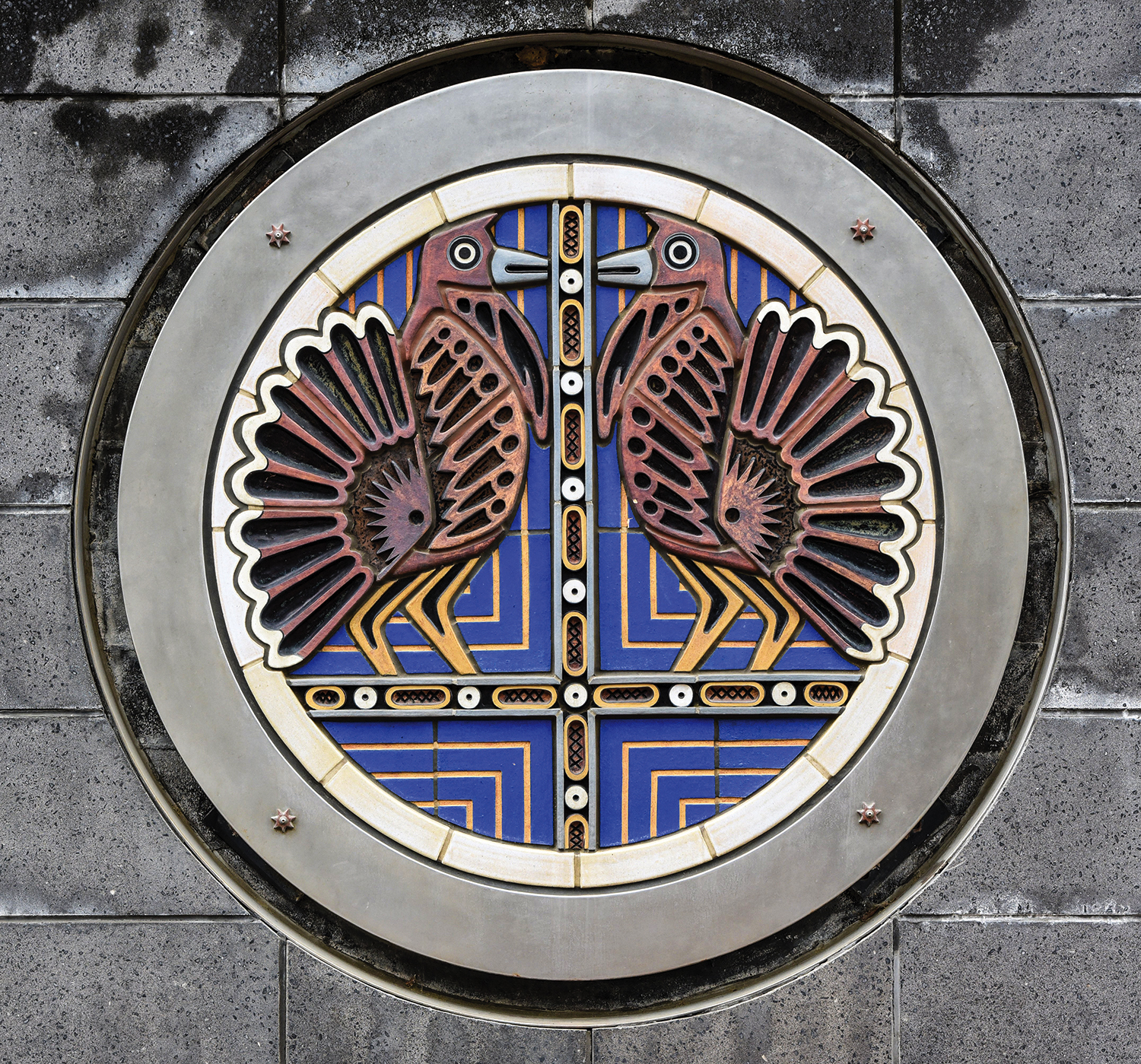
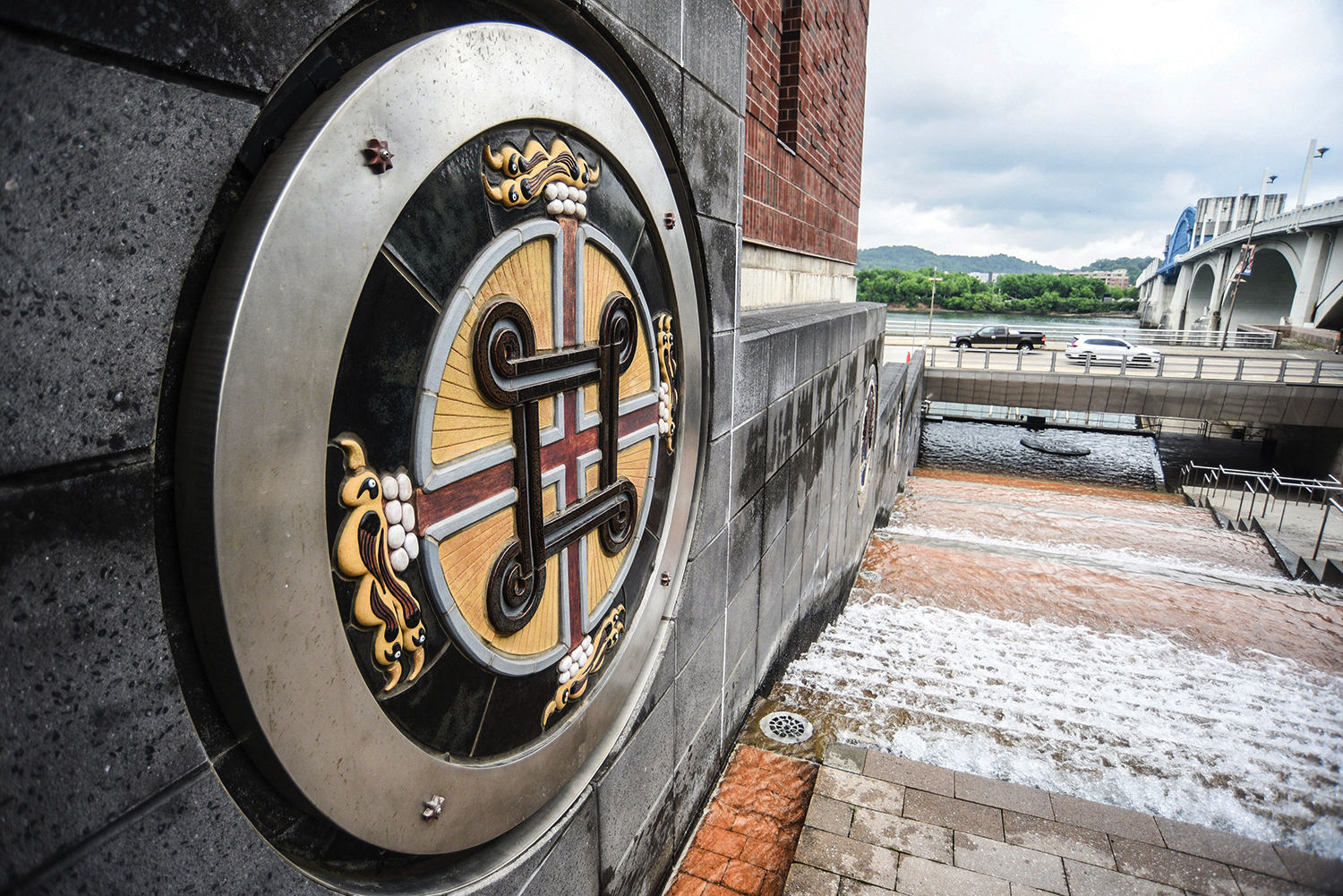
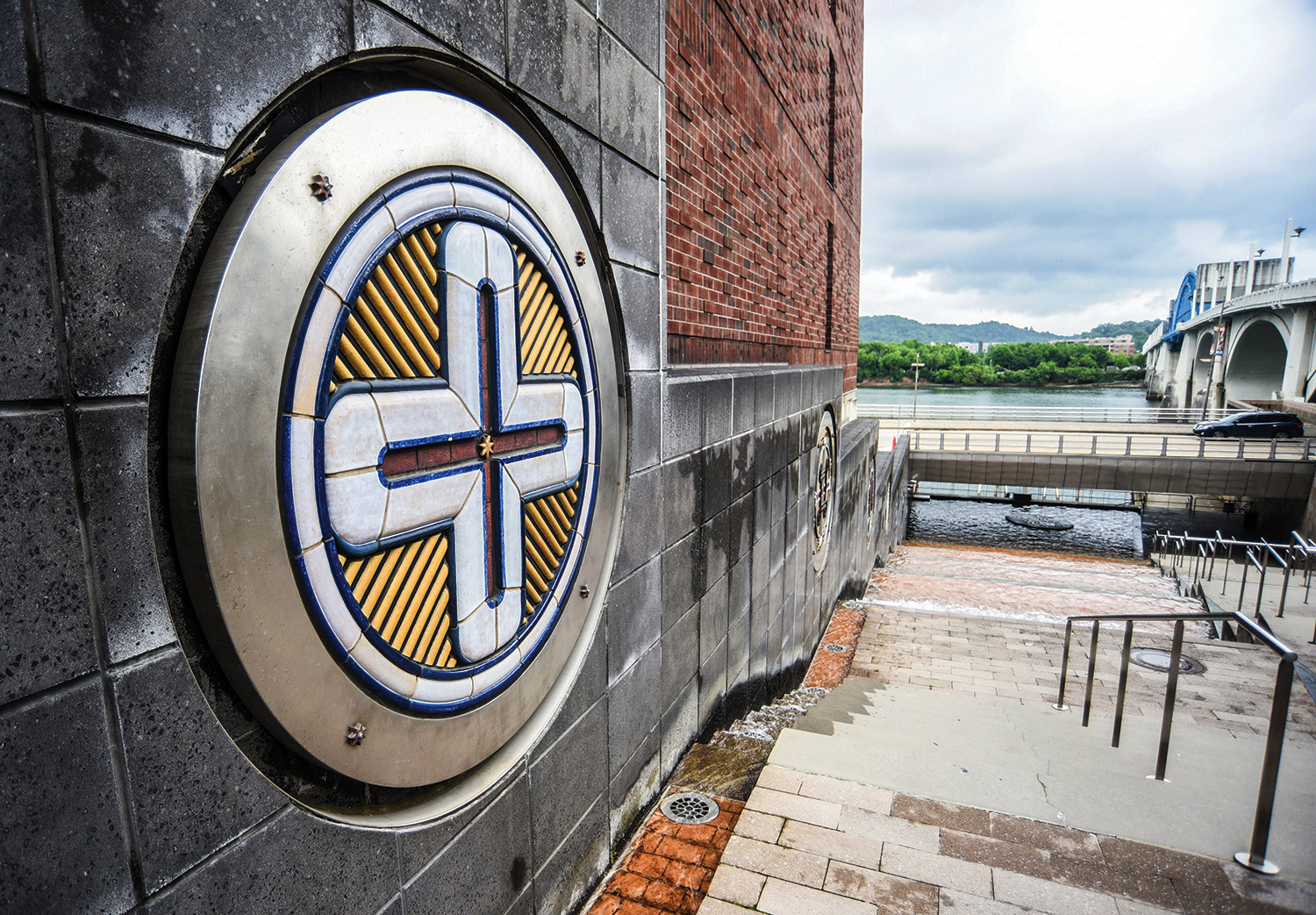
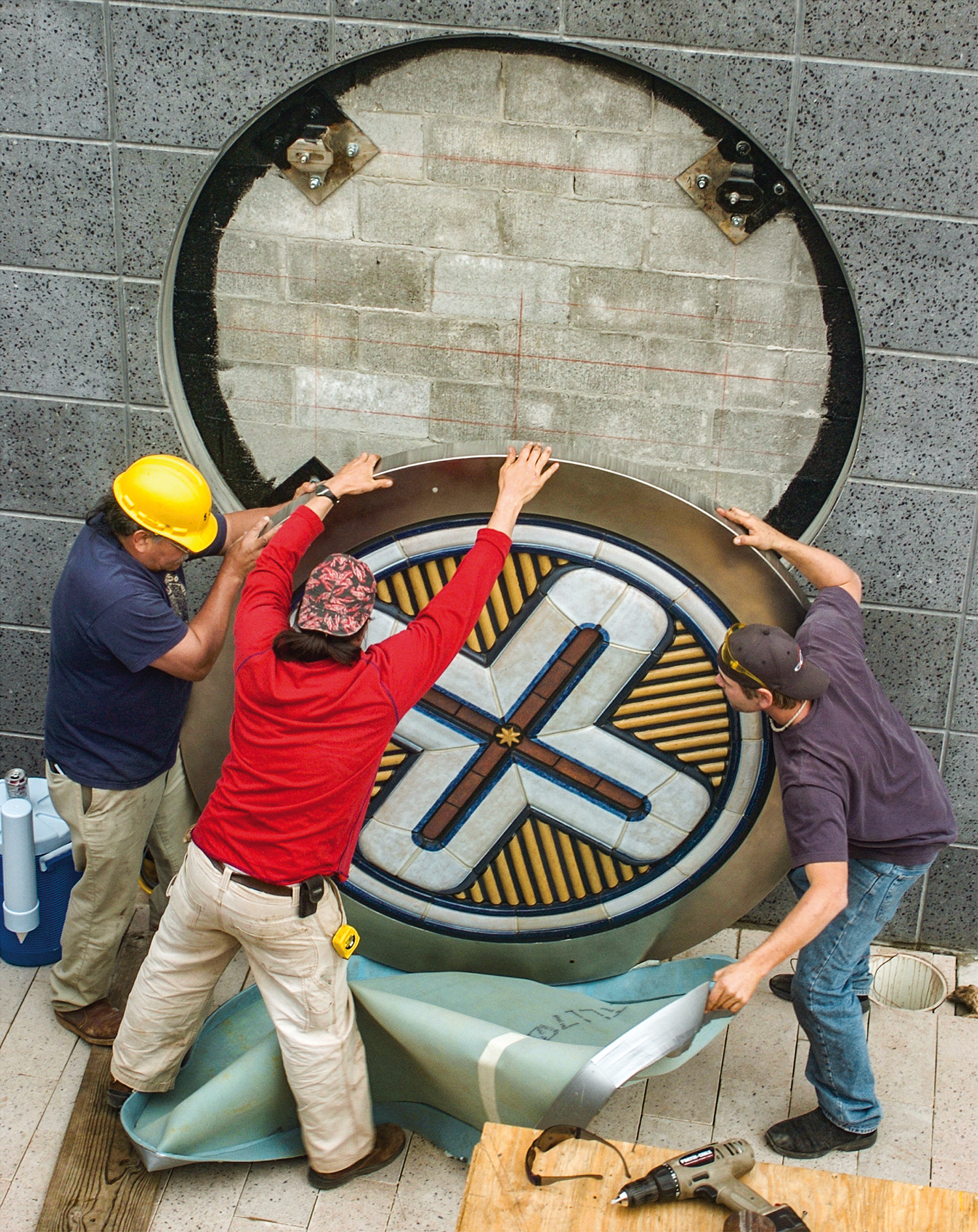
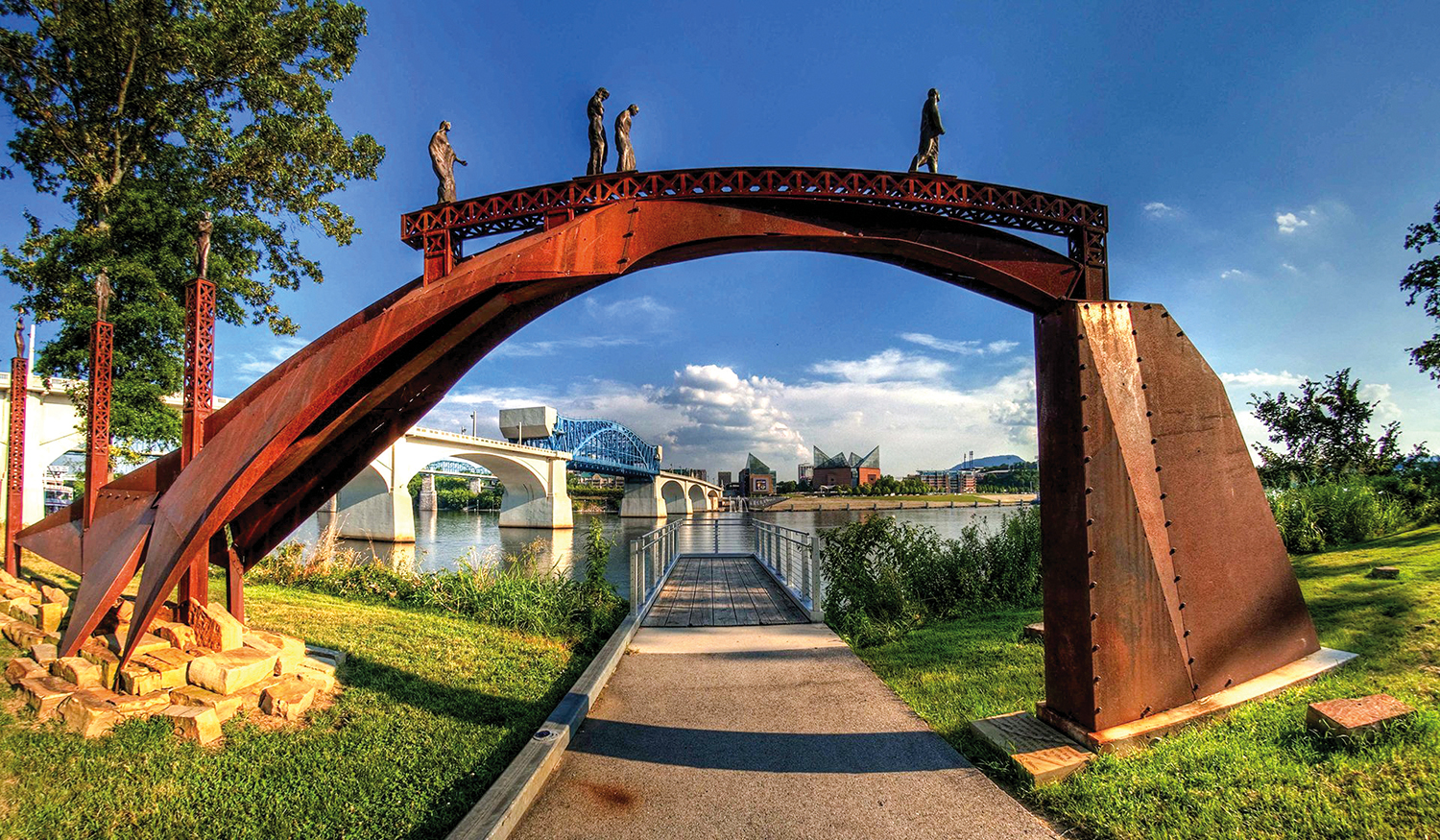
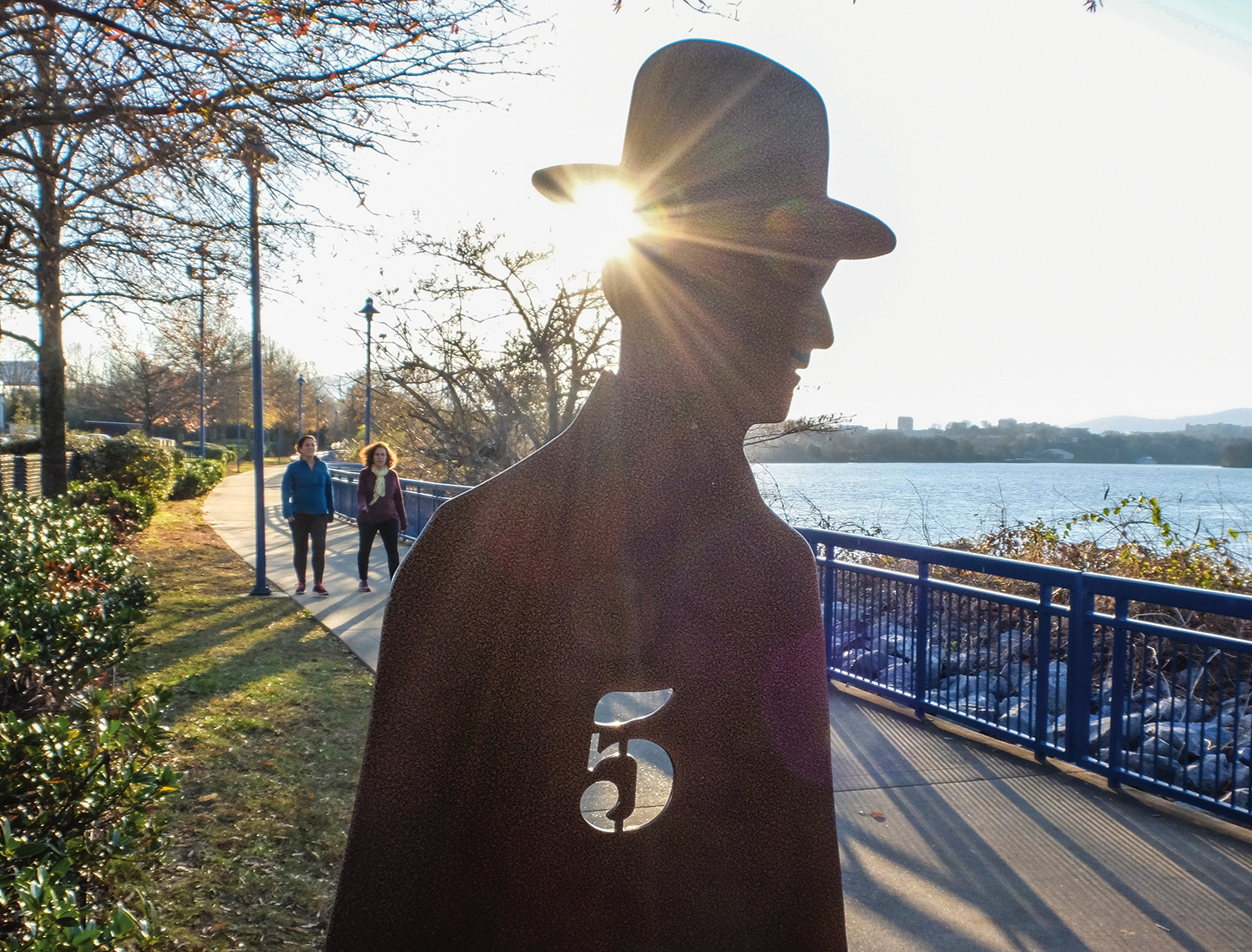
Staff photo by Matt Hamilton / Visitors play in the water at The Passage, a series of water-covered steps in downtown Chattanooga on Sunday, July 31, 2022.Staff photo by Matt Hamilton/ The “Coiled Serpent” feature in The Passage on Thursday, May 1, 2025. .The text reads: “The middle to late Proto-Historic period symbolic design represents So-Le-Ge-I, or Winged Serpent, who flew down from the sky, he was the source of ancient wisdom and traditional teachings for the Cherokees. The motif was used during the times of cross-cultural exchange and signifies the return to traditional customs to stop the loss of ancient knowledge and more tribal lands.”Staff photo by Matt Hamilton/ The “Strength of Life” feature in The Passage on Thursday, May 1, 2025. .The text reads: “From the Mississippian and early Proto-Historic periods, this stylized design is symbolic of the Cherokee’s spiritual counter-clockwise Stomp dance around the sacred fire. The smoke from the fire rises upward to the Creator and carries with it songs and prayers for strength in their lives. It also represents the spiral rotation of the Milky Way and Earth’s changing weather patterns.”Staff photo by Matt Hamilton/ The “Weeping Eye Mask” feature in The Passage on Thursday, May 1, 2025. .The text reads: “From the early Porto-Historic period, this motif is representational of the falcon warrior. Made from the lightning whelk shell used in ancient purification rituals, these masks were used to honor Dragging Canoe’s fallen warriors in their 17 year resistance to colonial expansion. They were believed to have the power to protect the wearer from harm during battle and were also worn during the cleansing ceremony.”Staff photo by Matt Hamilton/ The “Connections” feature in The Passage on Thursday, May 1, 2025. .The text reads: “This reworked design of the late Mississipian period represents the two roads that Indian people must travel. One is man’s time on earth, the Red Road or Indian Way. The other is the White Road of Eternity, which is guided by one’s spirituality. The circles begin at the time when we are conceived and the time when we cross over into the spirit world. Unity is shown by the basket weave pattern that is formed.”Staff photo by Matt Hamilton/ The “Warrior Birds” feature in The Passage on Thursday, May 1, 2025. .The text reads: “At the cultural peak of the middle Mississipean period, designs of two facing wild turkeys appeared. They symbolize the players of the opposing sides of the stickball game, known as the “Little Brother to War.” When a player threw the ball towards his goal, he would make a war whoop of the turkey gobble. The design also signifies the two facing mountains along the Tennessee River where Chattanooga is today.”Staff photo by Matt Hamilton/ The “Four Journey Directions” feature in The Passage on Thursday, May 1, 2025. .The text reads: “This refined symbol, dating from the early Mississippian period, represents the four directions the Cherokees would travel. Like birds of flight, they endured endless migration: North from their ancestral homeland; East toward the rising sun to a land that was only temporary; South where peace and contentment reigned for fourteen generations: and West where great upheaval, death and sorrow awaited.”Staff photo by Matt Hamilton/ The “Sun Circle” feature in The Passage on Thursday, May 1, 2025. .The text reads: “From the Early Mississippian period, this stylized design symbolizes the Holy Sun in the form of a sacred fire sent by the Creator. The outer circle represents eternity where the spirit goes after death and exists forever. The central cross depicts the four logs that keep the sacred fire alive. The star refers to the 7 Cherokee Clans. It is said Cherokees will survive as long as the sacred fire burns.”Staff Photo by John Rawlston Bill Glass, left, an artist from Locust Grove, Oklahoma, installs a Sun Circle Thursday afternoon, the first of seven discs depicting Cherokee culture to be displayed in The Passage, a ramp to the Tennessee River located between the Ocean Journey building and the Chief John Ross Bridge.Staff photo by Tim Barber.Siblings Madison Nunley, left, 5, and Mason Nunley, 6, enjoy splashing through the cool waters of the Passage Tuesday afternoon as late summer temperatures reach the mid-80s in downtown Chattanooga, Oct. 2, 2018. The water flows down concrete stairway toward the Tennessee River between the Tennessee Aquarium and Market Street.“Ascending Path” by Aaron Hussey and Brad Bourgoyne (Renaissance Park).Photo courtesy of Public Art Chattanooga..WufooStaff photo by Tim Barber.Daily Five-milers — Farah Shekari, left, and Mashid Mahdavi approach their marker, a steel sculpture by Jim Collins, on the Tennessee Riverwalk as colder than average temperatures are warmed by consistent sunshine late Thursday. ” We do five miles everyday,” Mahdavi said.
Bill Glass, along with his son, Demos Glass, and other Oklahoma-based Cherokee artists, built the pieces that make up The Passage, including the seven disks that adorn the wall along the descending staircase by the Tennessee Aquarium’s Ocean Journey building and the figures playing the Cherokee game of stickball that face Ross’s Landing.
When people visit The Passage, Bill hopes that they recognize that the Cherokee are still here.
“We’re not totally wiped off the face of the Earth,” he says. “We’re still around. We’re still kicking.”
The Passage was the father-son duo’s first public art project. For seven months, the team put pedal to the metal to get the work done, Bill says.
Once unveiled, it was clear to the artists that, based on community interaction, The Passage was going to be a good draw to the downtown area, helping revitalize that part of town, Demos says. The artwork was part of Chattanooga’s 21st Century Waterfront plan, which focused on connecting downtown attractions to the city’s riverfront. As people visit The Passage and interact with it, the work might open their eyes, Demos says.
“Public art is a great opportunity, because you get different exposures,” he says. “It’s for everyone. It’s not just that you collect it and put it in your house or whatever. It’s obtainable to anybody who happens to stumble across it.”
The Passage is about inclusivity through storytelling, according to Carmen Davis, senior director of Chattanooga’s Office of Arts, Culture and Creative Economy. The Passage is the largest Native American public artwork in the Southeast, she says.
“The artwork allows us to tell difficult stories in beautiful ways and to acknowledge a people and a history that were here before Chattanooga was even Chattanooga,” Davis says.
During the warmer months, water flows down the steps of The Passage, gathering at the bottom where a representation of Little Water Spider, a spirit who is said to have brought fire to the Cherokee, sits. It’s a common sight to see people playing in the water, and with the Tennessee River just steps away, the vision of the 21st Century Waterfront is on full display.
While The Passage is one of Chattanooga’s most prominent waterfront artworks, it is hardly the only one. In the city’s vast collection of public art, many works can be found at and around the Tennessee River. For example, a series of nine mile markers by Jim Collins line the Riverwalk, and various other sculptures dot the path. Bronze statues of a female figure, created by Daud Akhriev, stand at the south side of the Market Street Bridge for pedestrians and motorists to see before they cross the river. At night, the Chattanooga Pier is lit up by the Luminous Light Masts by James Carpenter. And at Coolidge and Renaissance parks, you’ll find public art galore, such as the iconic blue rhino statue by John Petrey, all a stone’s throw away from the river.
“We can’t top the natural beauty that the city has, but we can enhance it,” Davis says of Chattanooga’s public art. “So it just helps people connect more deeply to the space around them.”