
(Editor’s note: One in a series)
In August 1929, Chattanooga News writer John T. Whitaker profiled “the father of aviation in Chattanooga,” John E. Lovell, the man for whom the new airport then being planned would be named. The chairman of the Chattanooga Chamber of Commerce’s Aviation Committee for over 10 years, Lovell admitted that he seldom “gets in an airplane except on rare occasions. I’ve turned down more than 200 invitations.”
Lovell was president of the first aero club in Chattanooga and the force behind a campaign for the issuance of $250,0000 in bond financing for the new airport on the Haskins farm site near the Chickamauga railroad station. While flying was not a favorite hobby, he championed aviation’s importance and consistently promoted Chattanooga’s role in the future of air travel in the nation.
Following the organization of a local chapter of the National Aeronautical Association — with Mark K. Wilson as president and 40 active members — Lovell believed Chattanooga was poised for passenger air service and an influx of tourists to the Tennessee Valley’s incredible historic and natural sites. The A-1-A municipal airport being constructed in 1929 was the realization of Lovell’s dream that Chattanooga would one day be a major airline headquarters for travel between New York City and the South. “I’ve got but one interest in aviation, and that’s to see Chattanooga take her rightful place.”
Lovell remained true to that dream. When asked by the Chattanooga Daily Times on Jan. 1 for his “New Year’s Wish,” he responded, “My biggest hope for Chattanooga during the coming year is that the new airport will be as successful as experts tell us it will and that it will be of great benefit to all of Chattanooga and the surrounding territory.” Two days later, the Chicago Daily News helped deliver on Lovell’s wish by reporting: “The new airport at Chattanooga, Tennessee is nearing completion, and it will be one of the finest in the country.”
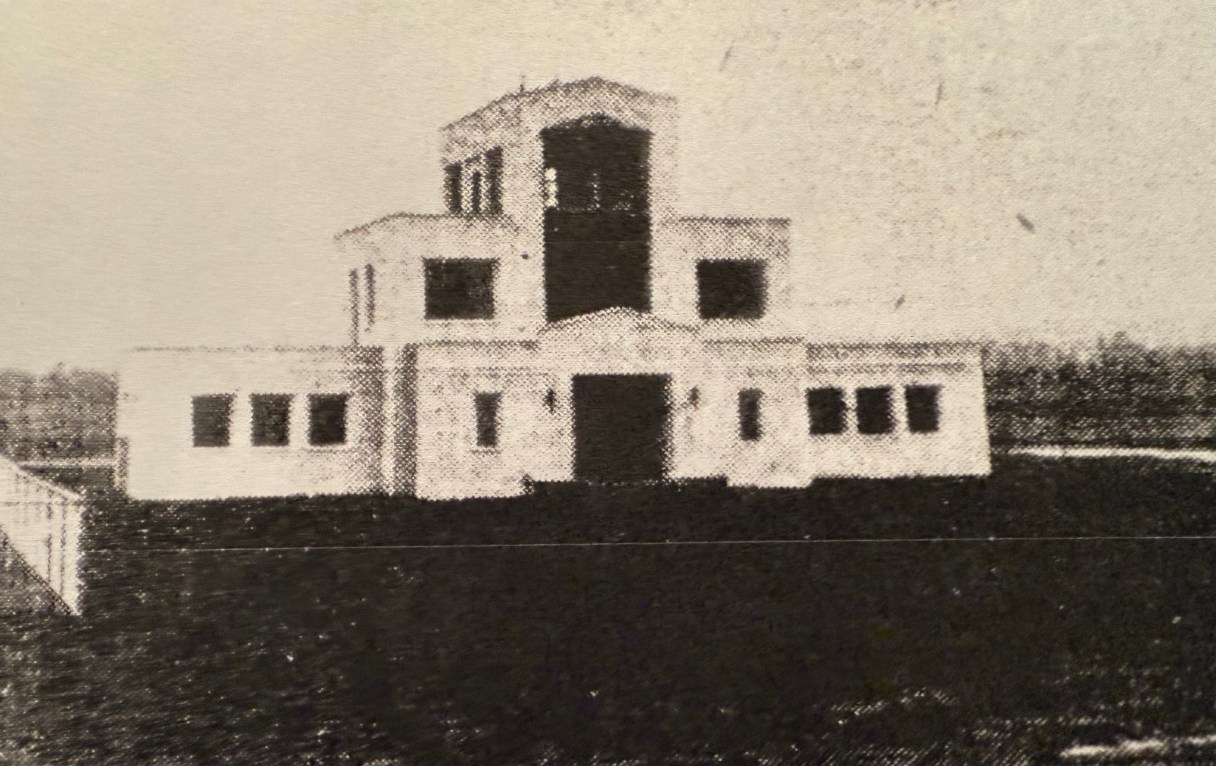
By February 1930, the terminal and hanger at Lovell Field were completed. The terminal, three stories high and constructed of concrete, featured a two-story window on the front which provided a view of the entire field. Large waiting rooms had been fitted with comfortable seating. A fueling station built near the terminal building served both automobiles and airplanes. The hangar constructed primarily of steel was to the right of the terminal and faced west. Modern lighting features made the airport hangar and runways visible from the air. The addition of an improved wind indicator shaped like an airplane instead of a sock was much more accurate, thereby improving safety. A small heating plant also located on the site served the buildings. Commissioner Cash indicated that two more weeks of good weather would allow the contractors to complete the fields.
As Lovell Field neared completion, the aviation world inspected the new airport. “Lovell Field, Chattanooga’s new airport, will be far ahead of any aviation field in the South and will compare favorably with any in the country,” commented Myron S. Hutchinson, Whittelsey Manufacturing Company, the manufacturer of Avian Aircraft. Accompanied by Capt. Edwin W. Romberger, both flyers were “high in their praise.” Romberger added that “no one familiar with airports over the country could possibly find any criticism of Lovell Field,” noting that it was larger than “nine-tenths of other airports, that it has unequaled ground facilities and is the ideal distance from the city.” Urging local leaders to publicize the new field, Hutchinson speculated that pilots would “go out of their way in order to stop here. Building this new airport is one of the most progressive moves Chattanooga ever made.”
Radio beacons enabling pilots to maintain their course at night or in dense fog were approved for Lovell Field. George D. Barr, assistant airways engineer of the Aeronautics Division, U.S. Department of Commerce, arrived in Chattanooga on Feb. 13 to select the site. Two radio loops, with a central tower of four masts, would claim about 350 square feet near the field. “The two loops constantly send out two sets of signals, covering a strip approximately five miles wide. One signal is a dot and dash; the other is a dash and dot. If the pilot veers in either way, he will hear only one signal, allowing him to adjust course.” Barr also commented that Lovell Field “compared favorably with any in the country.”
Next move — publicity.
Linda Moss Mines is the official Chattanooga and Hamilton County historian. For more on local history, visit Chattahistoricalassoc.org.