
(Editor’s note: One in a series)
By February 1929, Chattanooga leaders were considering a site for a modern municipal airport, having received a report from the aeronautics branch of the United States Department of Commerce. In airport specialist William A. Centner’s report, he described in detail three possible sites, and Mayor Ed Bass announced he would schedule a special conference for the City Commission and other interested parties to discuss the options.
The Chattanooga Daily Times had learned that Centner had focused on three sites: Marr Field; a farm owned by Dr. J.B. Haskins, seven miles from Chattanooga in Chickamauga, Tennessee; and the Fryar farm on Lee Highway. Other sites visited and considered included properties identified as Montague, Watkins, Brainerd, Chattanooga Estates and Hampton; all were eliminated due to serious problems. In the report, the specialist recommended the Chickamauga site for “first consideration” and the Fryar farm second.
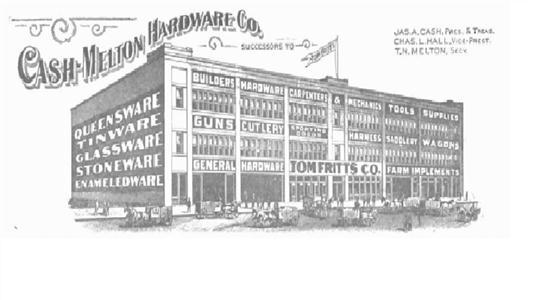
Commissioner James Albion Cash, providing oversight from the commission, explained that three requirements were necessary for a Class 1 airport: 1) contour of the ground, making it adaptable for landing and takeoff; 2) locations for increased lighting enhancing safety; and 3) acreage for hanger facilities, equipment and additional facilities.
Cash refused to state a preference, instead focusing on the importance of making the right decision based on facts. He acknowledged that he had “made it his business to become thoroughly acquainted with a large number of tracts of land offered … the greater portion of [which] is not suitable and could not even at great expense be placed in condition to provide Chattanooga with a Class 1 airport.” Cash did share that in Centner’s report, Marr Field was “practically eliminated from consideration” due to the field’s contour of land and the surrounding territory, which eliminated expansion but increased danger for flyers.