
Tennessee’s key automotive industry, soon touting four automakers building vehicles, would stand as the biggest sector in the state affected by tariffs on Mexico and Canada, a political scientist who follows international issues says.
The sector’s manufacturing and supply chain are expected to see an impact from tariffs, Steven Livingston, associate director of Middle Tennessee State University’s Business and Economic Research Center, says.
“Automotive would be the biggest one,” he says, though other kinds of manufacturing in Tennessee would have to deal with the results of tariffs.
Livingston says tariffs put into place the way President Trump has described are inflationary.
“It’s difficult to imagine importers or manufacturing companies … could possibly not raise those prices,” he says.
Stuart McWhorter, commissioner of the Tennessee Department of Economic and Community Development, says nearly 143,000 people are employed in the auto sector in Tennessee at about 900 businesses.
He says 88 of the state’s 95 counties have an auto sector-related business.
“This continues to be a robust industry in our state,” he says.
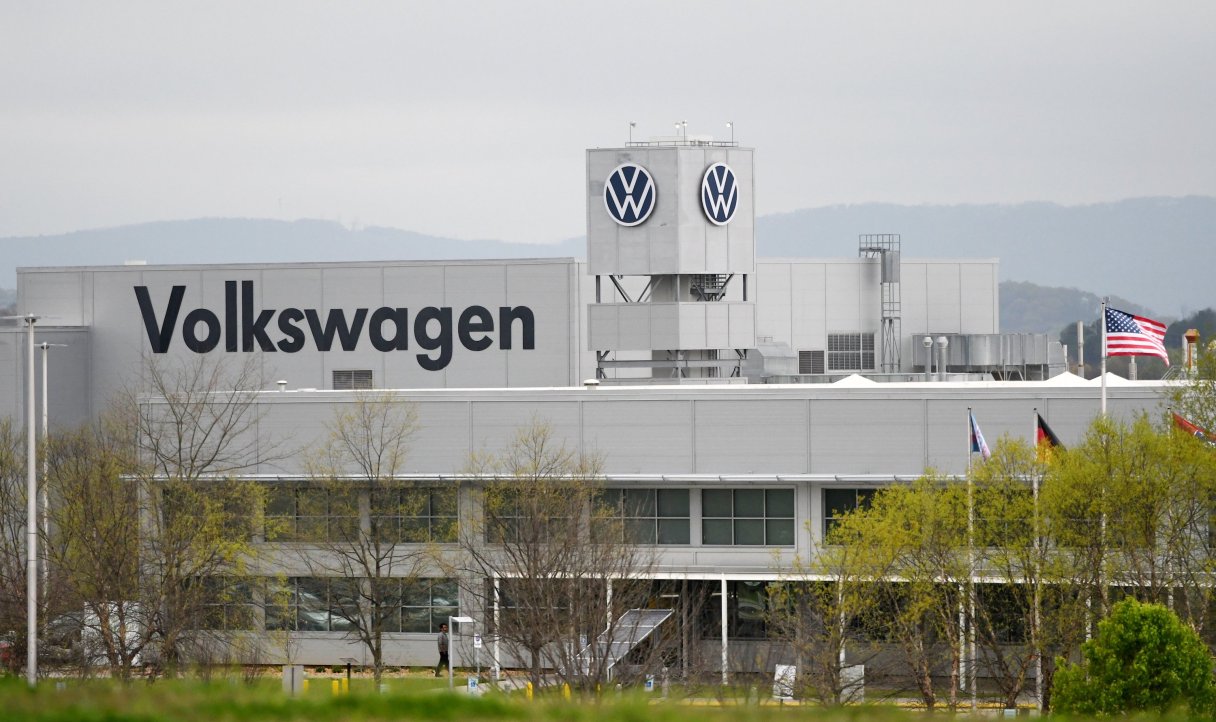
Volkswagen, the major Chattanooga employer with 5,500 workers at its Enterprise South industrial park assembly plant, has weighed in on the tariff issue and posted a warning.
The company is “concerned about the harmful economic impact” of tariffs on American consumers and the international automotive industry, a spokesperson at Volkswagen AG says.
The automaker says it remains a strong advocate for free and fair trade.
“We firmly believe that open markets have been a driving force behind global economic growth and prosperity, fostering innovation and creating opportunities for businesses and communities worldwide,” the spokesperson says. “Our more than $10 billion investment in the U.S. market is a testament to this belief.”
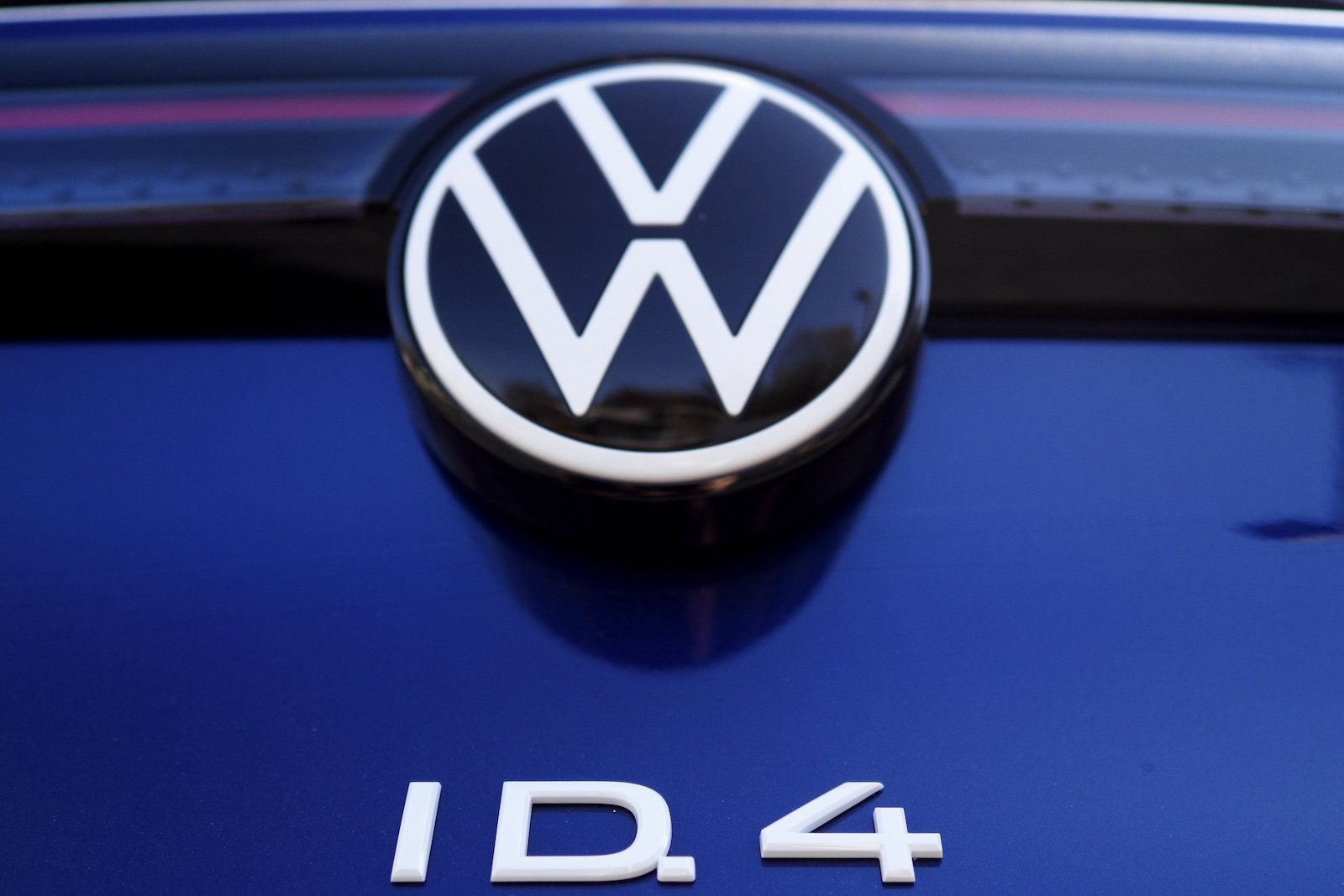 Staff file photo / Volkswagen branding is seen on the lift gate of a Volkswagen ID.4 in Chattanooga on March 30, 2021. The electric vehicle is assembled in Chattanooga.
While many automakers, including Volkswagen, have operations in Mexico, Canada also boasts a vibrant auto sector.
Two years ago, Volkswagen chose Canada as the site for its first North American battery cell factory as the company continues to push its electric vehicle offensive.
Volkswagen Group and its battery company, PowerCo, selected St. Thomas in Ontario, Canada, as the factory for cell manufacturing, with the expected production start in 2027, according to the company.
VW says Canada offers “ideal conditions” for the gigafactory, including the local supply of raw materials and wide access to clean electricity.
Volkswagen already produces the all-electric ID.4 SUV in Chattanooga. The company says it also has plans to upgrade assembly plants in Puebla, Mexico, and Silao, Mexico, for the assembly of EVs and potentially for EV components such as electric motors in the second half of the decade.
Jennifer Safavian, chief executive of the automotive trade group Autos Drive America, says Tennessee is attractive to international car companies and suppliers due to a business-friendly climate from state and local entities.
“In addition, Tennessee is home to a number of top-tier universities, creating a talent pipeline that directly feeds our member companies’ workforces at the manufacturing, R&D and managerial levels, among others,” she says.
Safavian also cites access to reliable and affordable energy that helps keep production costs low for the companies.
The trade group says more than 100,000 jobs were generated by international automakers in Tennessee, including direct and indirect employment and dealership slots. Every direct manufacturing job created by the automakers supports an estimated 4.3 added posts in the state, Autos Drive America says.
READ MORE
* Penny wise: Chattanooga money experts on how to avoid financial pitfalls
* Available balance: 30 banks in metro Chattanooga want your business