
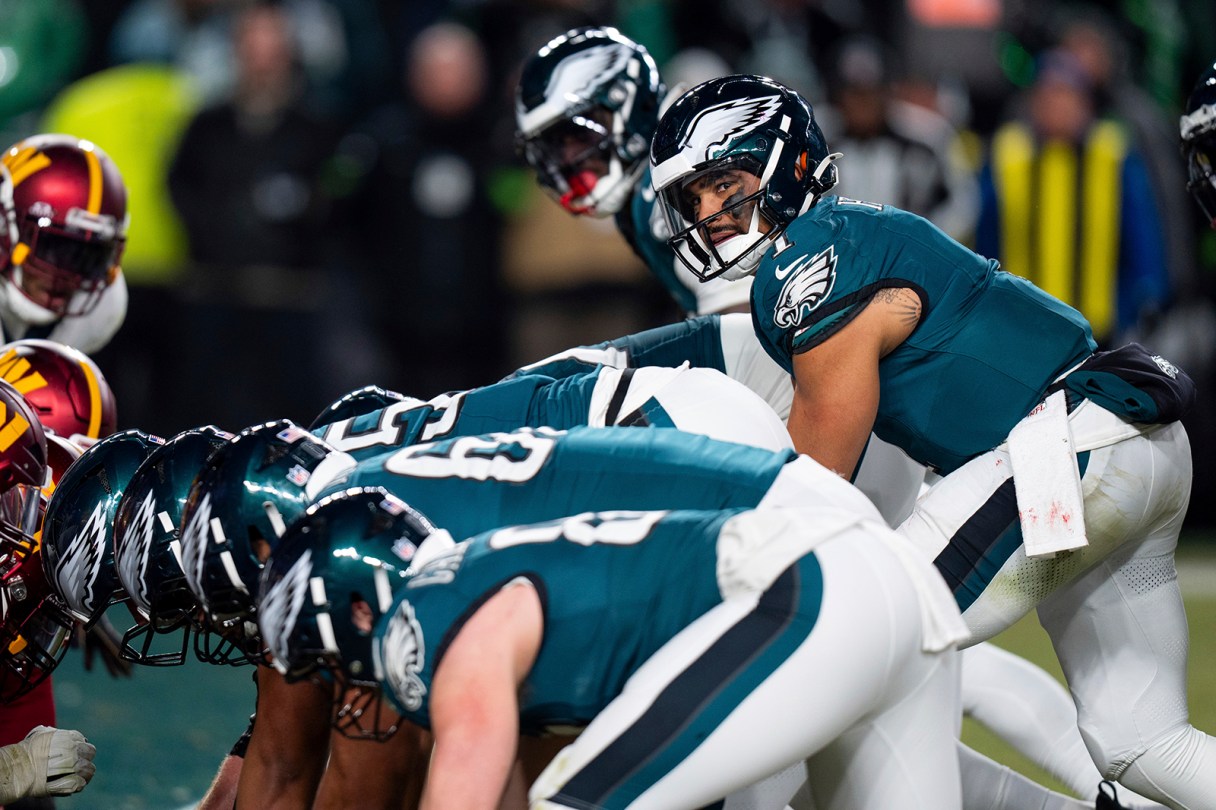
EAGAN, Minn. — After facing stiff resistance around the NFL, the tush push managed to move the chains and gain a fresh set of downs.
Owners of the league’s teams narrowly failed to pass a proposal to prohibit the polarizing short-yardage strategy at their spring meetings in Minnesota on Wednesday, keeping the rulebook as is — and pleasing the Philadelphia Eagles, the reigning Super Bowl champions who have made it a signature play for their offense with quarterback Jalen Hurts sneaking the ball.
The ban on offensive players from pushing, pulling, lifting, grasping or encircling a runner was supported by a 22-10 vote, according to a person with knowledge of the proceedings who spoke on condition of anonymity to The Associated Press because the details weren’t made public. That’s two votes short of the three-quarters majority required by league bylaws to pass it.
The health and safety committees for both the players and the owners as well. as the league’s competition committee all unanimously recommended the proposal, which was formally brought forward by the Green Bay Packers at the most recent league meetings in Florida seven weeks ago but tabled for further discussion. Such a ban previously existed and was lifted 20 years ago because it was deemed too difficult to consistently enforce.
“We don’t set a low bar,” said Atlanta Falcons CEO Rich McKay, the chairman of the competition committee. “There was a lot of support for it, a lot of discussion about it. I’ve been in that room numerous times where we’ve had these types of discussions, where one team ends up being, in their mind, more impacted than others. It still takes 24 votes, and in this case those votes were not there.”