
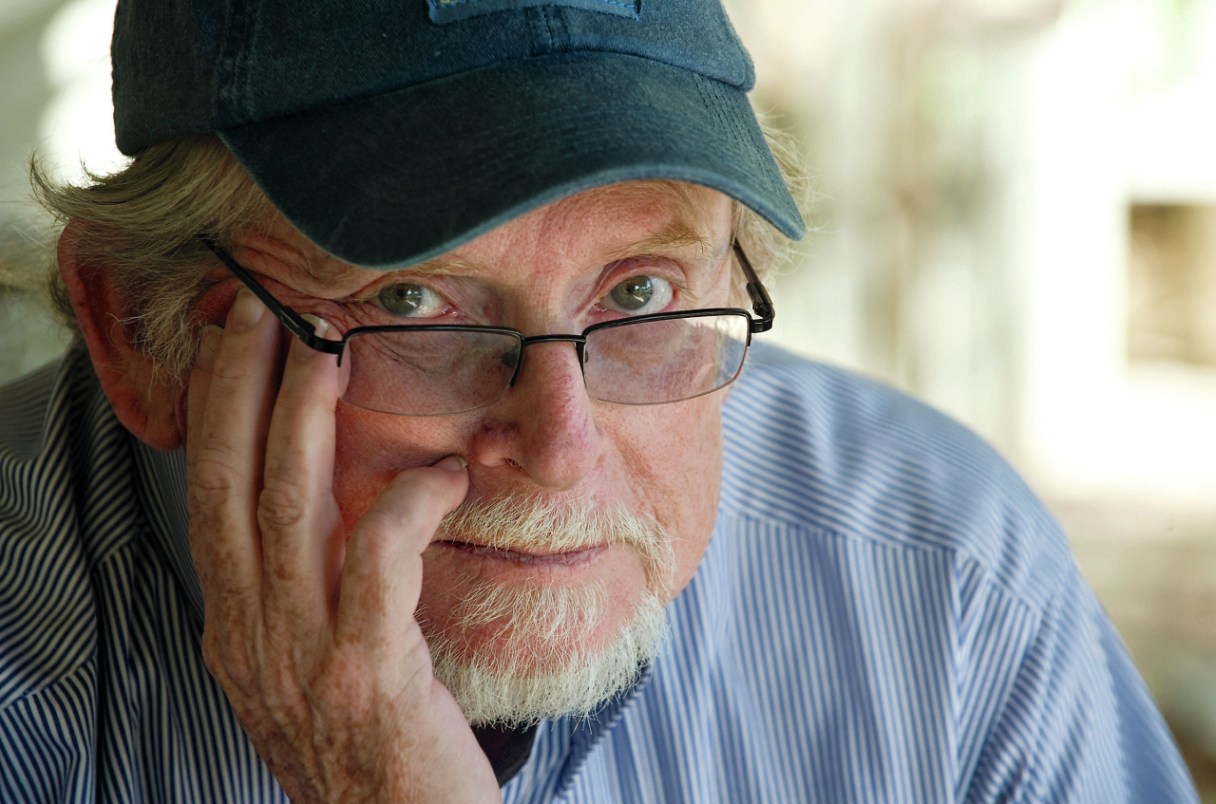
“THE FATE OF OTHERS” by Richard Bausch (Knopf, 352 pages, $29).
A mother and father find themselves at odds over how to handle their troubled adult son, a relapsed alcoholic they believe may have killed someone during a blackout. A history professor nearing retirement recalls his childhood religiousness and his break with the Catholic Church before visiting an old friend with a terrible secret. A woman shelters at home with her husband during COVID-19 while fearing for the life of the lover separated from her by the pandemic. A graduate student hosts his wife’s father, a famous poet, and ends up as the older man’s sidekick on a booze-soaked escapade involving public urination and an ill-advised attempt to jump a train. A boy, taken to Cuba by his parents in 1949 in their futile attempt to start a new life, is sent out for a newspaper and stumbles into a friendship of sorts with none other than Ernest Hemingway.
These are but a sampling of the various conceits in the stories which make up “The Fate of Others,” the newest collection from Richard Bausch, one of our most gifted and prolific literary artists and an acknowledged master of the short-story form.
In these stories, Bausch writes in a style and with a sensibility that feels comfortingly familiar, evoking his own early work and that of his peers writing what came to be known as “New” or “Dirty” Realism — Carver, Beattie, Ford, Wolff, Hempel, Williams, Gaitskill.
Several of the stories are set during the pandemic or in its early aftermath, but they are not “about” COVID or political polarization or any issue other than the mysteries of the human heart. But for the inevitable markers of time, they might have been written by Chekhov (indeed, in one story, Bausch introduces a gun, which ends up not being fired — a perhaps intentional subversion of the “Chekhov’s Gun” principle: the idea that a gun should not appear in a story unless someone’s going to shoot it).