
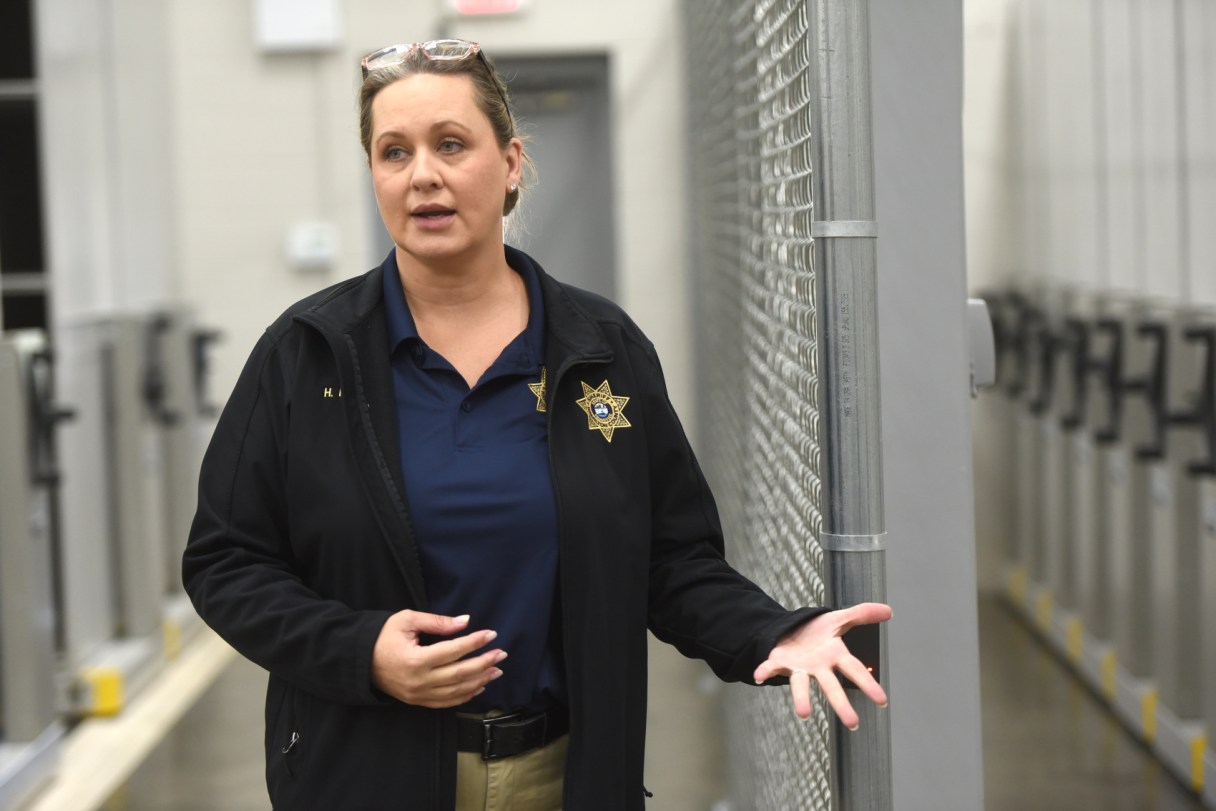

The Hamilton County Sheriff’s Office in early 2026 will move its property and evidence operations next to its law enforcement operations center, into a warehouse newly renovated at a cost of about $600,000, according to officials.
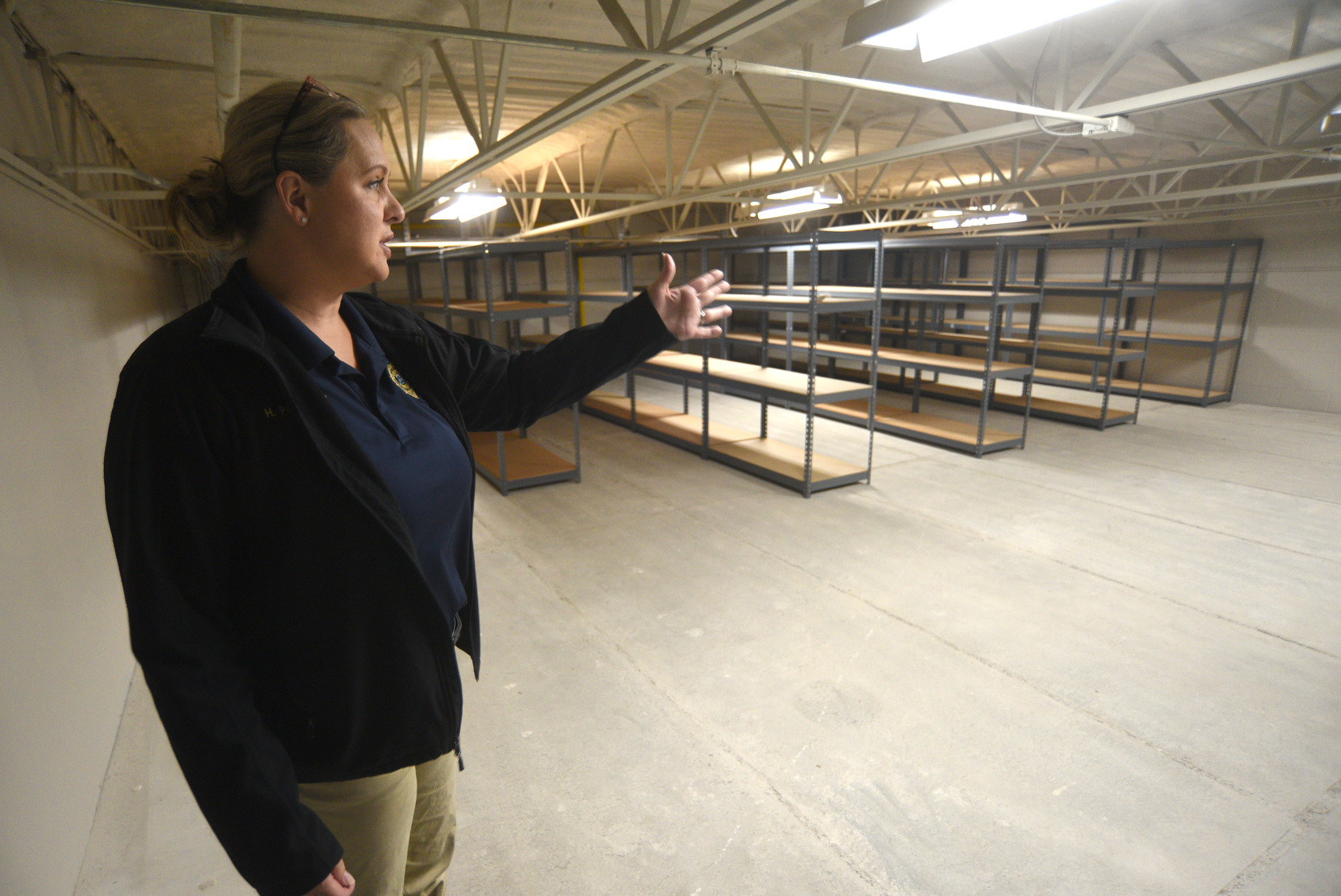
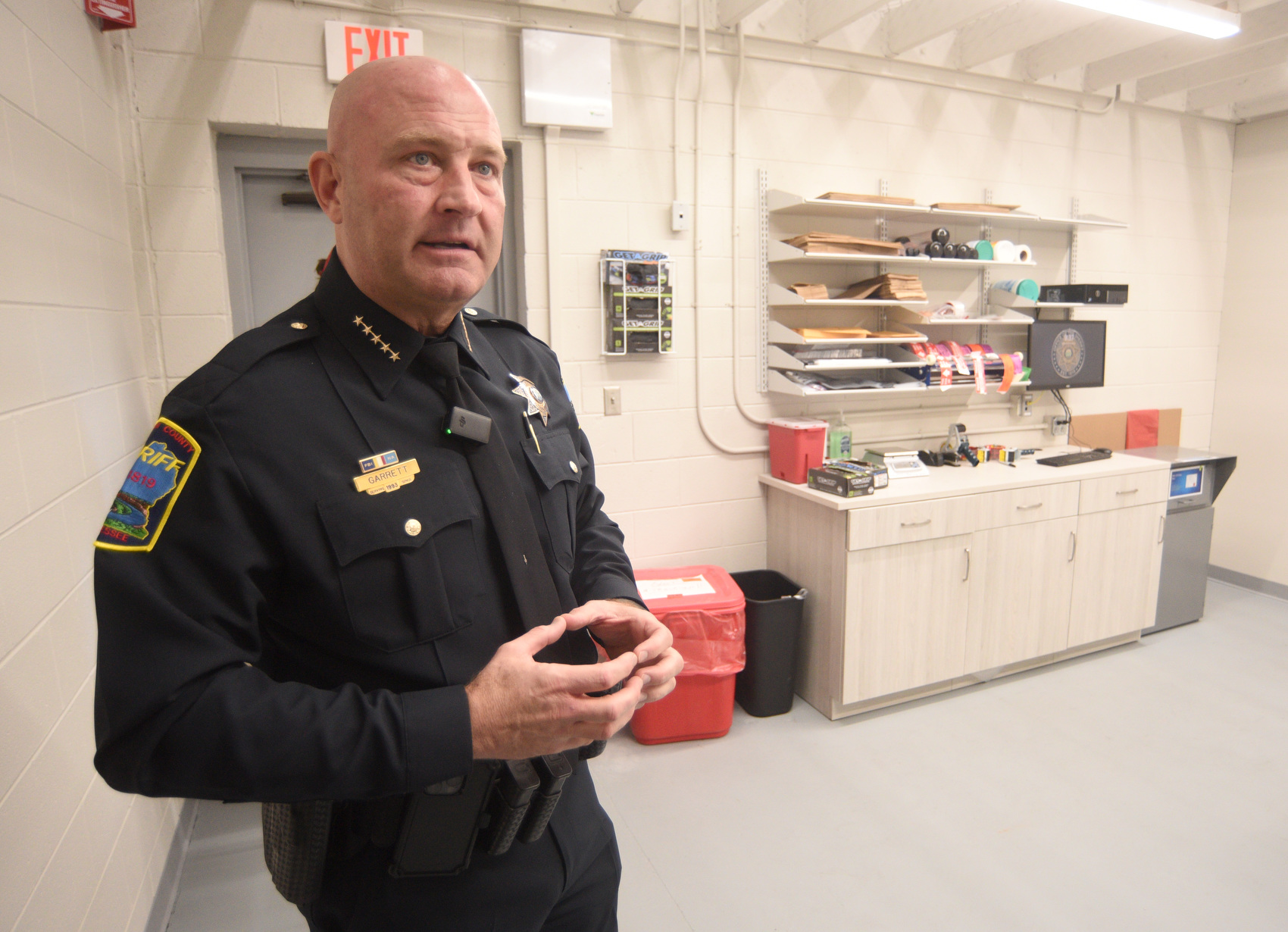
On Wednesday, Sheriff Austin Garrett gave reporters a first look at the new facility on Preservation Drive, which, at about 9,100 square feet, is more than double the size of the current center on Dayton Boulevard, he said. The move will help centralize the department’s operations, while ensuring that issued equipment, seized property and evidence are all properly separated and stored.
“They’ve really worked and knocked it out of the park,” Garrett said. “And I’m proud to show it off, like a new car driving around.”
Garrett said work began on moving the evidence and property facility in 2023. The new facility, supported by County Mayor Weston Wamp and the Hamilton County Commission, also means those operations will be near the Tennessee Bureau of Investigation’s regional office, Garrett said.
During the tour, the facility’s fresh paint smell, 1980s pop music playing from standing speakers and its high ceilings with fluorescent lights made it feel like a commercial warehouse. Yellow-painted railings and security fences reminded visitors that access would be controlled by key card, video camera and sign-in logs once evidence is moved in.
Hamilton County Sheriff’s Office debuts new, soon-to-open evidence and property facility
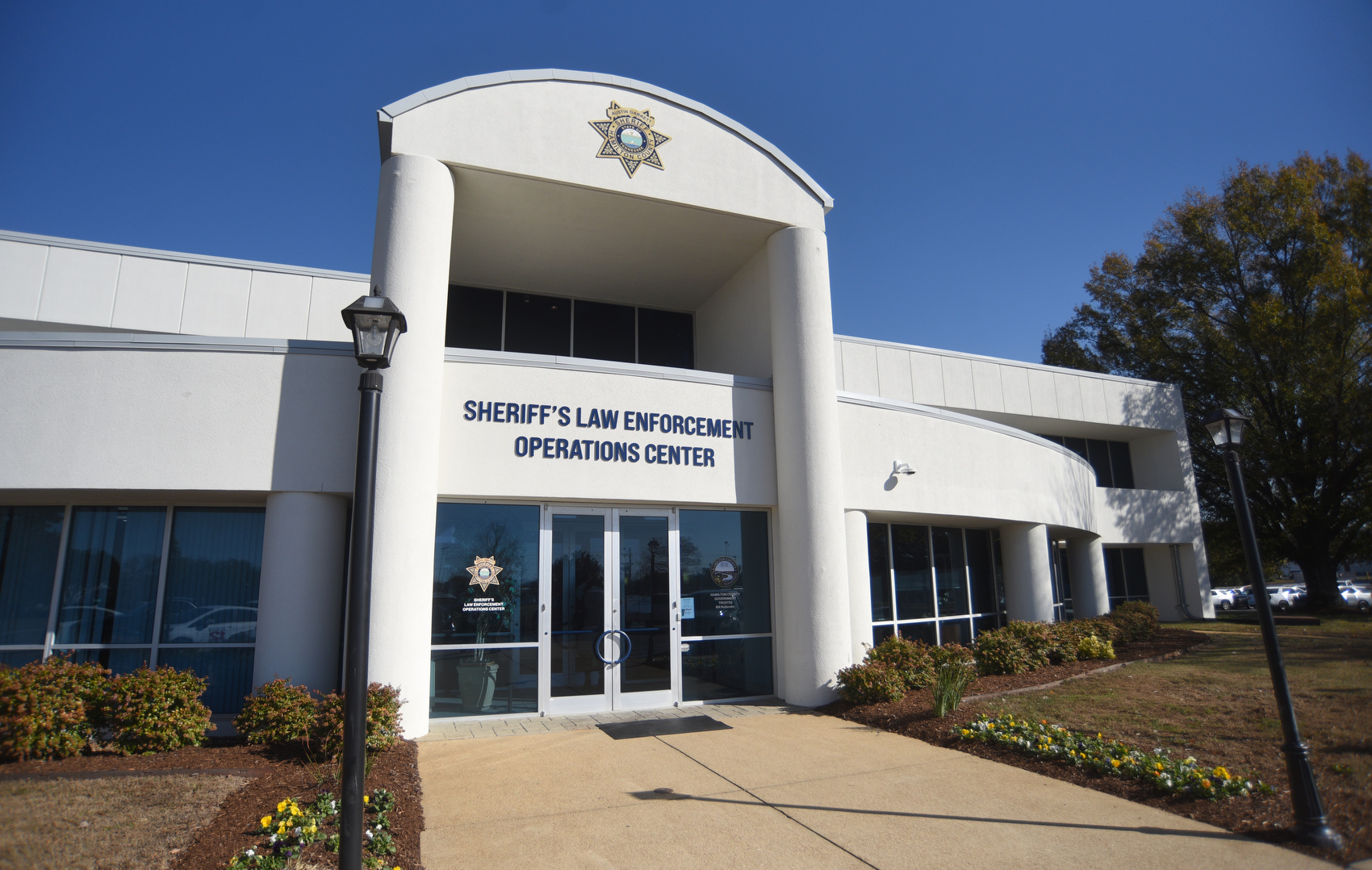

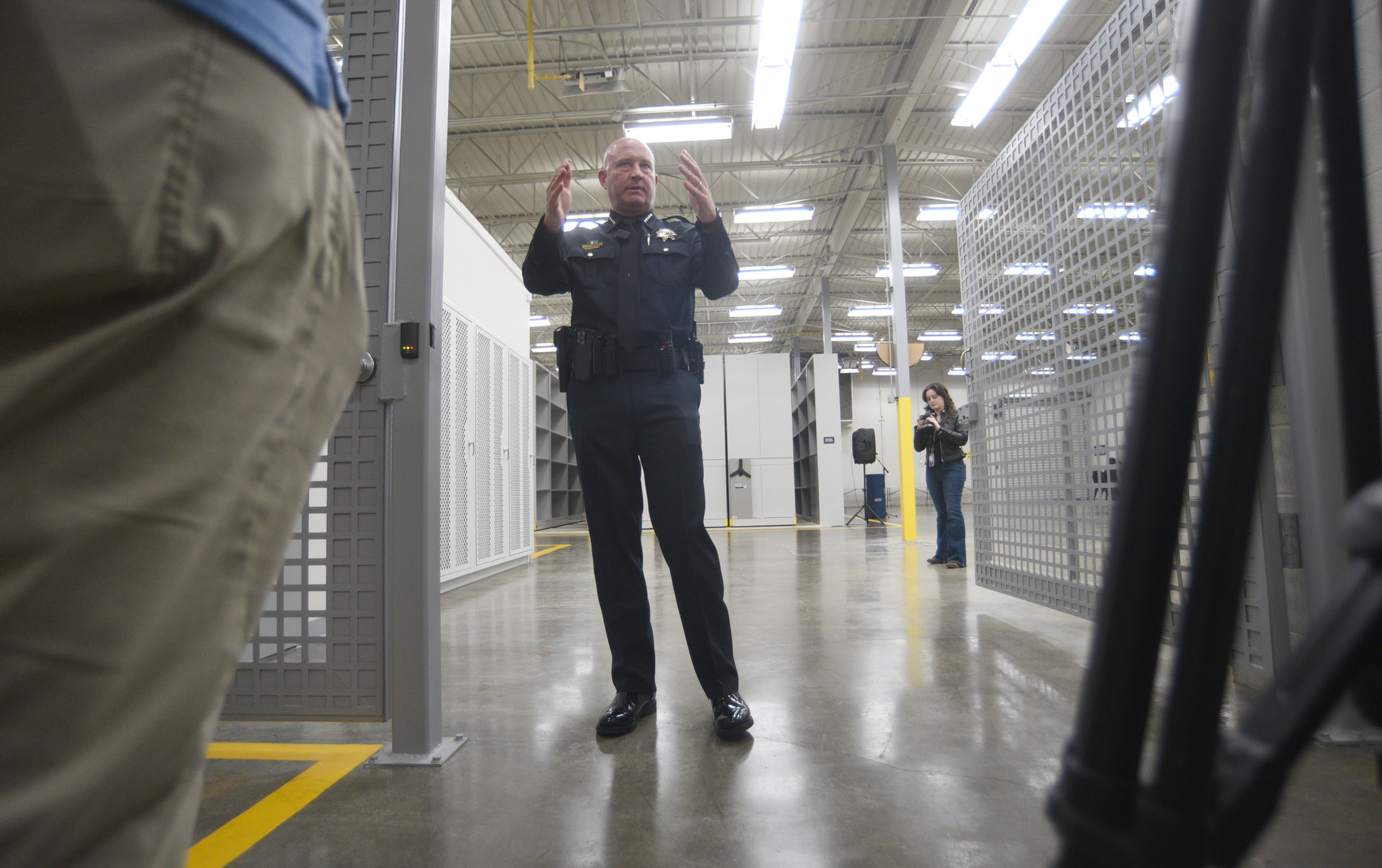

“So anybody coming into this has to have electronic access, and even I don’t have access at my request,” Garrett said. “If I need in here, then my staff, who actually are responsible for it, will get me in and walk me through.”
The renovations to create a new property and evidence facility will wrap up around a year and a half after Hamilton County opened its new jail building, which came under the county’s control in 2020.
STORAGE WOES
In the new warehouse, officials played a 20-minute construction video that showed the old storage space and the creation of the new evidence and seized property facilities. Clips showed boxes haphazardly stacked on top of each other almost to the ceiling, and overflowing weapon racks, leaving some rifles and shotguns to be stored in garbage bins.
The old building on Dayton Boulevard was a K-Mart in the 1980s, Garrett said. The heat and air do not work properly, and the roof leaks.
“We actually had — it wasn’t homicide evidence — but we had some evidence that got wet previously in that building,” Garrett said inside the new facility. “You can’t have that.”
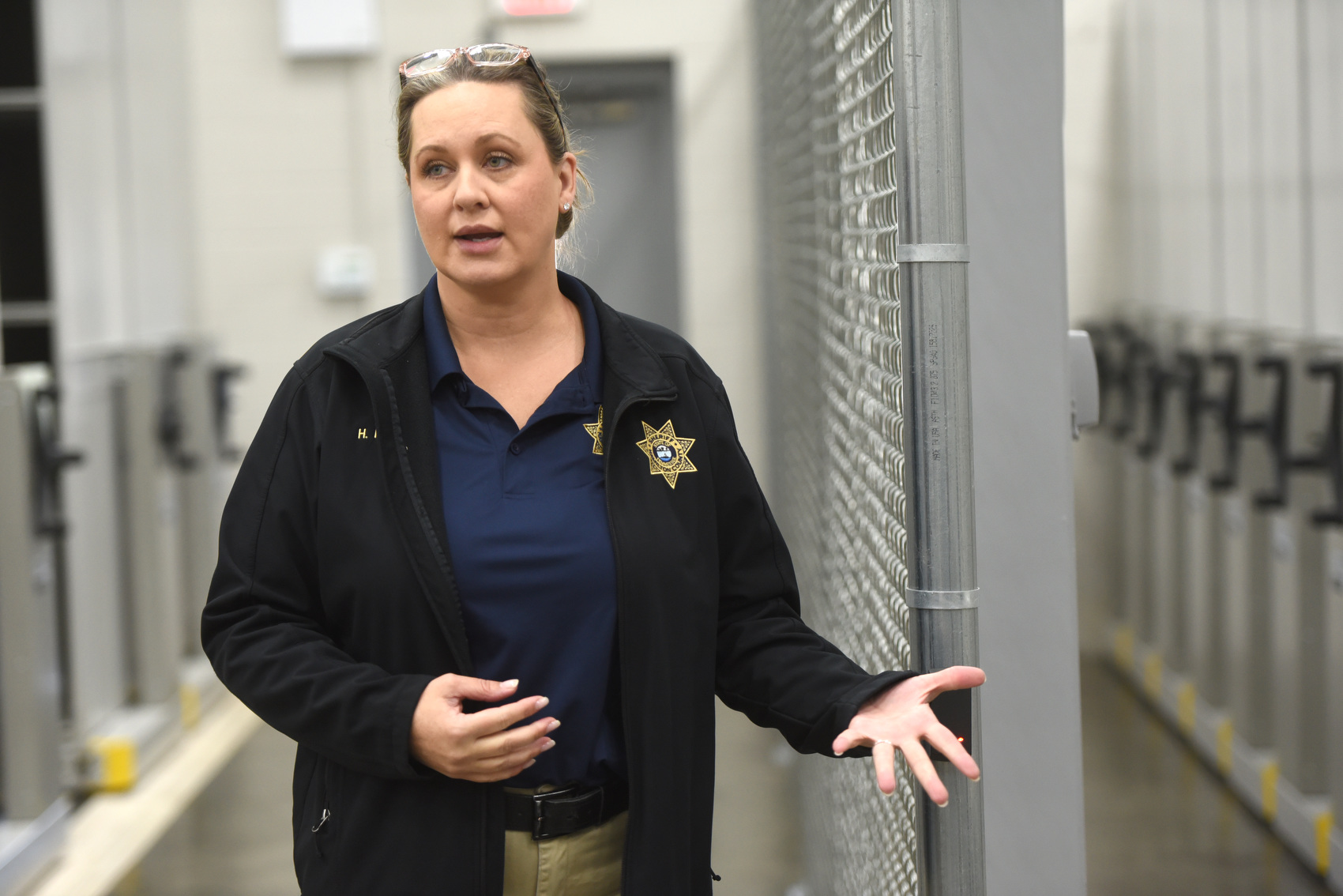
Property and evidence supervisor Heather Parker said the old facility was like a rat’s maze — one that was setting the department up for failure.
“It’s not a matter of if, it was a matter of when,” she said. “Because we’re so much — it’s just convoluted, it is the best organized chaos that you can find.”
Currently, the department has 600 various rifles, shotguns and long firearms stored, with many double-stacked. With the straps getting tangled, it can be dangerous, she said, but there’s no risk of injury with the new workspace.
(SIGN UP: Get breaking news in your inbox as it happens by going to timesfreepress.com/breaking)
FIREARM STORAGE
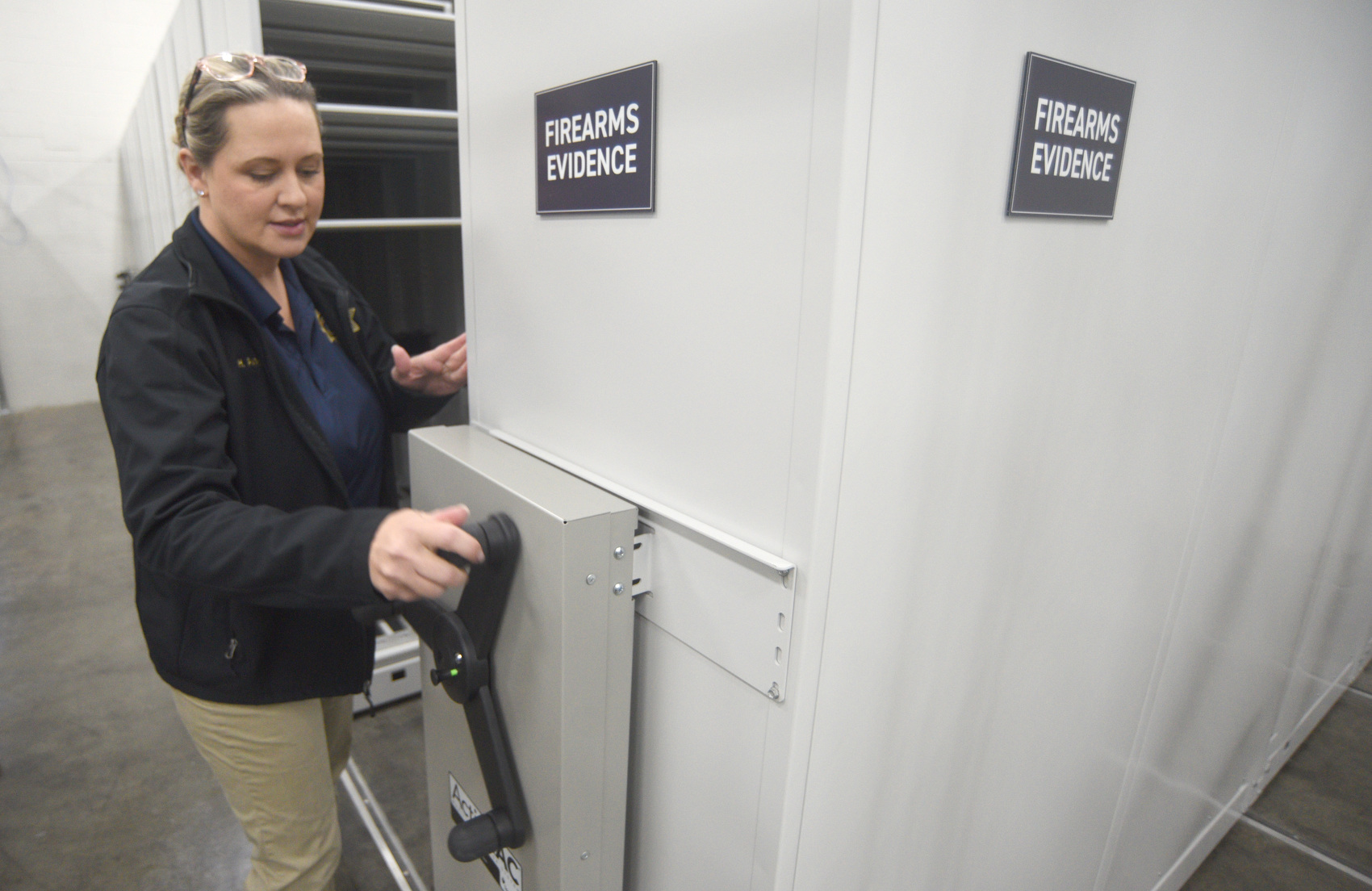
The new firearms racks inside the facility can hold around 800 long guns and hundreds of handguns, Parker said. The guns are locked, and scan logs will track who accesses them. Weapons come into the department’s possession for several reasons, from safekeeping to evidence for crimes. When firearms can be legally released, employees work through a lengthy process to verify ownership and conduct background checks.
“Any of our homicide, death-related cases, those are held for 100 years,” Parker said, “or until the defendant is deceased, whichever comes first.”
If a court orders a weapon forfeited, it is auctioned through a third party, and the proceeds are divided by the type of case between the county’s general fund or its drug fund. While auctions are helpful to alleviate county spending, Parker said, the team’s priority is returning weapons, provided the courts agree.
“A lot of people think that when we have those options themselves, that the Sheriff’s Office is just, you know, taking items to sell so we have the money, and that’s not the case,” Parker said.
EVIDENCE CONTROL
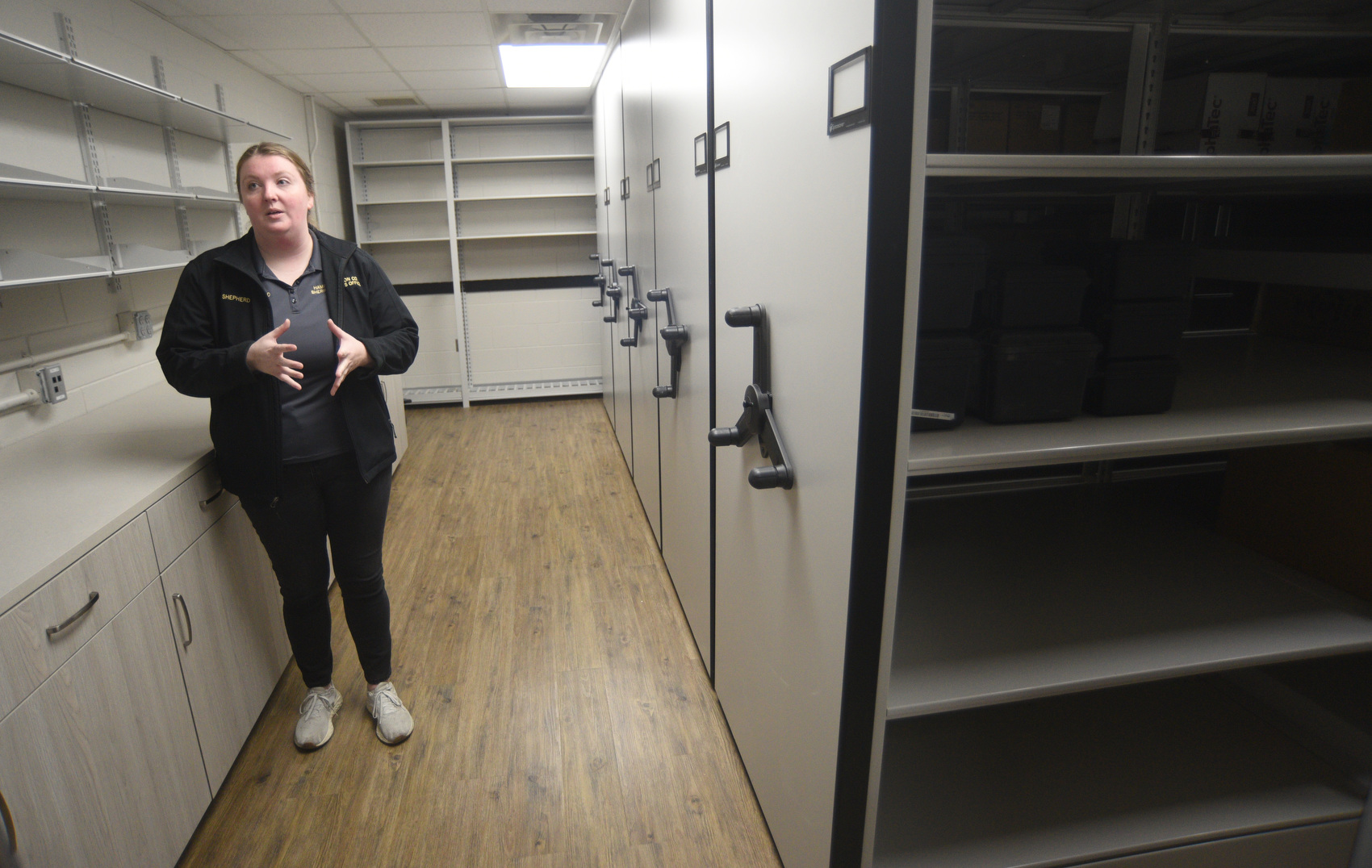
The new storage spaces include rolling shelving systems and multiple rooms, allowing the department to separate evidence and property physically by case type. When deputies arrive at the facility, they record and package materials in one room, place the items in a locker, and clerks on the other side of a security door open the locker from behind.
Second-story lofts help create multiple spaces for storage. One of the new building’s dedicated rooms will store sexual-assault evidence, outfitted with electrical outlets for deep freezers and refrigerators for biological materials, like tissue samples or blood.
“And here’s a little fun fact, because you guys might not know,” Parker said. “We actually had, on a couple of different cases, dogs, like complete dogs that were frozen in the deep freezer.”
The dogs were stored to help pursue animal cruelty charges, Parker said.
Another room is set aside for death-related evidence, and the drug storage space — which Garrett called the drug vault — is divided into two zones: one for active cases and another for materials cleared by courts for destruction.
The building also includes loading-dock bays for vehicles and double doors wide enough to move bulky evidence, like furniture. Impounded vehicles will also be stored at the new facility, Garrett said.
There will be room for rearranging for efficiency, Parker said. Everyone on her team has had input on designing, set-up and planning from the beginning, she said.
While contractors were needed for some work, Garrett said, Sheriff’s Office maintenance employees and part-time, retired law enforcement officers worked on the project to lower costs to taxpayers. The $600,000 figure, he said, was the cost for purchase orders for equipment, like paint and materials, which didn’t include his staff’s time.
(READ MORE: Hamilton County sheriff announces salary increases for patrol, corrections deputies)
LOOKING AHEAD
The next planned phase of construction for the facility is an evidence-processing bay for vehicles. When a vehicle is involved in a crime, he said, it gets taken inside and processed at the old facility, but Garrett said he wants to consolidate the work. As of Wednesday afternoon, the department hadn’t responded to a follow-up emailed question about when that project might begin.
The Sheriff’s Office has also applied for a grant with the state to build a training facility for the entire department, he said. That would incorporate corrections academy and law enforcement training.
The new processing facility won’t speed up investigations, Garrett said, but it will help efficiency and give the county room to grow. Also, a better workspace will improve employee hiring and retention, he said. He wants the county’s employees to be excited when they go to work.
“I believe this is a state-of-the-art property and evidence retention facility,” Garrett said. “There’s not one like this anywhere around here.”
Contact breaking news reporter Mason Edwards at medwards@timesfreepress.com or 423-757-6409.