New federal lead contamination standards may affect Chattanooga neighborhoods
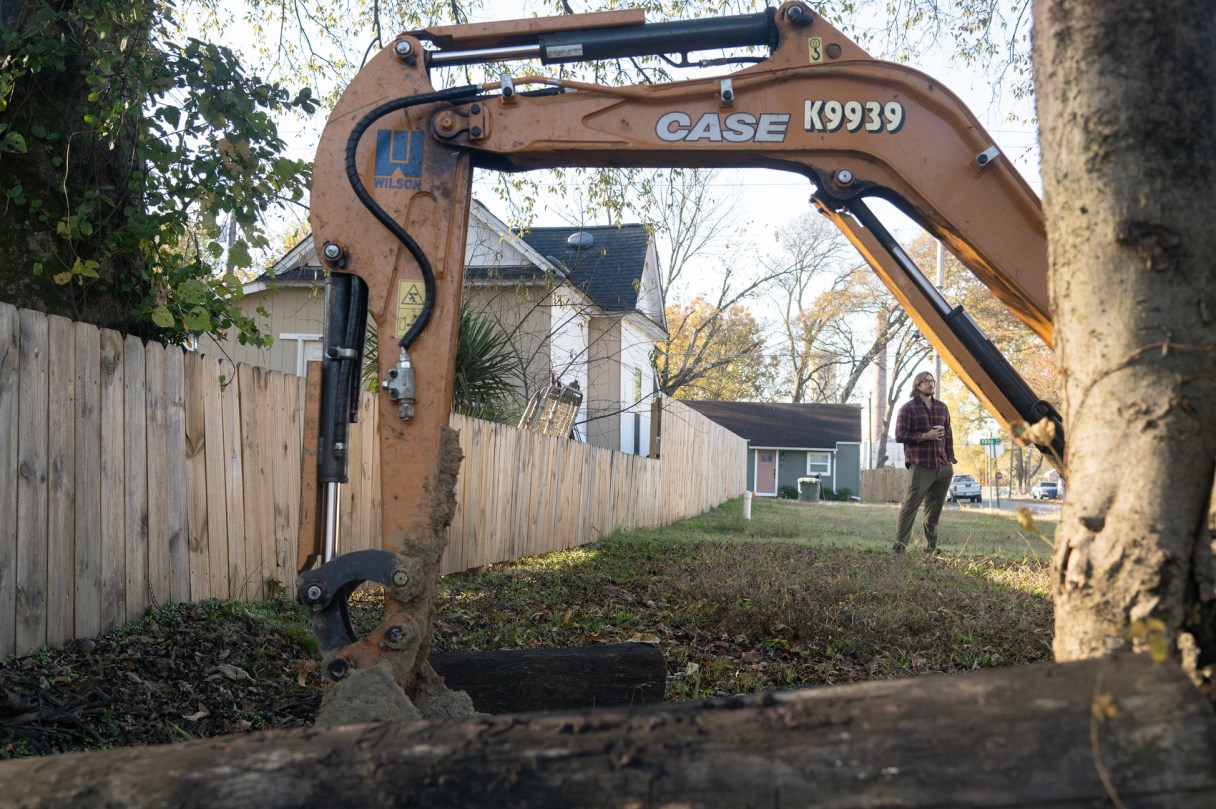
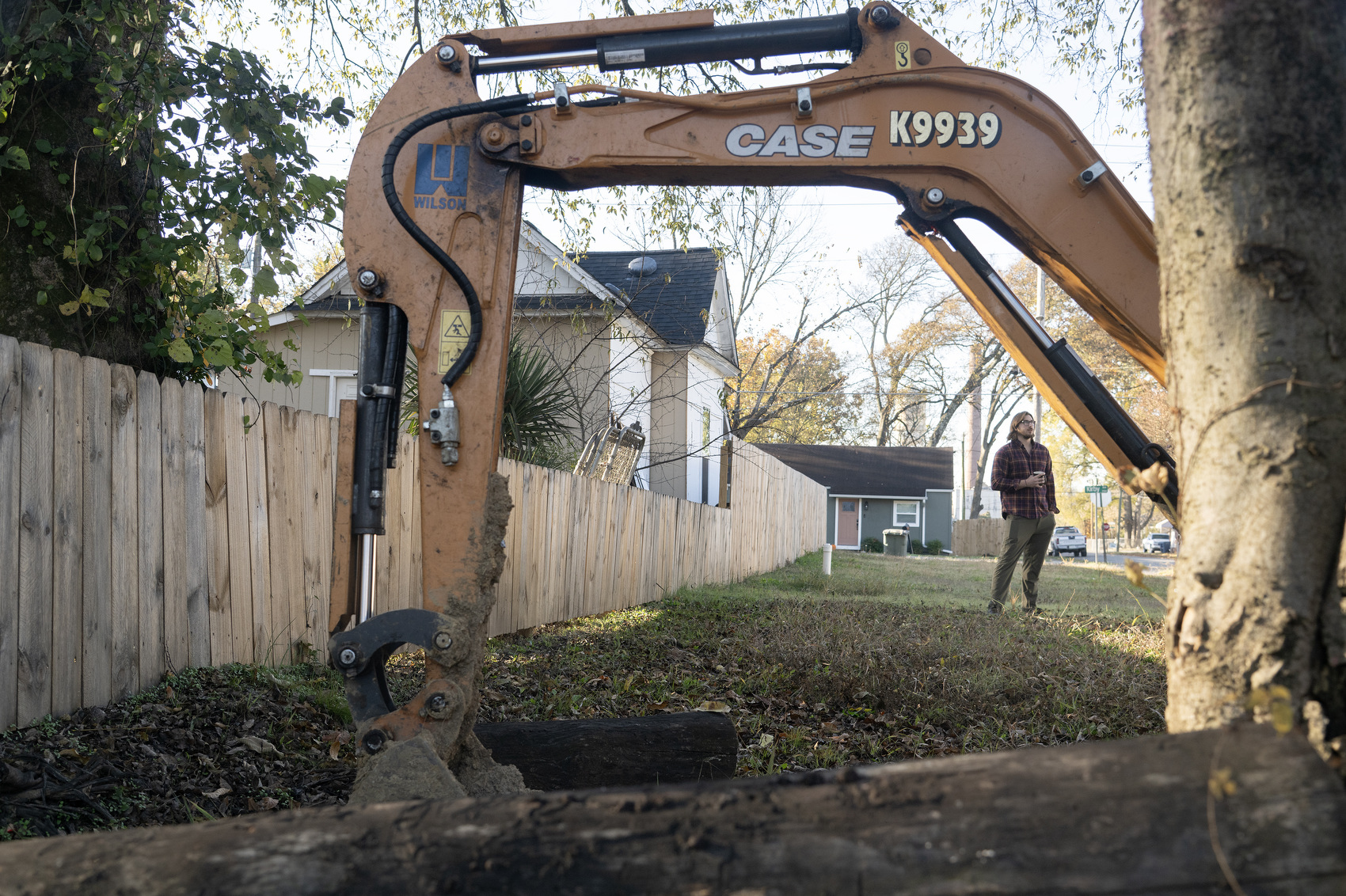
Staff photo by Seth Carpenter / Ridgedale resident Kenneth Hyman looks at an excavation vehicle left by contractors of the Environmental Protection Agency on a lot contaminated by lead on Kirby Avenue. Hyman has been urging the EPA to resume its work decontaminating the lot so that he can transform the space into a community garden.
By Siena Duncan 11 min read
Years ago, Michael John Weldon qualified for federal help to remove lead-contaminated soil from his Highland Park backyard. But with new protocols released in October by the Trump administration, it’s unclear whether homes like his will get that same help.
The U.S. Environmental Protection Agency announced new guidelines raising the threshold for what it calls the regional removal management level — the concentration of lead in soil that would flag concern for the agency — from 200 parts per million to 600 parts per million.
For a little more than a decade, the EPA has been testing for lead-contaminated soil in Chattanoogans’ backyards and offering free removal services if they qualify for cleanup. The project first broke ground with a few yards in 2017 and has expanded to several neighborhoods, costing hundreds of millions of dollars. The places involved are a federally registered superfund site — an area that contains hazardous waste that threatens public health and the environment.
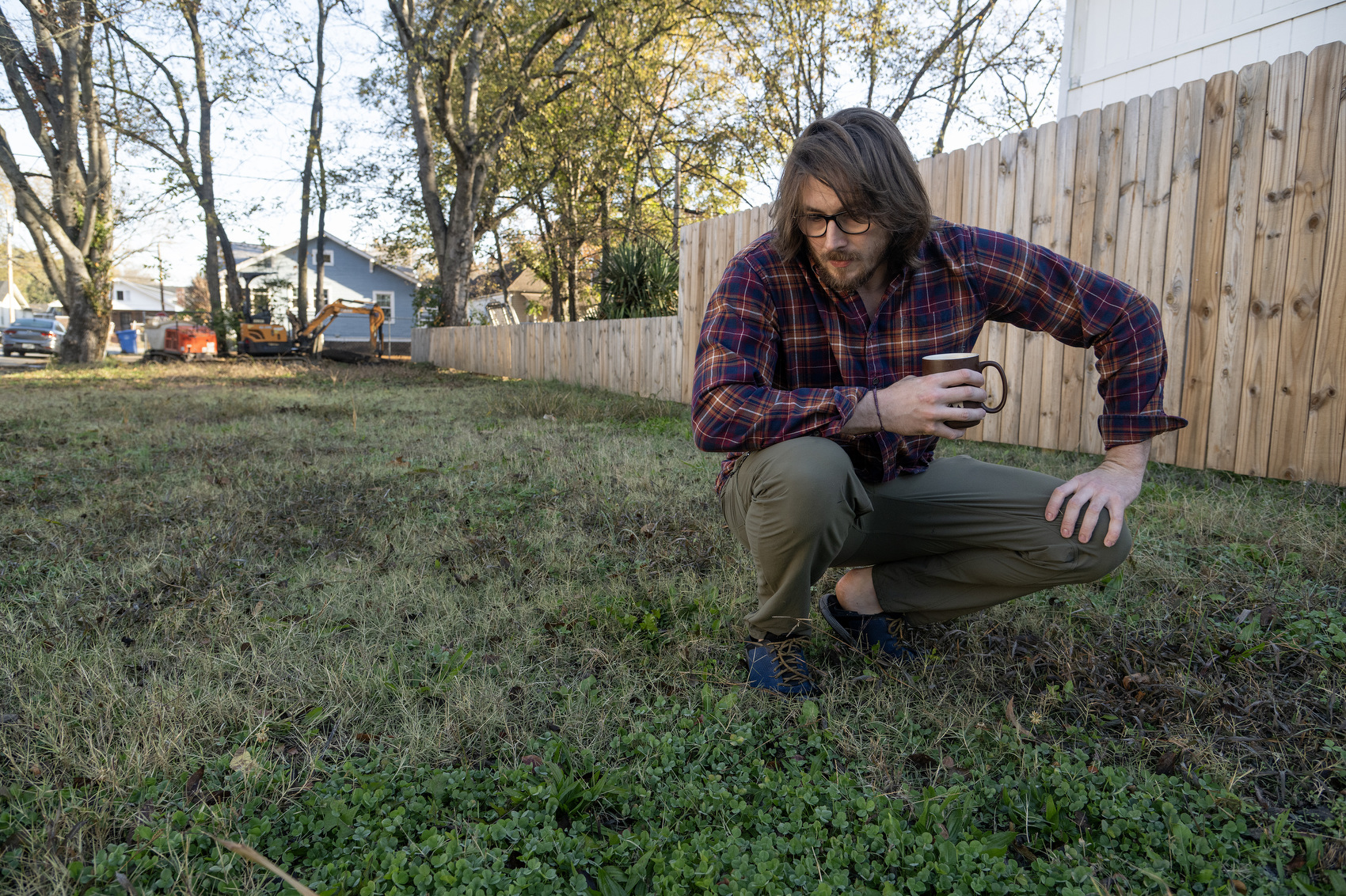
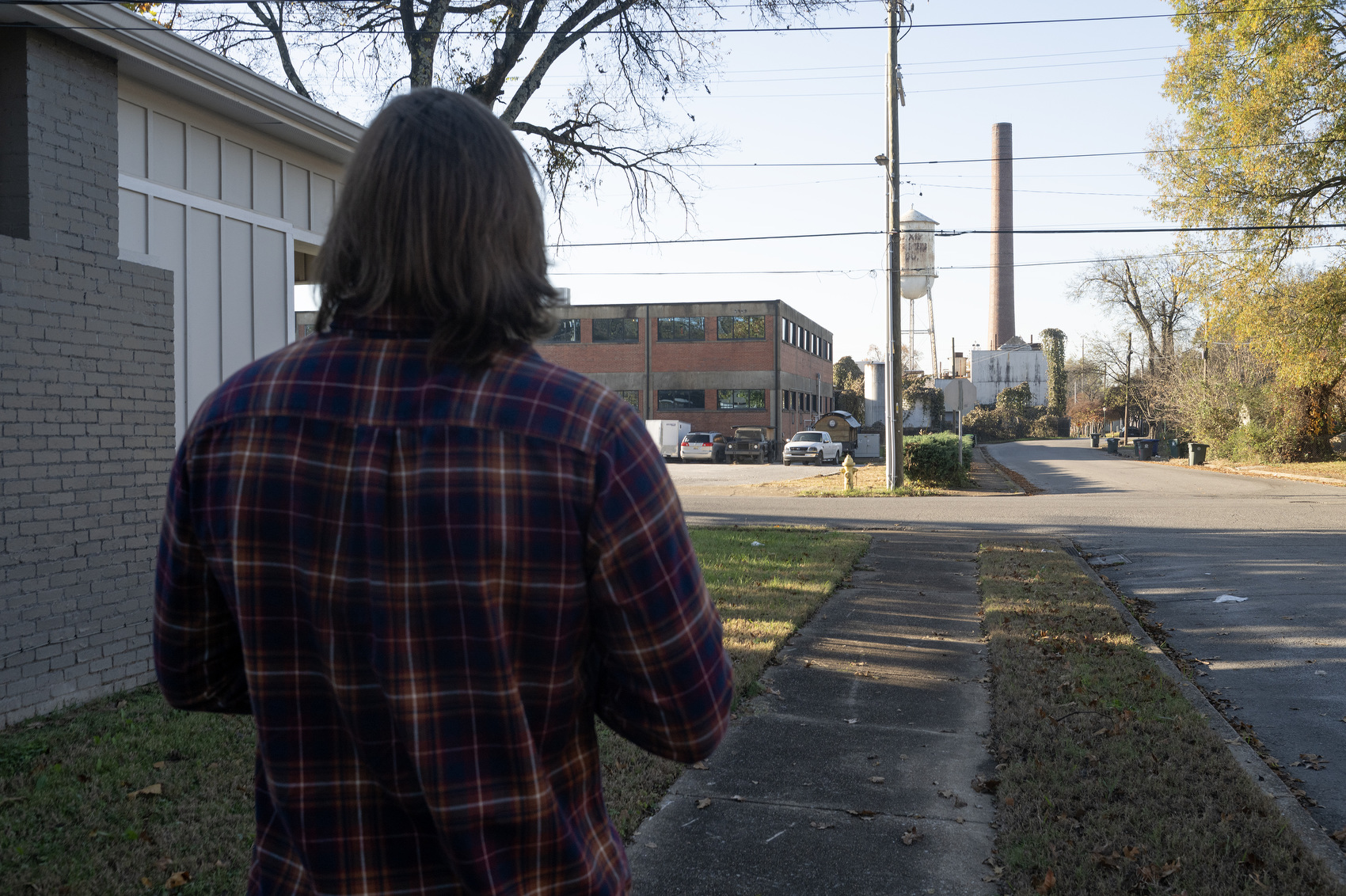
Staff photo by Seth Carpenter / Ridgedale resident Kenneth Hyman kneels down on a lead contaminated lot on Kirby Avenue. Hyman has been urging the Environmental Protection Agency to resume its work decontaminating the lot so that he can transform the space into a community garden.Staff photo by Seth Carpenter / Ridgedale resident Kenneth Hyman adjusts twine he uses to grow tomatoes out of a raised bed in his front yard. Hyman has been urging the Environmental Protection Agency to resume its work decontaminating a nearby lot of lead so that he can transform the space into a community garden.Staff photo by Seth Carpenter / Kenneth Hyman walks toward an industrial area near the Ridgedale neighborhood. Yards and soil in the area have been contaminated by lead sourced from byproducts of foundries in the area decades ago, according to the Environmental Protection Agency.Staff photo by Seth Carpenter / Ridgedale resident Kenneth Hyman looks at an excavation vehicle left by contractors of the Environmental Protection Agency on a lot contaminated by lead on Kirby Avenue. Hyman has been urging the EPA to resume its work decontaminating the lot so that he can transform the space into a community garden.Arkansas coach Bobby Petrino is shown prior to a game against Texas on Saturday, Nov. 22, 2025, in Austin, Texas. (Hank Layton/WholeHogSports)
Since then, over 1,000 properties have gone through the cleanup process, according to 2024 EPA data. Their backyards were likely contaminated by dozens of iron, brass and bronze foundries that operated in the city until the 1980s. Neighborhoods have been built on their old foundations.
SUBSCRIBERS ONLY
This article is for subscribers
An active subscription is required to read this article. Subscribe for full access — or sign in if you already subscribe.