
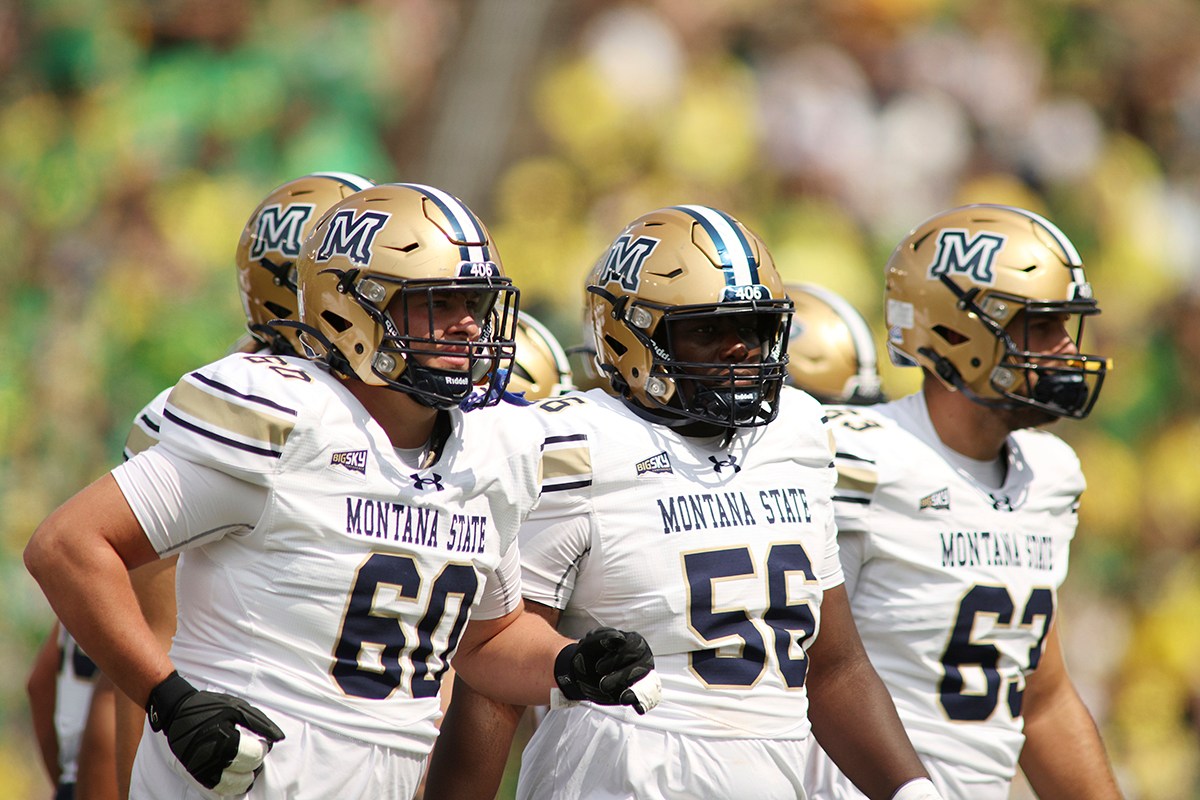
Montana State made it all the way to the national game of the Football Championship Subdivision playoffs last season, and the school lost tens of thousands of dollars in the process.
In fact, officials say, most of the 24 teams that go to the playoffs in NCAA Division I’s lower tier lose money or break even.
That’s a situation that’s just wrong, Big Sky Conference commissioner Tom Wistrcill said, and it is among the reasons FCS commissioners are exploring a proposal from a private equity firm that could turn its postseason into a moneymaker for the schools.
“I’m very open to the suggestion because it’s a new day and we have to figure out new ways to generate revenue,” Wistrcill told The Associated Press. “We’re sharing revenue with our student-athletes now, so that leads us to a place where we’ve got to find new revenue streams. It doesn’t mean it’s going to happen, it doesn’t mean I’ll be in favor of it when it’s all said and done, but these are the types of discussion we have to be having.”
The University of Tennessee at Chattanooga competes in the FCS as member of the Southern Conference, the champion of which receives an automatic bid. UTC has made the postseason five times, with a first appearance in 1984 followed by three in a row from 2014-16 and another in 2023, the latter via an at-large berth.
Leaders of Sequence Equity gave a presentation to FCS commissioners in Chicago last week. Sequence Equity co-founders Brandon Allen and Marcus Stroud, reached by phone, declined to discuss details of their proposal and said commissioners would take the lead in discussions with the NCAA, which also declined to comment.
Stroud played football a decade ago at Princeton — an FCS program but also a member of the Ivy League, which did not permit its members to take part in the FCS playoffs until this year — and his father, also named Marcus, played in the NFL in the mid-1990s. He said his firm and the commissioners are in early discussions.
“Everything is educational right now,” he said.
Describing the proposal, Wistrcill said the FCS conferences would be the majority owners of the playoffs and Sequence Equity would hold a minority stake. According to Hero Sports, which first reported the proposal, Sequence would offer tens of millions of dollars in investment and take over the operation of the playoffs.
Sequence Equity gave the commissioners a projected annual revenue figure, but Wistrcill declined to make it public.
Playoff revenue would be directed to the FCS conferences to split among schools — similar to how the 12-team College Football Playoff, which determines the national champion for D-I’s upper-tier Football Bowl Subdivision, directs proceeds, Wistrcill said. The CFP and bowl games do not operate under the NCAA’s purview despite involving member schools.
Current NCAA rules require member schools to participate in NCAA-sponsored championships if they are selected. To take the FCS playoffs from an NCAA-administered championship to private enterprise, the FCS Oversight Committee would have to make a recommendation to the NCAA Administrative Committee. That committee would make a decision, but the Division I Board of Directors would have veto power.
Another obstacle could be the NCAA’s television contract with ESPN. The FCS playoffs are included in a contract running through 2032 that pays the NCAA $115 million annually to televise championships in 40 sports.
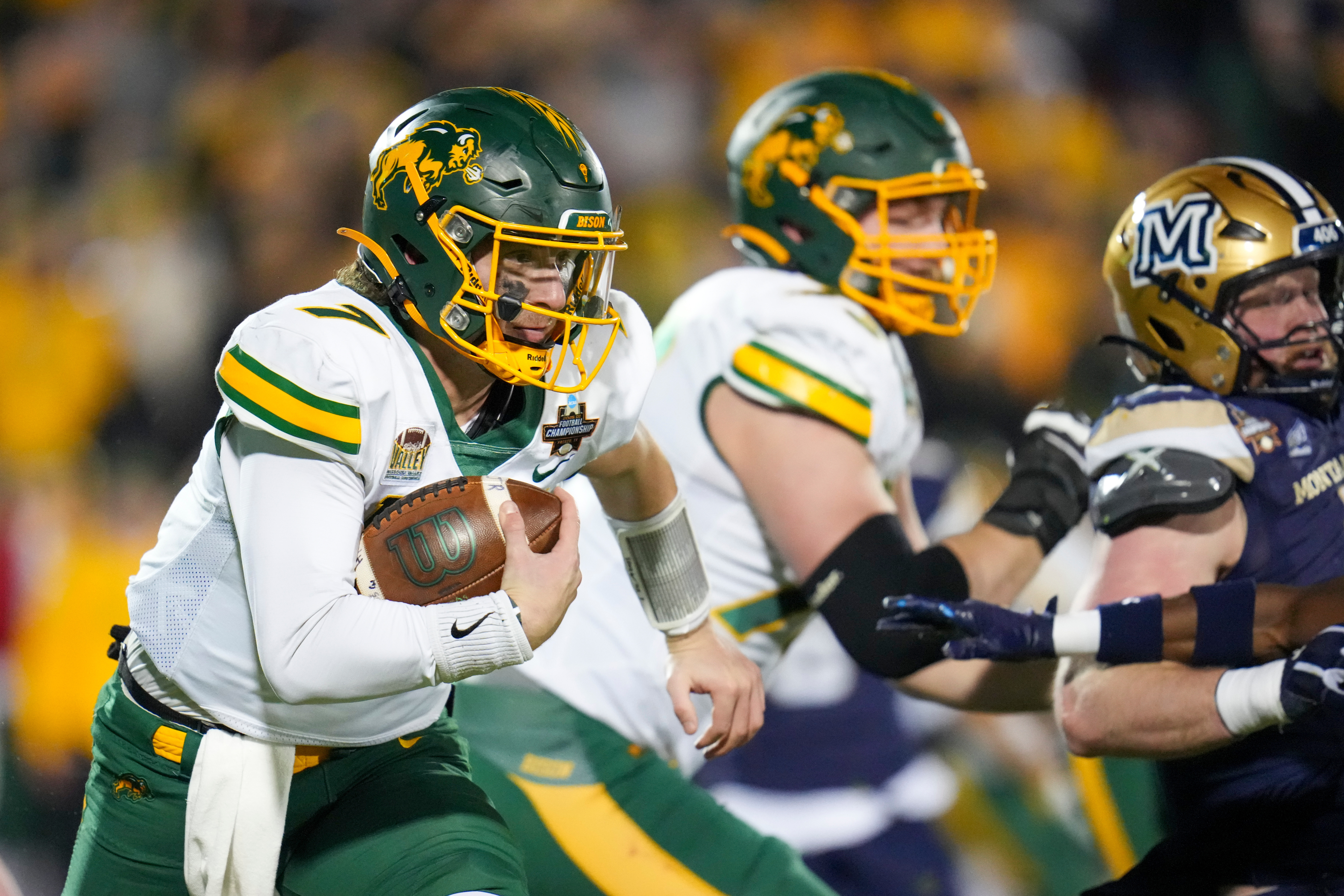
North Dakota State’s 35-32 win over Montana State in the 2024 season’s championship game on Jan. 6, 2025, averaged 2.4 million viewers and was the second-most-watched FCS title game on ESPN. Viewership peaked at 3.1 million viewers. The overall average viewership for all FCS playoff games was 1.3 million across ESPN platforms, the most since 2009-10.
Montana State’s bottom line for the playoffs was a $40,000 loss.
The Bobcats hosted three playoff games and were required to guarantee the NCAA 85% of the revenue, according to figures provided by the school. Montana State, which ranked second in FCS attendance last year, averaged just less than 19,000 fans for the three games and was able to keep $190,000.
The NCAA paid the Bobcats $130,700 to help cover costs for the trip to Frisco, Texas, for the championship game. Montana State ended up spending $360,000.
“We’ve had great success with great crowds in some of our venues, so it’s like, OK, if there’s value out there, let’s listen to people who think there’s value and how could we restructure this so it’s a different financial outcome,” Wistrcill said. “After the NFL and after FBS football has theirs, what do we need to do to start to get a bigger share?”
Jeff Schemmel, founder and president of the consulting firm College Sports Solutions, said the FCS playoffs are underpromoted and undervalued.
The past four FCS title games have matched Big Sky and Missouri Valley Football Conference teams, and at least one team from one of those conferences has played for the championship every year since 2008.
“I think if there’s incentives for other FCS leagues to invest in their programs, then I think it makes it all better,” Schemmel said. “Rather than the Dakotas and Montanas playing for the national championship every year, maybe the East Coast or the South get involved.”
For all the promise of private equity, Schemmel said, he has a hard time envisioning the NCAA allowing the FCS playoffs to be run by an outside entity. He said it would be more likely for private equity to enter a partnership with the NCAA.
Schemmel said several conferences and athletic departments he has worked with have explored private equity investment, but none have followed through.
“Once you bring in private equity, that means those investors are looking for a return and a substantive return,” he said. “From an institutional perspective, that’s been difficult for schools to get their arms around, to share some of the revenue, to share whatever the return is on that investment to make both parties happy.”