
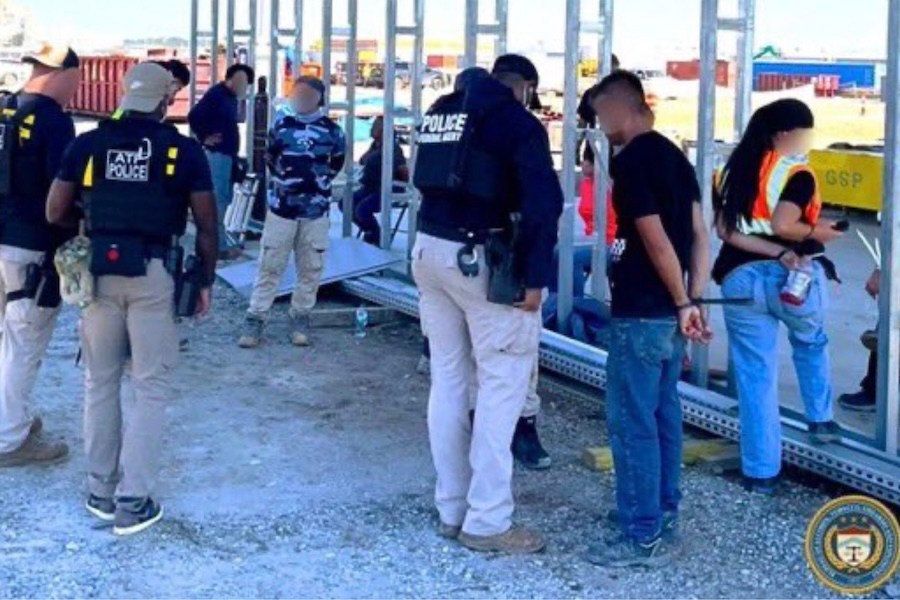
Before the immigration raid on the battery plant in Georgia that’s upended relations between the U.S. and South Korea, there was growing resentment from locals who felt left out of the jobs, economic opportunities and wealth created by the factory, part of a massive $7.6 billion manufacturing complex anchored by Hyundai Motor Co.
In the nearby port city of Savannah, where over half the population is Black and most elected officials are Democrats, leaders questioned how jobs were being filled at the battery plant, a joint venture by the Korean companies Hyundai and LG Energy Solution Ltd., and other nearby factories. Georgia Gov. Brian Kemp, a Republican, and local politicians had touted the development as a boon to the entire region, eventually offering more than $2 billion in taxpayer-subsidized incentives.
“First we’re told to support this because it will create jobs — then we’re told, ‘Because you’re not trained, I’ve got to bring these other people in,'” said Jamal Toure, an adjunct professor at Savannah State University and host of a radio show and podcast, where the topic has been discussed. “How do we benefit from this? For the average citizen, the average African American here, they don’t see the impact.”
Some 25 miles west of the city, the sprawling industrial complex that Hyundai calls Metaplant sits in once rural Bryan County, where over 70% of residents are white and President Donald Trump and other Republicans have received strong support. The politics and demographics are different, but the concern over who wins from the surge in economic development is similar.
“They said Hyundai is coming, and we’re just going to make you all bigger. We’re getting new everything,” Megan Lee, a 26-year-old who grew up here, said as the sound of bulldozers and backhoes rumbled at nearby construction sites. Lee said the truck stop where she works booms with business as a result of the plant, but she’s not sure that she and her neighbors directly benefit. “I liked us being a small town.”