
Many federal agencies released shutdown contingency plans early this week ahead of a potential partial government shutdown if Congress could not agree to a short-term funding deal by Tuesday night.
Despite the plans, many agencies were unavailable Tuesday to answer questions about how a shutdown would affect local federal offices or their employees.
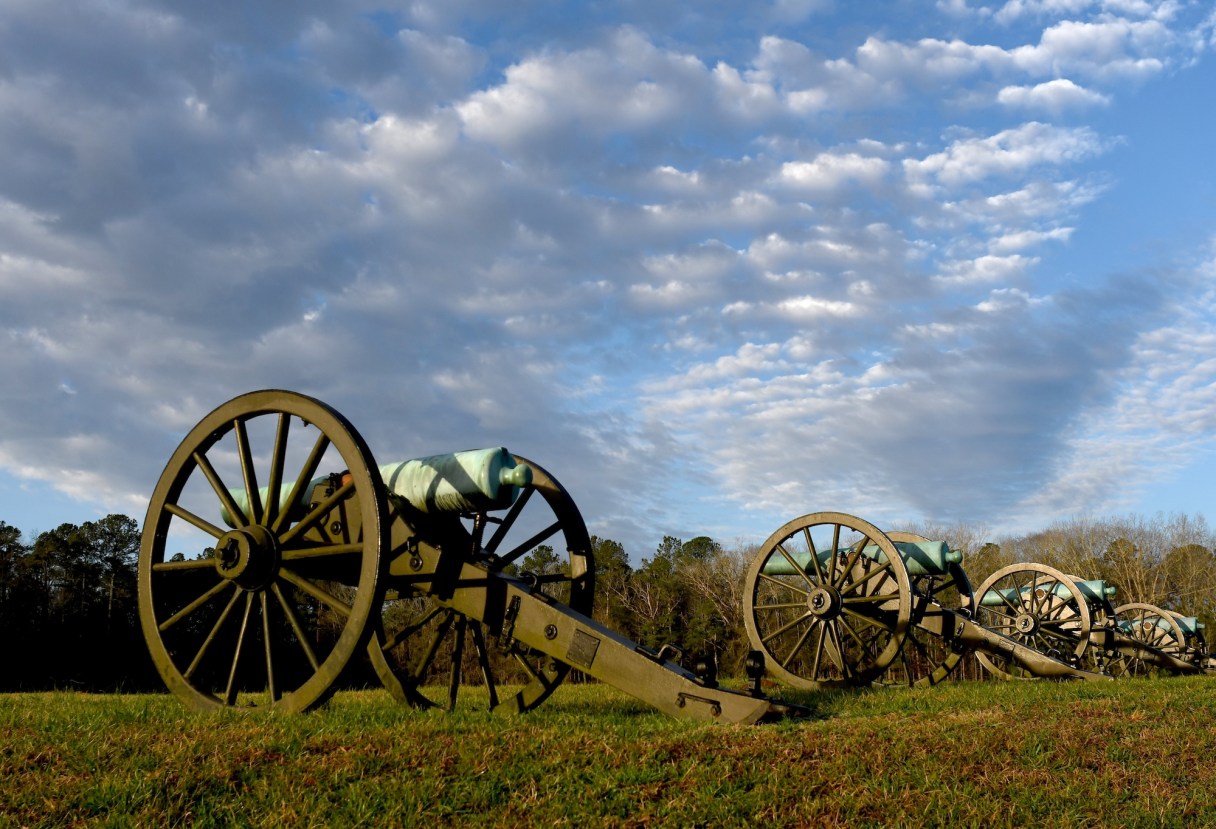
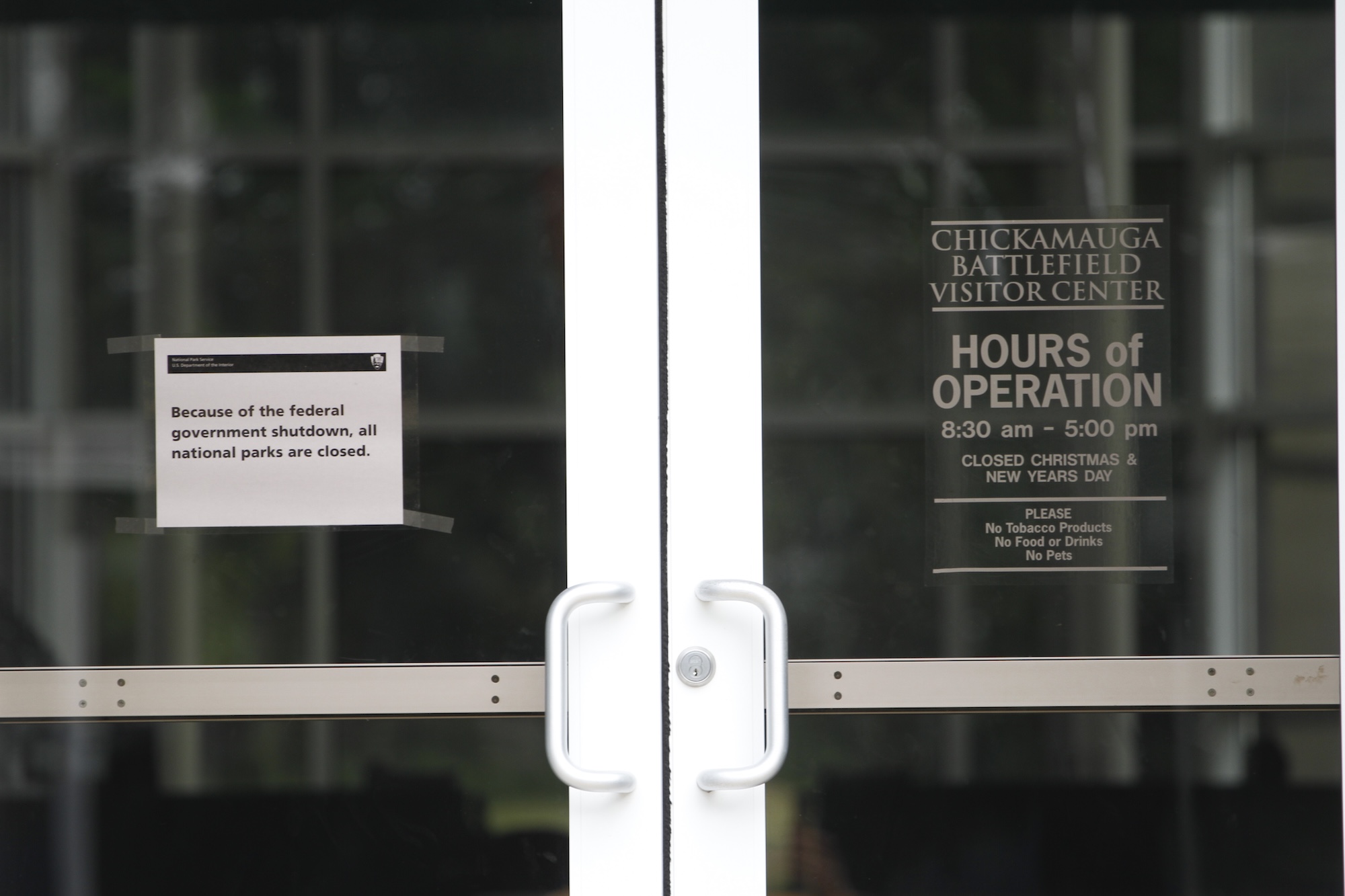
The shutdown could close the Chickamauga and Chattanooga National Military Park and potential staffing issues at the Transportation Security Administration could delay travel if a shutdown lingers.
(READ MORE: Government shutdown begins as nation faces new period of uncertainty)
The U.S. House passed a stopgap measure earlier this month that would have funded the government at current levels into mid-November. But it failed to pass the Senate, where Democrats are pushing for a permanent extension of health care premium subsidies for people whose incomes are too high for Medicaid but cannot afford private health plans. Senate Republicans say passing the stopgap measure should not be tied to permanent policy.
Little progress was made Monday, when President Donald Trump met with Congressional Democratic leaders to discuss the budget.
After the meeting, Vice President JD Vance said a shutdown was likely.
“I think we’re headed for a shutdown because the Democrats won’t do the right thing,” he said at a press conference after the meeting.
On Tuesday, two Senate votes took place, where again Republicans and Democrats blocked each other’s stopgap proposals.
In a statement after the vote, U.S. Sen. Marsha Blackburn said Senate Democrats deliberately forced a shutdown.
(READ MORE: Health care subsidies, impactful to Tennesseans, sit center of pending shutdown)
Slightly more Americans — 38% — think Republicans are responsible for the possible shutdown, according to a NPR/PBS News/Marist poll. Thirty-one percent said they blamed both parties, while 27% said they held Democrats responsible. Four percent blamed neither.
The White House Office of Management and Budget, charged with determining which agencies are essential and therefore can continue to operate even in a shutdown, put out a memo directing federal agencies to prepare for layoffs if the programs they work on are “not consistent with the president’s priorities,” the funding lapses Oct. 1 and they lack alternative sources of revenue.
The memo also directs affected agencies to rehire workers “as needed to retain the minimal number of employees necessary to carry out statutory functions” after a fiscal year 2026 budget is approved.
The Office of Management and Budget has not previously directed agencies to use the shutdown to carry out permanent layoffs.
Typically, the goal is to minimize the impact of a government shutdown, but it’s unclear if minimizing disruption is a priority for the Trump administration, said Mandy Spears, executive vice president of the Sycamore Institute, an independent, nonpartisan public policy research center for Tennessee.
“This is a different administration than the previous ones, with shutdowns. Even if the president is the same as previous shutdowns, it’s just a different time politically,” Spears said. “So I don’t think we should take for granted that if there is a shutdown, it will feel exactly the same way as it’s felt in recent history.”
(READ MORE: Chattanooga area to feel impact of federal government shutdown)
TRAVEL
The Chattanooga Airport said it would operate normally if the government shuts down.
“We do not anticipate that a government shutdown will have a significant impact on our air service or airport operations,” a spokesperson for the airport said. “However, we continue to recommend that you contact your air carrier prior to traveling and arrive at the airport at least 2 1/2 hours before your departure.”
Air traffic controllers and Transportation Security Administration workers will be on the job Wednesday even if the government shuts down, according to a contingency plan published by the Department of Homeland Security, although they will be working without a paycheck until the government reopens.
Past shutdowns have seen staffing shortages and snarled TSA lines amid staffing shortages.
The president of the U.S. Travel Association, which represents various stakeholders, including major airports and airlines, said a shutdown could cost the industry $1.3 billion.
NATIONAL PARKS
The Department of the Interior, which oversees the National Parks Service, has not published an updated contingency plan ahead of the shutdown.
A 2024 plan posted online said the department will continue essential operations, which include maintaining restrooms, trash collection, road maintenance, campground operations, law enforcement emergency operations and the protection of park resources.
Chickamauga and Chattanooga National Military Park locations in Tennessee and Georgia have closed in previous years, including in 2013.
Calls to the local national park and an email to the national press office went unanswered Tuesday.
MILITARY
The more than 2 million active duty service members in the U.S. military will continue with their operations as usual, including nonessential work so long as they do not require new spending, according to a Department of Defense contingency plan.
Only a “minimum number” of civilian employees will continue with their work. Those employees will be furloughed until a new budget is approved. They will receive back pay.
Active duty personnel are permitted to take over civilian responsibilities if the move doesn’t require new spending. Recruiting and basic training will continue in the event of a shutdown, the plan states.
A public affairs director for the Tennessee Military Department, which includes the Army and Air National Guards, did not respond to multiple requests for comment on the impact on troops deployed to Washington, D.C., and approved for deployment to Memphis.
Chickamauga Dam lock operations and work on a massive replacement project by the Army Corps of Engineers will continue through a shutdown, said Leon Roberts, the acting chief of public affairs for the corps’ Nashville district.
“What I can tell you is the Chickamauga Lock replacement project’s funding covers multiple years and is set aside (obligated) to execute the work,” Roberts said in an email. “The project is governed by a legally binding contract, and the government is obligated to fulfill its terms. This means that work under contract can continue.”
The estimated $954.4 million project began in 2004 and is expected to be completed sometime in early 2031.
The dam itself is owned by The Tennessee Valley Authority, the largest public utility in the country.
TVA generates its own revenue and so will not be affected by the shutdown, spokesperson Scott Brooks said.
“TVA receives no federal appropriations and is funded almost exclusively from the sales of electricity,” he said in an email. “Thus, in the case of a federal government shutdown, operations at TVA would not be impacted.”
THE COURTS
The judicial branch does generate its own revenue from fees and forfeitures but still relies on congressionally appropriated federal dollars to operate.
In its contingency plan for fiscal year 2026, released Monday, the Department of Justice said it plans to assume that criminal court operations will continue while civil cases may be curtailed.
“Litigators will approach the courts and request that active cases, except for those in which a delay would compromise to a significant degree the safety of human life or the protection of property, be postponed until funding is available,” the Justice Department’s contingency plan said.
A spokesperson for the U.S. Attorney’s Office for the Eastern District of Tennessee declined to comment on the specific procedures that court would follow or how long it could operate.
LAW ENFORCEMENT
Federal law enforcement agencies, including the FBI, the Bureau of Alcohol, Tobacco, Firearms and Explosives and the Drug Enforcement Administration would largely be unaffected by a shutdown, the same Justice Department plan said.
Nearly 90% of all 115,000 Justice Department employees are exempt from furloughs and will work without pay during the shutdown.
Employees of the Bureau of Alcohol, Tobacco, Firearms and Explosives who conduct criminal investigations, application/compliance inspections and work with data involved in criminal investigations, will continue to work through a shutdown, according to the plan released by the U.S. Department of Justice on Monday.
U.S. Drug Enforcement Administration operations, according to the plan, would largely be unaffected by a shutdown.
DEA agents and field organizations are exempt from furlough, particularly in light of the Department of Homeland Security Memorandum issued in January that carried out presidential directives and expanded immigration enforcement authority, the plan said.
Over 90% of the Immigration and Customs Enforcement workforce, about 19,500 people, are expected to continue working through a lapse in funding, according to a document outlining procedures if funding lapses that was released by the Department of Homeland Security.
Customs and Border Protection will retain a similar portion of its nearly 68,000 person workforce.
Neither of the local border protection or ICE offices in Chattanooga responded to requests for comment.
SOCIAL SECURITY
A spokesperson for the Social Security Administration told the Chattanooga Times Free Press in an email that beneficiaries of the retirement program would continue receiving benefits.
However, a plan released by the administration said it will pause benefit verifications, earnings updates and corrections and Medicare replacement card issuances.
INTERNAL REVENUE
The Internal Revenue Service will keep assistance centers open for five days, according to a contingency plan published on its website. There is one center in Chattanooga.
The IRS will use funding secured in 2022 through the Inflation Reduction Act to maintain all employees and operations for at least five days, the plan published Monday said.
The disclosure plan does not specify what will happen if the shutdown lasts longer than five business days.
The supplemental appropriations from the Inflation Reduction Act are available through Sept. 30, 2031, for all IRS appropriations accounts and were intended to revamp the department’s outdated operating systems and increase its workforce.
POSTAL SERVICE
All U.S. Postal Service offices will remain fully operational in the event of a partial shutdown, according to a statement on the service’s website. The postal service generates its own revenue from the sale of products and services and is not subject to the appropriations process.
Contact politics reporter Ruby Rayner at rrayner@timesfreepress.com or 423-757-6556.
Contact Report for America corps member Jules Feeney at jfeeney@timesfreepress.com or 423-757-6431.