
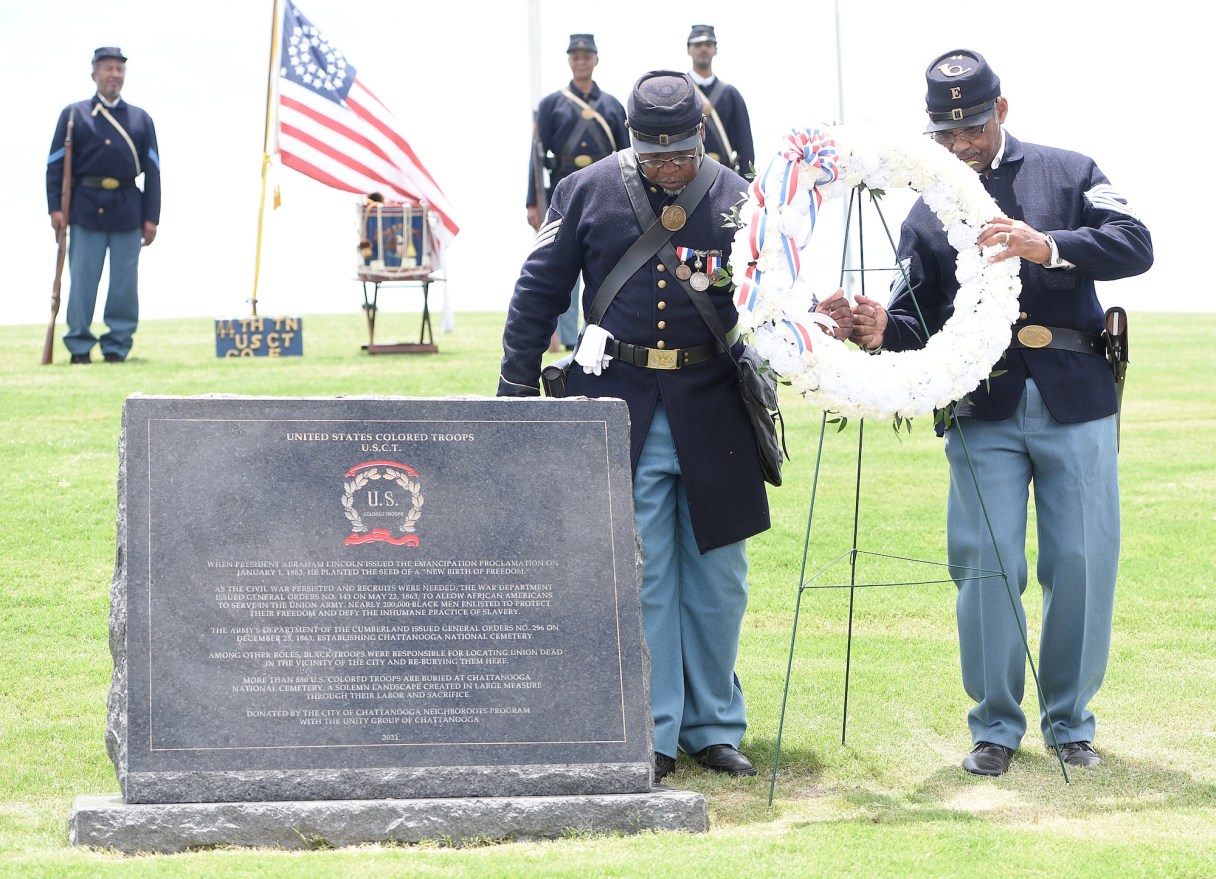
Monuments tell us who we are, and just as importantly, who we choose to remember. As this nation approaches its 250th anniversary, communities across America are reflecting on the stories we elevate in stone and bronze.
We’ve all been taught the familiar words tied to the Statue of Liberty, “give me your tired, your poor, your huddled masses yearning to breathe free” — a story of welcome and possibility. But as Catherine Meeks writes in a 2024 article entitled “Look underneath Lady Liberty’s skirt,” there is a deeper truth we have too often ignored: The statue was originally conceived to celebrate the end of slavery, and the broken shackles at her feet still symbolize that liberation, even though they are almost invisible to most who look upon her. Too often, that truth is hidden in plain sight, present, but not fully told. As George W. Bush said, “A great nation does not hide its history. It faces its flaws and corrects them.”
Chattanooga now faces that same choice. Cities across Tennessee, like Nashville, Franklin, Clarksville and Pulaski, have made the decision to honor the United States Colored Troops with permanent monuments that tell the full story of the Civil War and emancipation. These were men who fought not just for the Union, but for their own freedom and the freedom of others. Their courage helped redefine this nation, yet their story remains underrepresented in too many of our public spaces, especially here in Chattanooga.
It has been recently announced that Civil War sites at Browns Ferry and Stones River will be further preserved through the acquisition of lands that will aid in restoring those areas to their original battlefield condition. We also have much work to do in reviving the sites along Billygoat Hill which are in desperate need of preservation so that they may become more publicly accessible.
Honoring the contributions of the United States Colored Troops should be an important aspect of the Civil War that we undertake with as much fervor. A few years ago, a coalition of citizens was able to place a monument atop the great memorial Circle of Honor at the Chattanooga National Cemetery, but if the actions of our sister cities is any indication, then more could and should be done to properly honor the United States Colored Troops.