
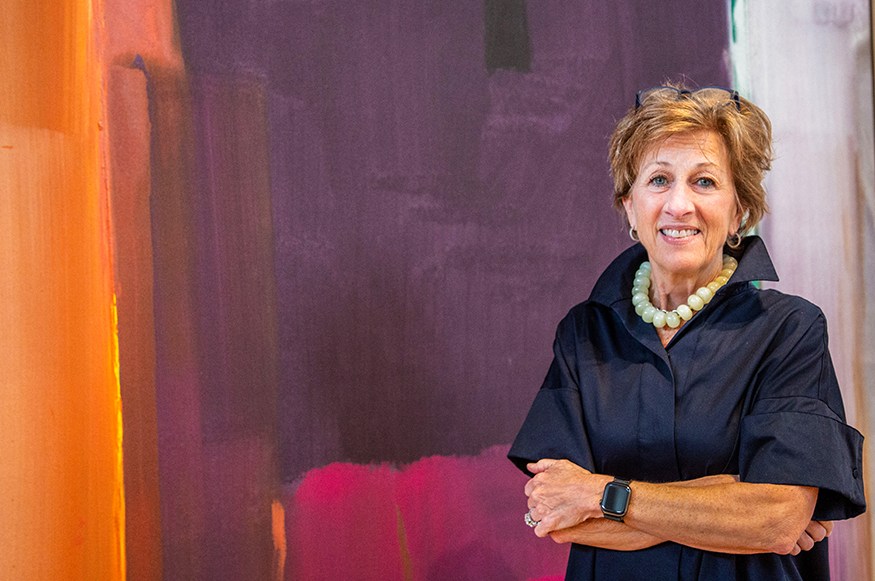
Virginia Anne Sharber was an attorney for 25 years before detouring to her current job as executive director of the Hunter Museum of American Art. A search for a new museum director would have typically taken up to 18 months, but Sharber was appointed interim director about a decade ago and ultimately won the job full-time.
The former Miller & Martin law firm attorney went from dealing with legal matters associated with commercial real estate to leading what is considered one of the best museums in any mid-sized city in America.
It was really just the culmination of a lifetime of being an arts patron in Chattanooga, she said. Sharber was head of the public arts program under former Chattanooga Mayor (and U.S. Senator) Bob Corker which was responsible for many of the sculptures that dot the downtown area.
She served in various volunteer roles at the Hunter Museum before taking on the challenge of leading the museum’s 60 full- and part-time staff members.
“I come from a background of being an ordinary person,” Sharber said. “I’ve tried to make sure (the museum) is for the entire community, not just people with an art education.”
We asked Sharber, a Chattanooga native, to share some things she’s learned since being chosen to lead the Hunter Museum. Her answers have been edited for brevity.
How have you tried to broaden the appeal of the Hunter Museum to attract a diverse visitor base?
There’s always room to grow, but I feel like we have done a nice job of opening doors. It’s not my grandparents’ museum any more. We have really opened the doors to children being in the museum.
The museum also offers monthly yoga sessions, museum tours for 5th graders, regular music and dance programs, and free- and reduced-admission events.
How have you learned to balance honoring traditional art history while making the Hunter relevant to today’s audiences?
There is a proscribed process of curating. I inherited a fabulous team. … The team is always looking at our collection and what gaps we might have.
We’ve got three priories of adding artwork now: Female artists, artists of color and technology works. The curatorial team is always out looking in the art world, and we have a collections committee that knows what our priorities are.
What is the museum’s biggest challenge going forward?
The challenge in this day and age is that people have so many opportunities for entertainment. We ask ourselves: How do we continue to attract people who want to come visit the museum? How do we grow the next audience of art lovers?
It needs to be an experience. We try to do a lot of programming. We have programs every Thursday night with dancers, musician and poets who perform something that was inspired by a work of art. We have hands-on arts and crafts. We have artists who come and talk about their work.
What are some of your personal, near-term goals for the institution?
Two really cool things. Next year is the museum’s 75th anniversary. We want it to be a year-long thing. We want it to involve the whole community. We will look back and thank the folks that helped us over the years, of course, but the real focus is what is the next for us.
We are literally in the process of doing some master planning. … We are land-locked. We have a lot of concrete. We have a lot of people on the (Walnut Street Bridge) making their way through the plaza. We want some help looking at how the flow is going — how we use the facility.