
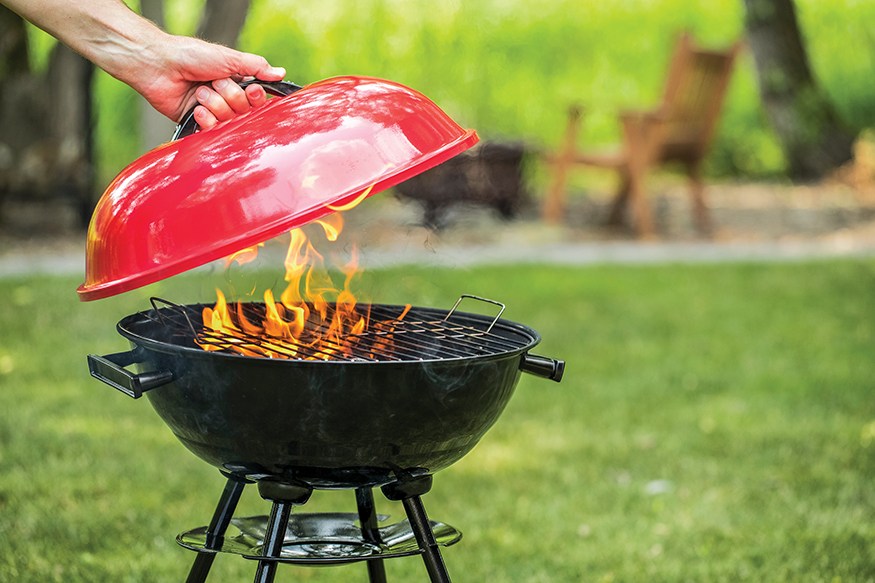
Summer grilling can feel like a competitive sport, even if you’re alone in the backyard. Sometimes you’re trying to shut down your neighbor’s burger boasts and hot dog swagger. Sometimes you’re just trying to outsmart the grill.
If you’re ready to raise your game, Noah Burnette has some tips to offer. Burnette, who works at the Bass Pro Shops outpost in East Ridge, has years of casual and competitive experience. These days, he does most of his grilling at home, but when the store holds grilling demos, he’s the man for the job.
If you’re in the market for a grill, Burnette said to give plenty of thought to the type of grilling you want to do. Cost will also be a factor. Grills can range from about $60 for a charcoal grill to a couple thousand dollars for a model with multiple options.
Among the first decisions you’ll need to make are the fuel source (charcoal, gas, electric) and the cooking surface (grate or griddle).
“If you’re an old-time traditionalist, you’re going to prefer charcoal,” he said. “Charcoal is all about the flavor.”
Charcoal grills are prized for giving foods a superior smoky flavor, their ability to reach high temperatures for searing, and their lower cost. However, they can be inconvenient in that they require 20 to 30 minutes to heat, the temperature must be constantly monitored and the briquets will burn into ash to be disposed of.
Propane grills, which heat the cooking grates with a controlled flame, are a more “no muss, no fuss” option, Burnette said. They are prized for their fast startup times and precise temperature control, but they can’t provide the intense smoky flavor of charcoal. They are also more costly.
If your home has natural gas, you can choose that as a fuel source for a patio grill, with similar results to propane.
Burnette said pellet grills are gaining in popularity for their “set it and forget it” convenience. Introduced in the mid-1980s, these grills use compressed hardwood pellets heated by electricity. Once the cook sets the desired temperature, the pellets are automatically fed into the firepot to maintain consistent heat.
“It’s basically like using an indoor oven,” he said.
Lately there’s been a change in cooking surfaces as well. Rather than the open grates of a grill, some models offer flat-surface griddles. They’re great for making smash burgers, stir-fries and fajitas, Burnette said. Some cooks even fire them up for breakfast spreads with pancakes, hash browns and scrambled eggs.
“The cooking area is large and it’s easy to work on,” he said.
Several manufacturers now offer the half grill/half griddle cooking option, so the cook can choose either/or or both methods, he said. The combo models are especially appealing for gatherings when multiple grilled foods are on the menu.
“We sell a ton of them,” Burnette said.
There are also several options in smokers, though even a charcoal grill can be used for smoking. Smokers and fryers also come into play during big-meal holidays when ham or turkey is on the menu. He said offering meat samples during grilling demos can persuade customers that they, too, can achieve grilling success.
“We’ll do a turkey or ham and cut it up into sample pieces,” he said. “Our sales spike when we do that.”