

Six years and five days after a Chattanooga man was accused of bludgeoning a group home caretaker to death with a brick, whether he can one day be competent to stand trial remains to be answered.
Shantez Ferguson, 31, allegedly told police he hit Kevin Garrett, 30, in the head three times with a brick, according to an arrest report. Video footage provided to police by a neighbor allegedly showed Ferguson toss something in a nearby ditch, where police found a bloodied brick.
A month earlier, Garrett had called the police to help him with Ferguson, who also had prior attempted robbery and assault charges.
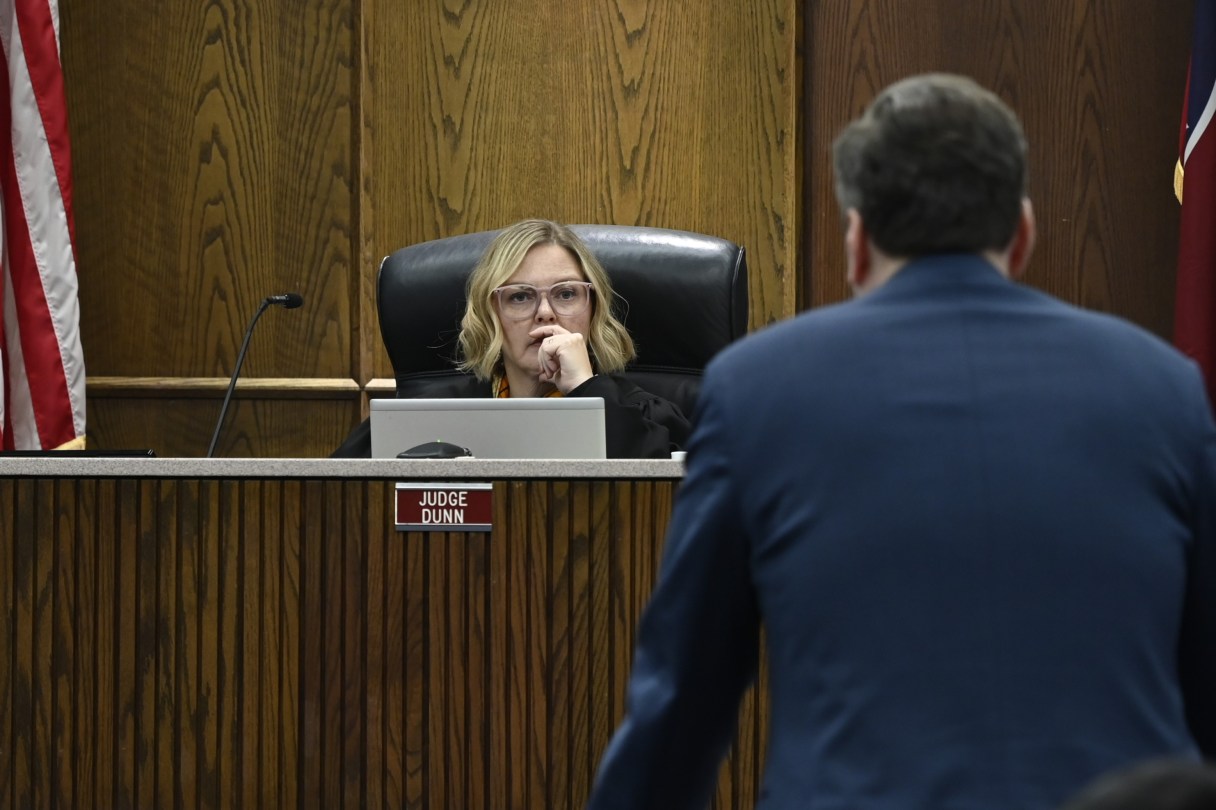
Hamilton County Criminal Court Judge Amanda Dunn ruled against a motion to dismiss Ferguson’s murder charge at a hearing Thursday afternoon. Before starting the proceedings, she recapped the history of the case. Several proceedings have happened since his indictment in 2021, she said, including numerous hearings over his judicial commitment to a mental health facility.
“This case has a very long history,” she said. “Mr. Ferguson has frankly been in front of me as long as I’ve been a judge.”
Judge continues with murder charge from 2020 brick bludgeoning incident
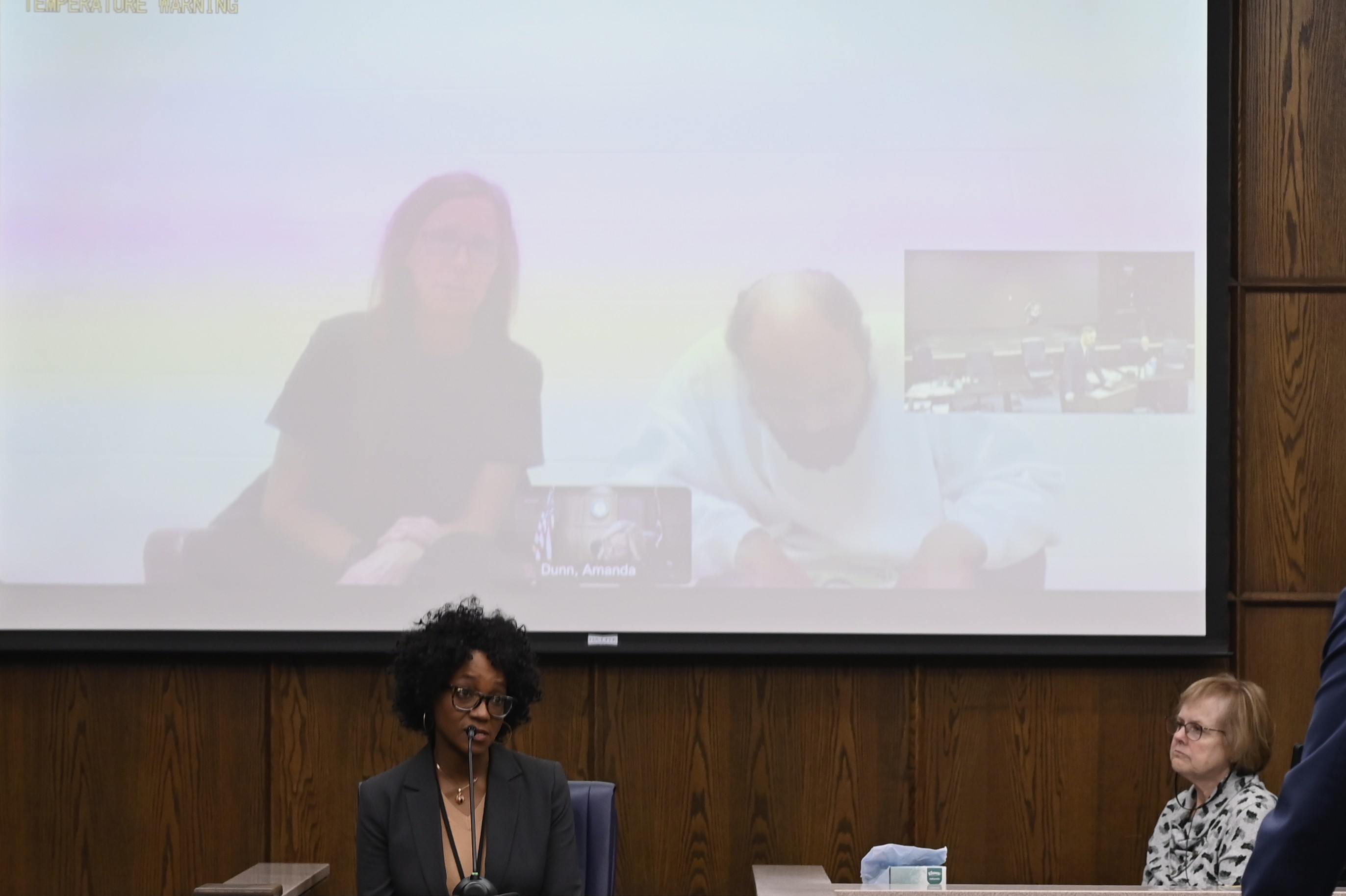
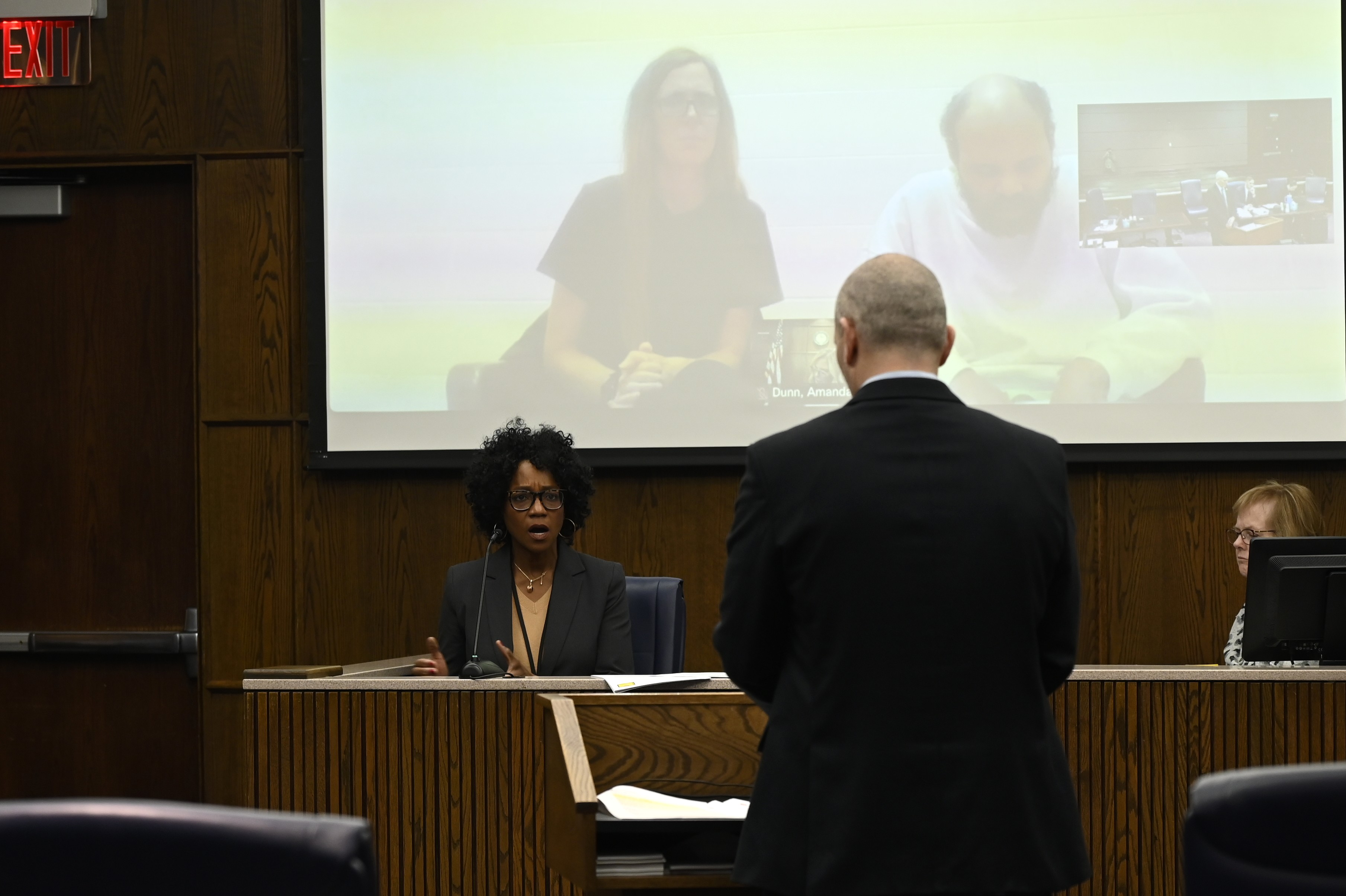
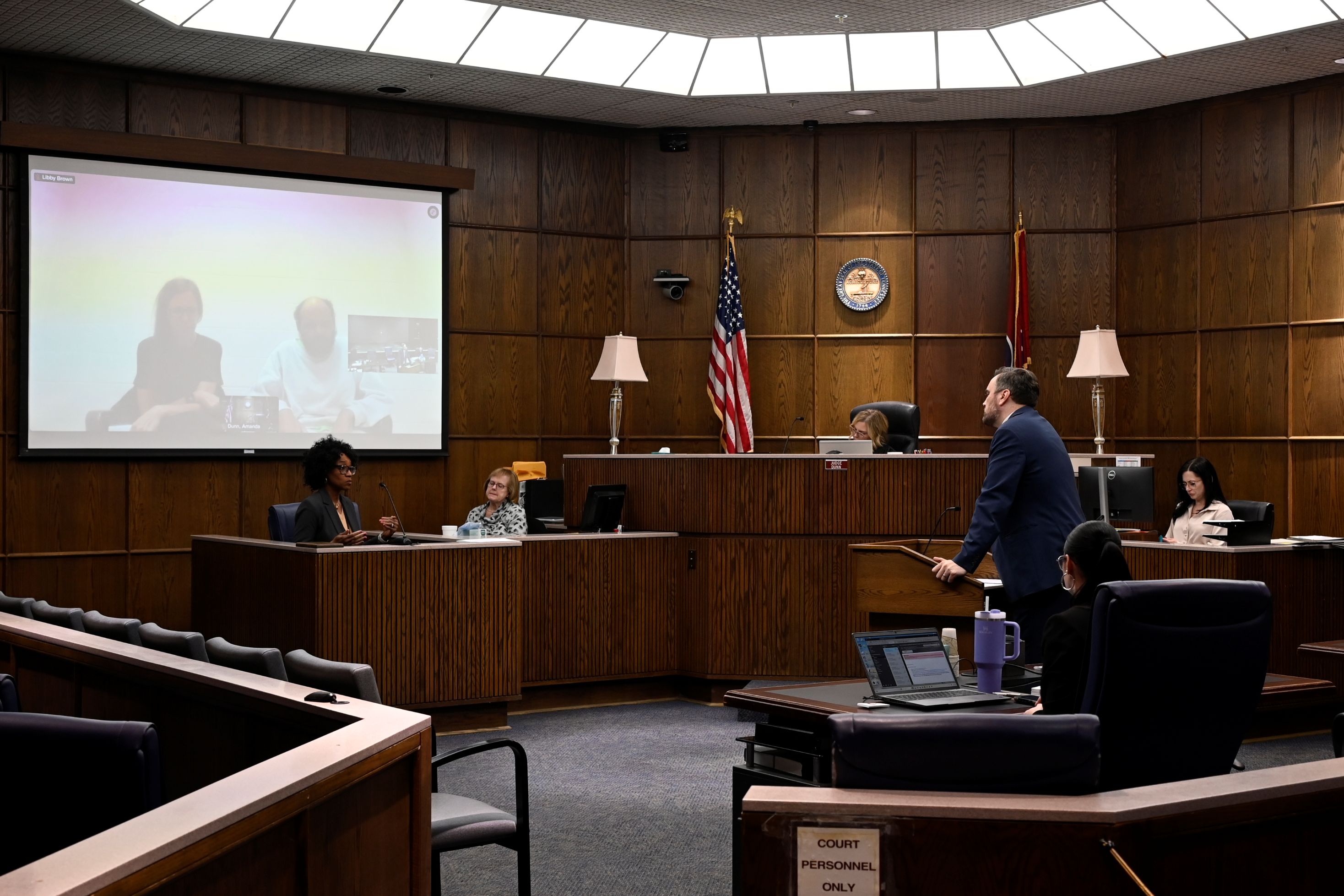
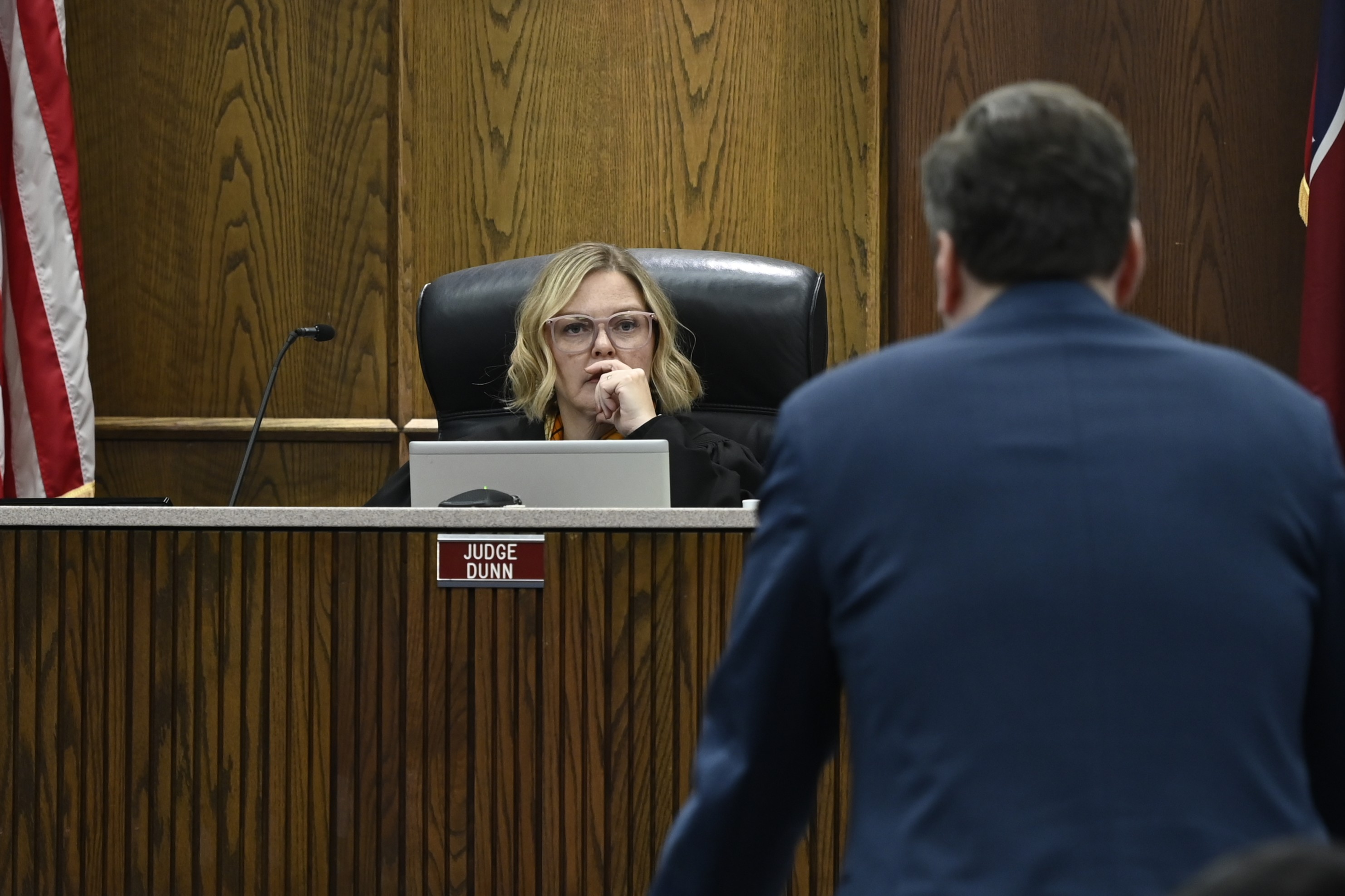
Ferguson has been committed, judicially hospitalized, for over two years, Dunn said, and she’s received reports from the Tennessee Department of Disability and Aging regarding his status, ability to be institutionalized and likelihood his competency to stand trial can be restored.
Since Ferguson was first declared incompetent to stand trial on Sept. 12, 2023, the judge has seen Ferguson in the courtroom and on screen, she said. She’s seen him in a state of extreme neglect and distress. He seemed well-taken care of Thursday, she said.
The state has filed multiple requests for the court to reconsider the involuntary commitment, she said. Ferguson remains in a mental health institution and appeared for the hearing over video conference with defense attorney Erinn O’Leary. His defense counsel’s motion to dismiss came after a new report from the state, she said, wherein it was noted he still struggled with delusional and psychotic episodes.
Ferguson’s defense attorneys, Jonathan Wilson and O’Leary, did not respond to emails and voicemails requesting comment by deadline. Wilson and prosecutor Miller Leonard were not available in the courtroom halls immediately after the hearing. Prosecutor Andrew Coyle said by text that the state agreed with Dunn’s decision and will move forward with the case.
(SIGN UP: Get our top headlines in your inbox every evening by going to timesfreepress.com/evening)
DISMISSAL HEARING
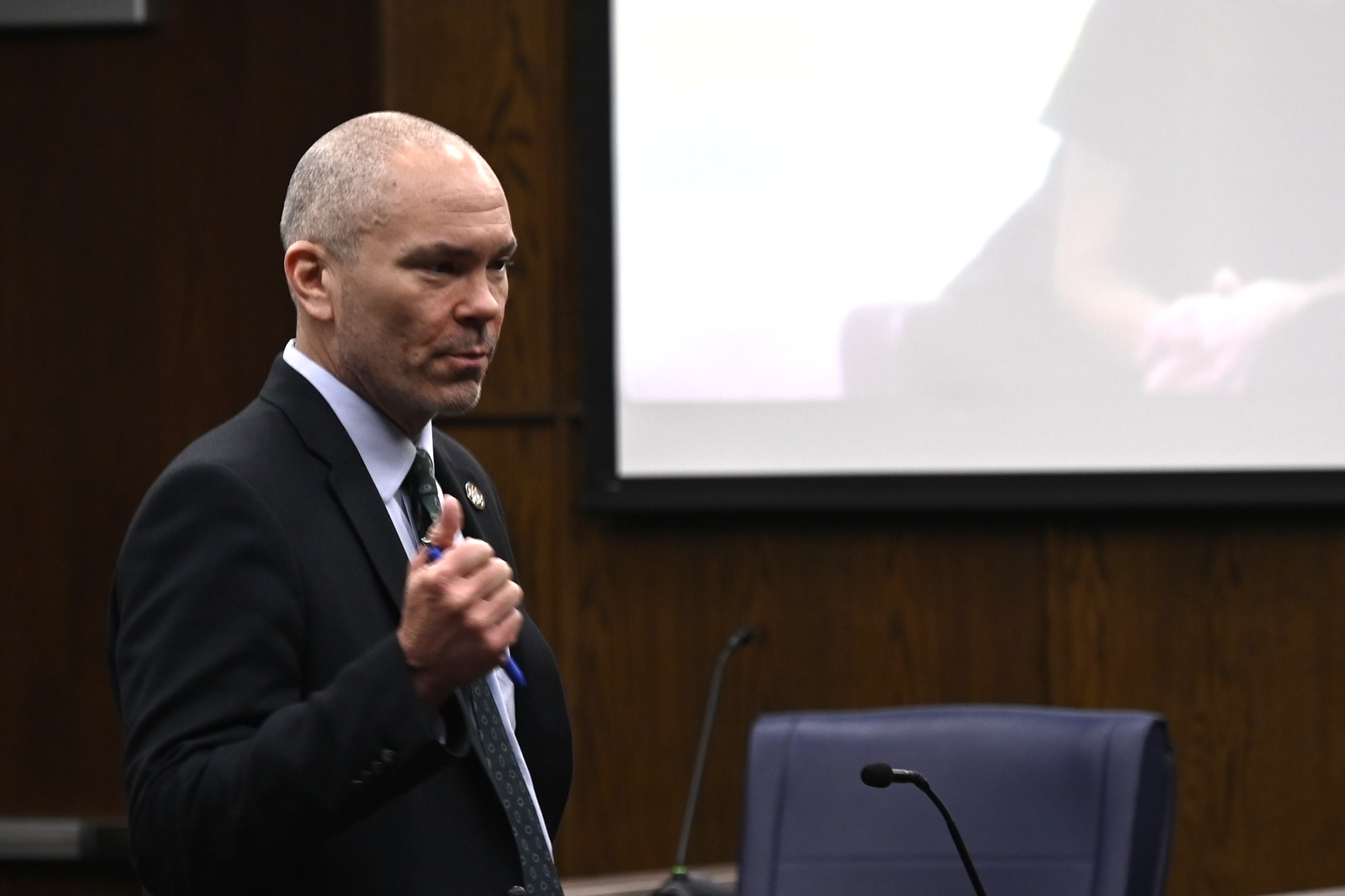
Standing inside the courtroom, Wilson asked the judge to dismiss the murder charge Thursday, in part, because of a U.S. Supreme Court case that found a defendant found incompetent to stand trial cannot be indefinitely committed to a mental institution without a trial.
The prosecutor, Leonard, argued that the court will need to consider whether further efforts can be made to restore Ferguson’s competence in the future, within six-month intervals.
“But I already made that decision, right?” Dunn said. “I mean, that was what my order was in 2024.”
The court seemed to be backtracking, she said.
“From the state’s perspective, what we see is a defendant who continues to present with new facts about his competency,” Leonard said.
Wilson said his team subpoenaed Uduakobong Ikpe, the psychology director of the Middle Tennessee Regional Office at the Tennessee Department of Disability and Aging, to speak about her efforts to bring Ferguson to competency. When she first began at the agency in 2023, she found Ferguson extremely unstable in his initial evaluation.
She’s met with Ferguson 39 times for competency training, she said. The Harold Jordan Habilitation Center in Nashville housed Ferguson until it became necessary for him to be transferred to the Department of Mental Health, she said. He allegedly displayed behaviors more psychiatric in nature as opposed to intellectual disability. At a psychiatric facility, a patient can get medications and injections, as needed, to help an agitated person.
Before he was transferred to a new facility in January 2025, he was allegedly extremely aggressive, would fight and scratch staff. Ikpe said he would spit all over the building, smearing his feces in the unit he was in and cover doors with spit and feces. He would say he was a police officer, a federal agent, came from a rich family and made other psychotic statements, she said.
Ferguson was not actively participating in the competency training sessions, she said. She did not think more meetings would help, and she said he’s been diagnosed with a long list of various diagnoses over time, including schizoaffective disorder, bipolar disorder, post-traumatic stress disorder, intermittent explosive disorder and mild intellectual disability.
“And that was due to what I found was an exaggeration of symptoms, meaning that he was being excessive in his presentation when he was meeting with me in terms of how he was psychiatrically,” Ipke said. “As well as, I’m sure, genuine psychiatric symptoms, like delusions and alike, because Mr. Ferguson does have mental health concerns.”
CROSS-EXAMINATION
Outside of the training sessions, staff within the mental health facility said Ferguson presented as more high-functioning and stable than when he was in the competency sessions, according to Ipke. When she met with him for training, he was unable to walk on his own, drooling excessively and took excessively long periods of time to answer simple questions. So, she started watching him on camera, around four different times.
“When I would observe him on camera before meeting with him, he was able to walk on his own steam, did not require support to walk,” she said. “He was able to, there were times where I would see him dancing, even.”
When his effort level was challenged by a trainer, Ferguson said his medication was responsible, Ipke said, which shows an understanding of his problems.
The prosecutor, Leonard, asked if that suggested Ferguson was aware of the competency training and would change his behavior to impact Ipke’s assessment, which she said was her impression.
“I believe that he understands that he was found incompetent to proceed,” Ipke said, “and believed that his charges should or will be dismissed as a result of that.”
Ferguson’s defense attorney, Wilson, objected to more questions, as the court drifted into arguing over competency again, and Leonard defended his line of questioning.
“This court needs to make a determination as to whether or not this gentleman, who’s charged with the most serious crime that the state of Tennessee can charge a person with,” Leonard said, “is exaggerating for purposes to get out of a criminal charge.”
Ipke said she believes Ferguson has the capacity to become competent, but the answer to that would be beyond anything she could share. He understands there’s an adversarial process, he would lose his freedom if found guilty and knows who his attorney is, Ipke said, but she does question his ability to testify and sit in a courtroom for a long period of time.
The judge asked Ipke a few clarification questions, to which Ipke said that during the competency hearings, Ferguson would appear to be folded over and completely asleep. The psychologist also elaborated on what Ferguson understands about his medication, before Dunn interrupted.
“And Mr. Ferguson’s now folded over, completely,” Dunn said, “if you want to look at the screen.”
She could not return Ferguson to jail, she said, as she would have to rescind her judicial order. She didn’t know if that would be good for him. Dunn asked Ipke if there were any other recommendations or suggestions to gain his compliance. Ipke said that the question was a little outside her scope of practice, but medication changes were also suggested and never implemented at one point in his case history.
Ferguson has been tested three times for memory malingering, Ipke said, which is to determine whether there is deliberate faking or exaggeration of memory problems. In 2021 and 2022, he could identify 98% of items seen previously. In 2025, he scored a 78%, which she said suggests either some deterioration in functioning, an increase in psychiatric symptoms or a change in effort level.
(READ MORE: Hamilton County Commission establishes new compliance division under Janie Varnell)
DISMISSAL REFUSED
In closing arguments, the defense said it did not anticipate to relitigate Ferguson’s competency to stand trial. One thing the defense finds concerning, Wilson said, when Ipke was pressed on what could be done to restore competency, the expert wasn’t sure. Ferguson has previous, deep-seated mental issues that have been previously decided upon, he said.
“We have here a case that has been pending for over five years, and we still don’t have a defendant who is competent,” Wilson said. “One thing that’s quite clear about the testimony, Dr. Ipke thinks he is not competent today.”
Even if the court delayed the case, Wilson said, there’s no plan for how to get competency. Even if he is possibly restored, then the court begins the process of trying to get into trial. It’s a difficult case with tragic facts, but he said that with the extreme efforts undertaken to restore competency, it’s overdue for dismissal.
“The state’s answer is saying, we’ve not done enough,” Wilson said. “Well, when is enough?”
Leonard said the court heard that Ipke believes Ferguson could be made competent, and that she’s a professional who gave testimony that cuts both ways for the defense and state. Practically, also, the defendant needs to remain institutionalized anyway, as Leonard said the defendant stipulated that he’s a danger to the community.
“But to take the dramatic step of ordering a dismissal of a first-degree murder charge,” Leonard said, “in this case, we’re not right.”
Before the state concedes as what might be required by the law, he said, the prosecutors have one more step they can take.
Dunn said her greatest fear is the same as the prosecutors’, which is that an alleged offense could happen again. She had to note for the record, she said, if the case were dismissed, Ferguson would return to a group home, where the alleged crime first happened. And then, she said, those fears need to be balanced against the United States Constitution.
“The truth is, none of us here — lawyers — are mental health professionals,” Dunn said. “And little did we know that by putting him at the Harold Jordan Center as requested, he would not be able to receive any psychiatric medication.”
That was a significant period of lost time in which Ferguson was committed but was not in a position where competency training could be attempted, the judge said. She said it was a lesson about how some things should be best left to doctors, and she believes Ferguson is aware of how his conduct could result in a dismissal. That led her to believe he’s not participated in the competency hearings in earnest, Dunn said.
“I think everyone is stumped, including our expert witness, about how to make him comply,” Dunn said. “Because, unfortunately, he has the belief that if he is simply found incompetent, this case will be dismissed.”
She knows she cannot force anyone to do something they don’t want to do, but in this particular instance, one additional effort in asking for collaboration between the Department of Disability and Aging and the Department of Mental Health to achieve his compliance is warranted. She would not dismiss his case, she said, even if it may result in nothing.
Movement stirred on the video screen.
“I will note, for the record,” Dunn said, “that Mr. Ferguson is suddenly more attentive.”
For justice to be served, the court must make every effort to make the right decision, she said. The court would compose a written order asking his medical professionals find a way to collaborate and obtain Ferguson’s compliance with the competency restoration efforts.
Contact breaking news reporter Mason Edwards at medwards@timesfreepress.com or 423-757-6409.