
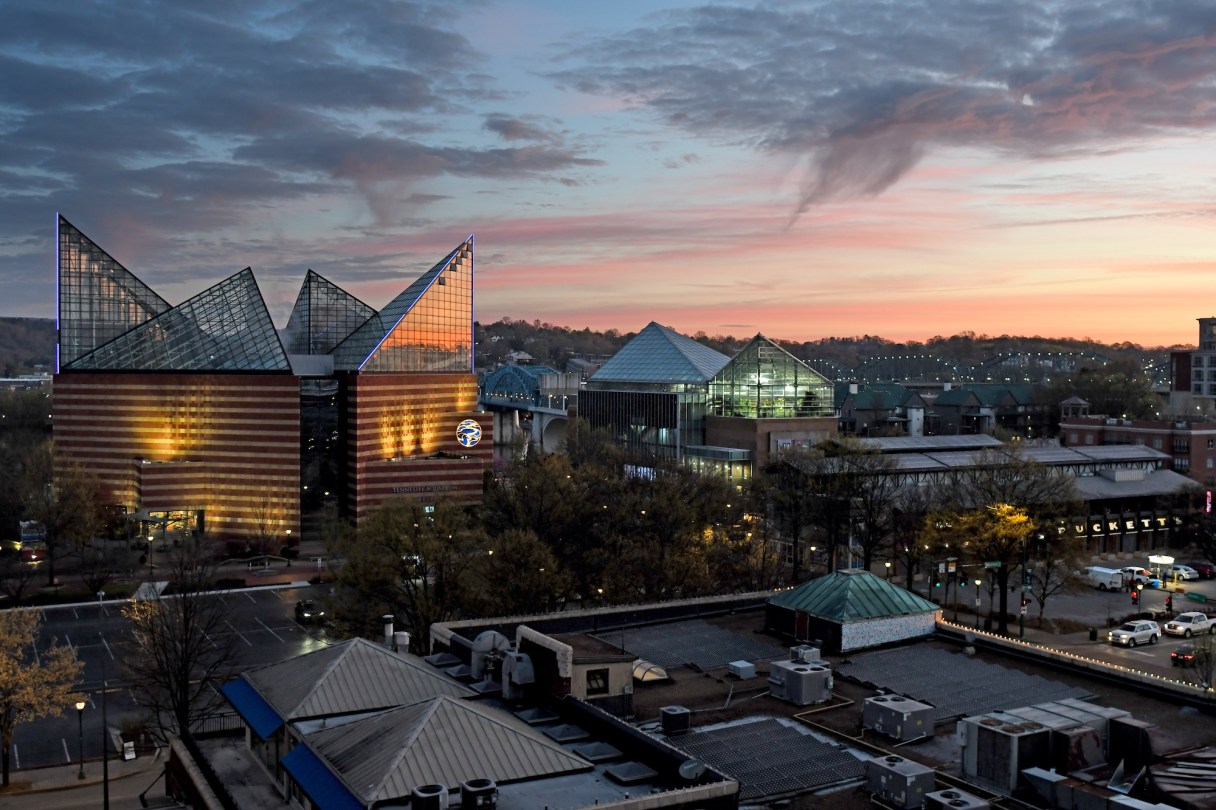
Chattanooga’s now world-renowned environmental turnaround and downtown renaissance began, in part, because of a 1981 community concert series that some leaders didn’t want.
At the time, the Tennessee riverfront was a polluted industrial grid of abandoned factories, train tracks and warehouses, not a gathering place for events, and the city was a tinderbox.
Just the year before, Chattanooga had captured national attention after four Black women had been shot and a fifth injured by flying glass in an attack by three Ku Klux Klan members. An all-white jury’s acquittal of two and a nine-month prison sentence with a $225 fine for the third triggered violent unrest, which led to seven police officers being shot and the intervention of national civil rights leader Jesse Jackson, newspaper records show.
Chattanooga, once a thriving blue-collar powerhouse known as the Dynamo of Dixie, was also being decimated by the brutal national recession that had left the city with the highest unemployment rate in the state at the time, records show.
The day of the first community concert by blues legend B.B. King, former Chattanooga Mayor Robert Kirk Walker had grabbed one of the organizers, Rick Montague, by his lapels and issued a dire warning, Montague told the Chattanooga Times Free Press in 2017.