
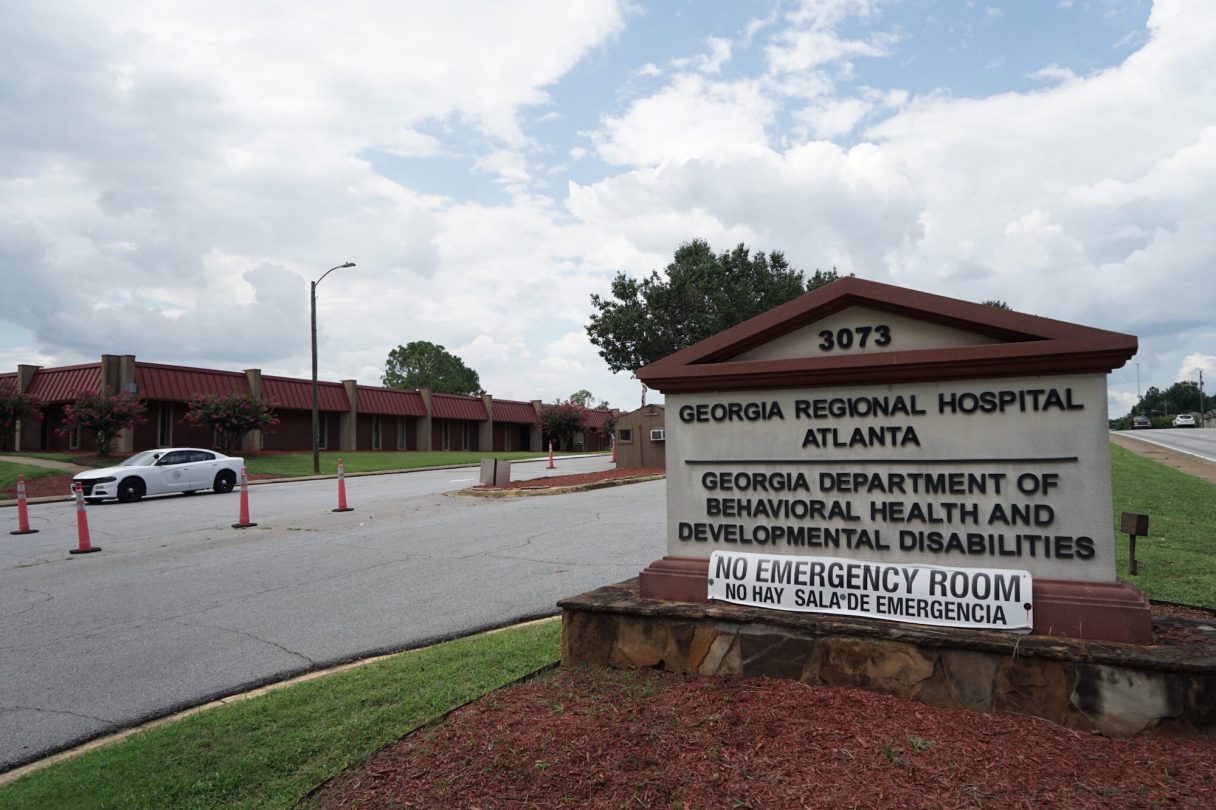
After spending 16 years moving away from a psychiatric care system centered on institutionalization, state officials are preparing to build Georgia’s largest state hospital in decades.
More than 700 Georgians in the criminal justice system are currently waiting for a spot in a state psychiatric facility, according to Kevin Tanner, commissioner of the Department of Behavioral Health and Developmental Disabilities. That’s why state lawmakers made room for $409 million in the budget for a 300-bed forensic state hospital, which will be built near Georgia Regional Hospital, located in south DeKalb County, during the 2026 legislative session earlier this year.
The waiting list is putting pressure on county jails across Georgia. According to Tanner, the hospital will serve only forensic patients — people who have a mental illness or disability and have been charged with or convicted of a crime. When lawmakers announced the hospital project at a February press conference, several sheriffs were standing alongside them.
Tanner said patients come to state hospitals in two main ways. In Georgia, when a judge decides that a person charged with a crime isn’t fit to stand trial because of a psychiatric condition or a disability, they order the person into a state-run long-term hospital. Similarly, some individuals with a mental illness or disability are found not guilty because of their mental state — courts also order these people into state care.
But when state hospitals are at capacity, forensic patients who cannot be admitted are forced to remain in local law enforcement custody, usually waiting months for their court-mandated place in a state hospital.