
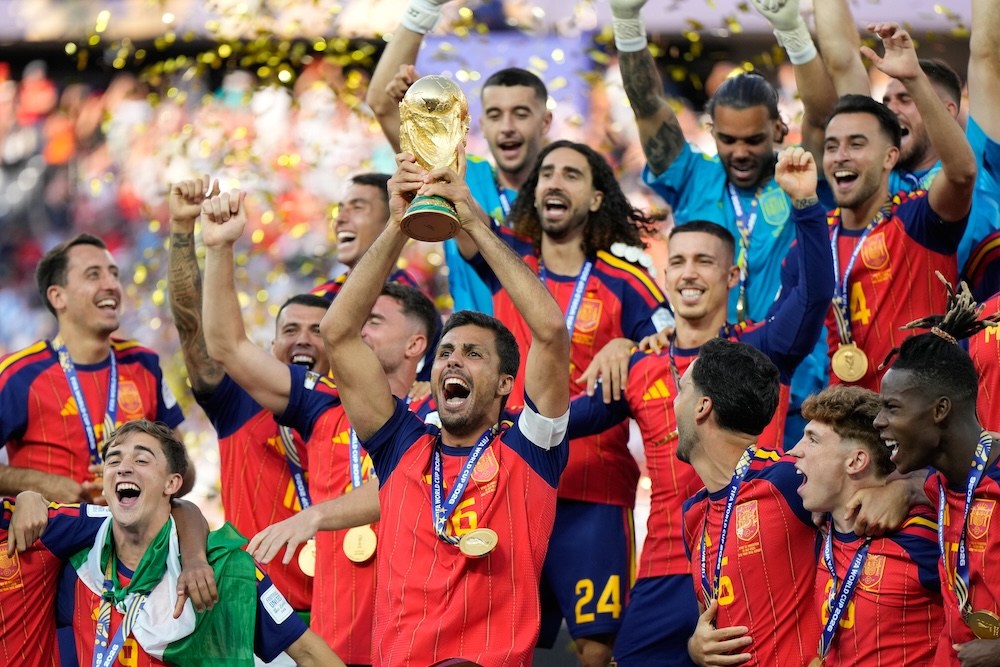
Spanish soccer has reached a level of its own.
Spain’s World Cup victory on Sunday added to the nation’s long list of recent triumphs across men’s, women’s and youth competitions, highlighting the dominance of a system that has stuck to a tactical identity and the development of collective talent.
The men’s team is also the current European champion, the Olympic gold medalist and has reached the Nations League final twice — winning it once. The women’s squad is the defending World Cup champion and a two-time Women’s Nations League winner. It also made it to the final of the 2025 European Championship.
Spain is the first nation to hold both the men’s and women’s World Cup titles at the same time and is the only country with two men’s World Cup triumphs this century. The nation also has won several youth tournaments in recent years with both the men’s and women’s teams.
The men’s senior squad has been racking up titles since it was gradually revamped after the demise of a golden generation that won the nation’s first World Cup in 2010 with the likes of Andrés Iniesta, Xavi Hernández, Sergio Ramos and Gerard Piqué.