
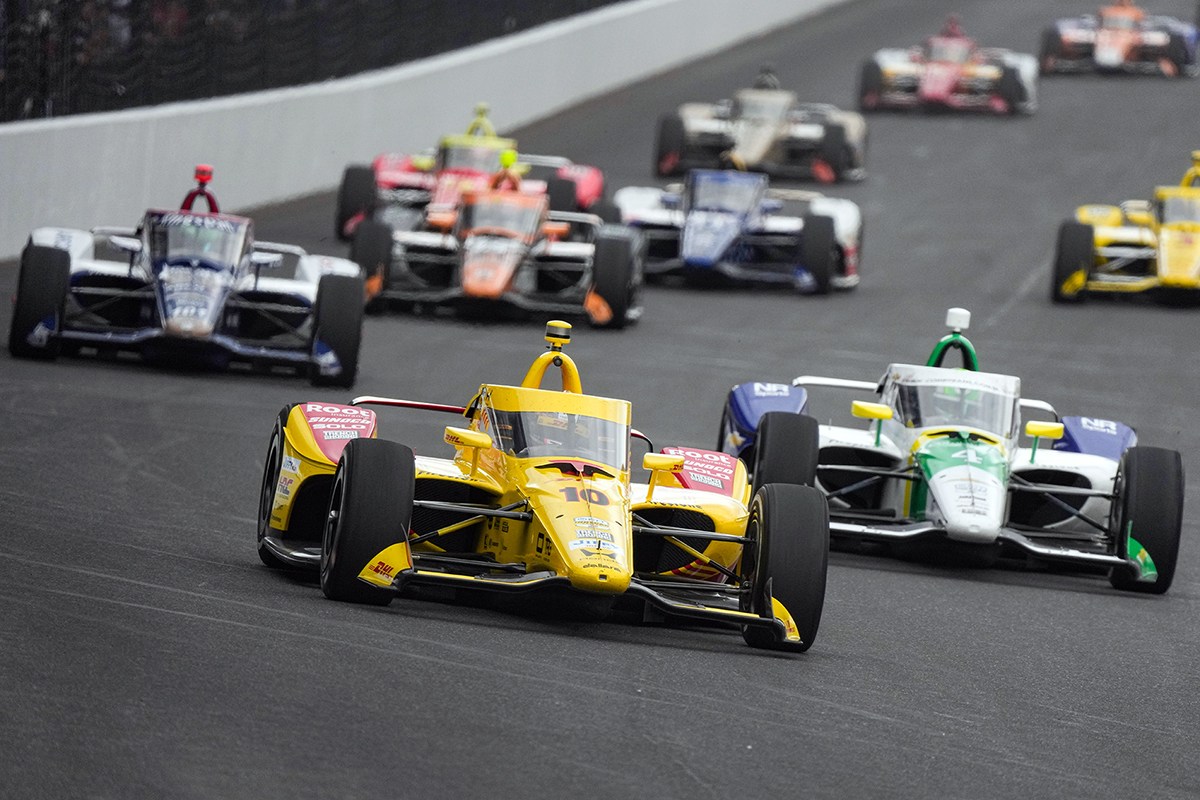
INDIANAPOLIS — IndyCar officials released the renderings of the American open-wheel series’ new car Tuesday and also announced the first tests for the IR-28 chassis will be held this week.
IndyCar officials believe the new, sleeker, lighter cars that debut in 2028 will produce faster speeds and better racing while also keeping drivers safer in the cockpit.
Doug Boles, the president of IndyCar, said the organization worked closely with longtime chassis manufacturer Dallara, longtime engine manufacturers Chevrolet and Honda, tire supplier Firestone and fuel supplier Shell to produce a car that met all of the goals set by the series when it comes to its new ride.
“There is still plenty of work to do before 2028, but we are well on our way to showcasing a new era of IndyCar, which will include enhanced wheel-to-wheel competition, track records, standards in raceability and new benchmarks in safety,” Boles said in an IndyCar release. “We are confident the IR-28 is the ideal package to move IndyCar forward for our teams, drivers, partners and fans.”
The new cars are close to 100 pounds lighter than the current models and will feature some noticeable changes such as new front and rear wings that could help drivers continue to test speed limits and maybe even produce record-breaking one-lap and four-lap qualifying runs on the 2.5-mile oval at Indianapolis Motor Speedway for the first time since 1996. Two-time Indianapolis 500 winner Arie Luyendyk holds both records.
Engineers also believe the redesigned wings will create more aggressive racing on road and street courses while limiting drag and maximizing downforce on superspeedways.
The 2028 car appeared to be an instant hit in Gasoline Alley.
“Seeing the car for the first time made me even more excited about where IndyCar is going,” said Chip Ganassi Racing driver Alex Palou, the 2025 Indy 500 winner who is first in the points standings as he seeks his fourth straight series title and fifth in six seasons. “The design is super cool and feels like a proper next step for the series while still looking like an IndyCar Series car. I think the fans are going to love it, and as a driver I cannot wait to get behind the wheel.”
Felix Rosenqvist, this year’s Indy 500 winner, added: “There is a ‘wow’ factor. The first thing that struck me is that it has more room in the cockpit and will fit different-sized drivers, which is really good. Secondly, it definitely has the IndyCar DNA, which was a worry for me.”
The new, lighter aeroscreen is intended to improve driver safety and gives the cars a jet-like appearance. Other new safety features include electronic adjustable antiroll bars, a stronger, more efficient side-impact structure, wider chassis, and better internal airflow and cooling in the cockpit. The cars also have more stability to stay on the ground when they go “nose up” or in sliding or spinning conditions.
Engineers also believe the aerodynamic changes will lead to closer racing and more passing, but what fans will see are more cosmetic changes: a digital display that shows the car’s position in practice, qualifying and in races, as well as a transparent window over the engine cover to give manufacturers more room to display their branding and additional room for sponsorship decals.
The previously announced 2.4-liter twin-turbocharged V6 engine will produce up to 760 horsepower and create additional torque, while the low-voltage hybrid technology will have more power storage deployment options, all in a package 20 pounds lighter. A new gearbox will be 25 pounds lighter, too.