
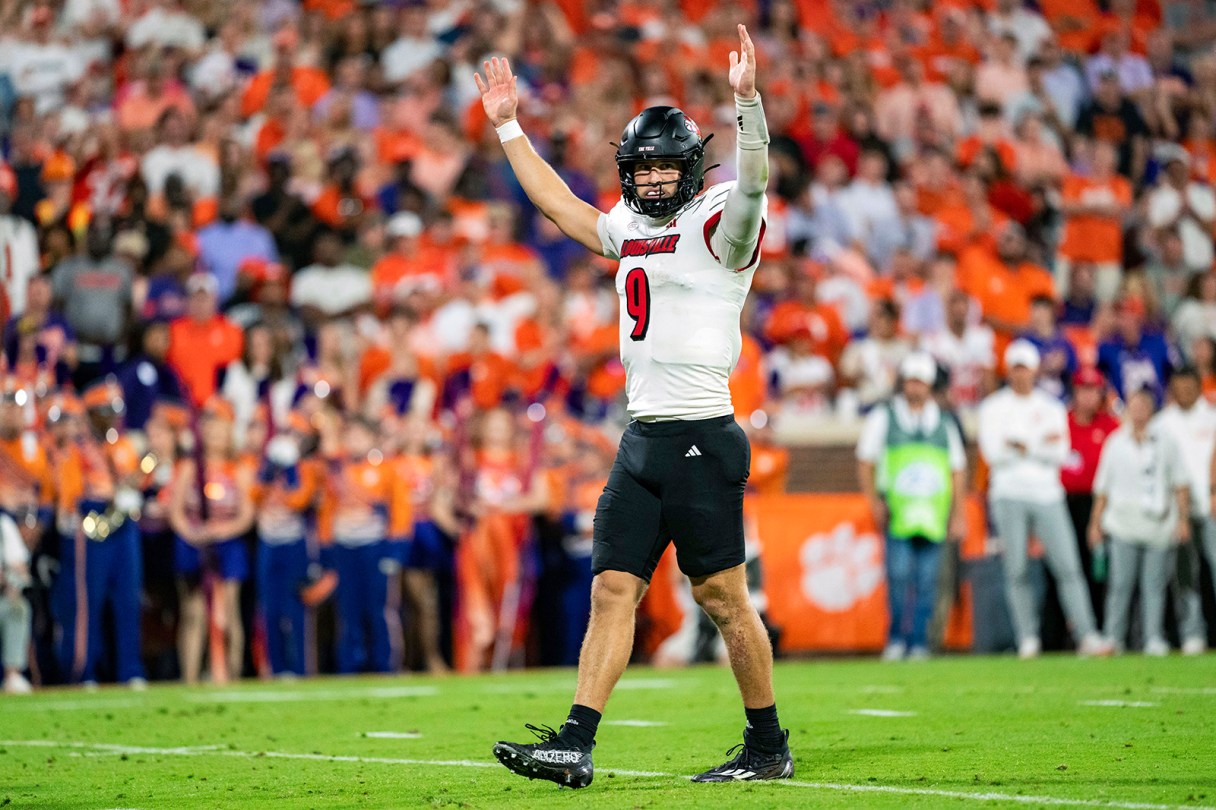
Tyler Shough needed seven years of college football to become an NFL quarterback, but he wound up starting nine games for the New Orleans Saints last season as a 26-year-old rookie.
Under the NCAA’s new eligibility model, players will no longer have that long to get things figured out.
Athletes in Division I, the top level of competition in college sports, will now have five years to complete five seasons of competition, a move the NCAA hopes will add structure to a system stretched into chaos and courtrooms by countless transfers, redshirt decisions, injuries, players seeking more seasons to cash in on NIL opportunities, and even pandemic-era complexities.
The eligibility clock starts when an athlete enrolls into an NCAA D-I school on a full-time basis or at the beginning of the academic year following their 19th birthday, whichever occurs first.
The new rules were unanimously approved by the Division I Cabinet on Tuesday. If the NCAA regulations withstand potential legal challenges — and those have already started, with a group of 15 college basketball players filing a lawsuit in an Ohio state court Wednesday, claiming the new age-based model unfairly shuts them out of further competition — the development of college athletes will undergo a dramatic shift.
There will be no more traditional redshirts, which were a staple of the five years for four seasons model, nor will there be medical or general extension waivers available. The only limited exceptions for going beyond five-in-five would be for military service, religious missions and maternity leave.
Tom Loy, a national recruiting analyst for 247Sports, believes the change could keep talented players in college for longer.
“In addition, I believe this rule change would have coaches putting a significant emphasis on retaining as much of the current roster as possible, especially upperclassmen, while focusing their attention slightly less on the transfer portal,” Loy wrote in an email. “With the opportunity to play five full seasons, they could have a roster full of 23-year-olds, for example, compared to 18- or 19-year-olds, and beyond that, potentially have a group full of talent they have developed in their system.”
Shough spent two seasons at Oregon and three at Texas Tech before suiting up at Louisville as a seventh-year senior in 2024. Injuries, a redshirt season and the COVID-19 pandemic extended his college career, extra time that helped turn him into a second-round pick in the 2025 NFL draft and, by late October with the Saints off to a 1-7 start, the starting quarterback in New Orleans.
He believes future college athletes should be given the same opportunities.
“I think everybody should have a chance to at least get a medical (redshirt) and then a (traditional) redshirt,” Shough said. “I know I benefited from that experience, the maturation process, having to compete multiple years. I feel strongly about that.”
Detroit Lions rookie defensive lineman Aidan Keanaaina followed a similar path. His six-year college career included an undergraduate stint at Notre Dame and two postgraduate seasons at California after using a medical redshirt and the NCAA’s blanket waiver that gave thousands of athletes an extra year amid the pandemic.
The five-in-five rule would have taken away Keanaaina final college season in 2025, a year that helped him make his case to NFL scouts. Even so, he understands the effort to bring order to a landscape he described as “the Wild West” for college sports.
It’s an environment that led to such extreme cases as tight end Cam McCormick, for whom 2024 marked his ninth year of college football — with plenty of time lost due to injuries — as he spent his final two seasons with the Miami Hurricanes after seven at Oregon.
“You can’t please everyone in this world, ever, but they’re trying to please as many people as they can and do right by as many people as possible,” said Keanaaina, a 6-foot-3, 320-pounder who signed with the Lions as an undrafted free agent. “As someone who was injured, I think it’s tough to make a one-size-fits-all rule. But I also get that sometimes an older player is taking opportunities away from a younger one.”
While he and Shough point to what the new model could eliminate, others believe opportunities will be created elsewhere in college sports.
“I think it’s the NCAA’s way of keeping college sports as amateur as possible with the chaos that is the NIL era. It will be good for sports like lacrosse, where postgrad and redshirt years are less common than in football,” said Kelsey Fee, an assistant coach for the Dartmouth women’s lacrosse team. “It will open up the portal to a new slew of craziness with kids looking to use their fifth year.”
Fee said she also thinks the shift will bring an excitement to recruiting that hasn’t been felt in recent years.
Loy, the 247Sports recruiting analyst, said coaches could be more interested in high school prospects “and getting these guys on the field as quickly as possible.”
“Whether it works out or not, everyone would get a glimpse at where each prospect stands compared to others,” he wrote. “The players would get the early playing time, the coaches would see who outperforms who, and then, without the ability to redshirt anyone, a prospect can continue to be developed if they want to stick around and compete. They also wouldn’t just rush to leave and transfer, since they know they have five years to play ball.”
Green Bay Packers center Sean Rhyan, a third-round pick in the 2022 NFL draft, predicted stricter eligibility guidelines could change the way athletes think about transferring: Once the clock starts ticking, a case can no longer be made to rectify a misstep.
“Five-for-five, that’s fair. I think NIL is good, but I also think it took away that loyalty aspect that I think sports need,” Rhyan said. “Having that fixed amount of time is going to bring that loyalty.”
And then Rhyan added perhaps the most convincing argument of all: “Having, like, a 27-year-old linebacker or something, and then you have a 17-year-old running back … I think five-for-five is more than fair.”