
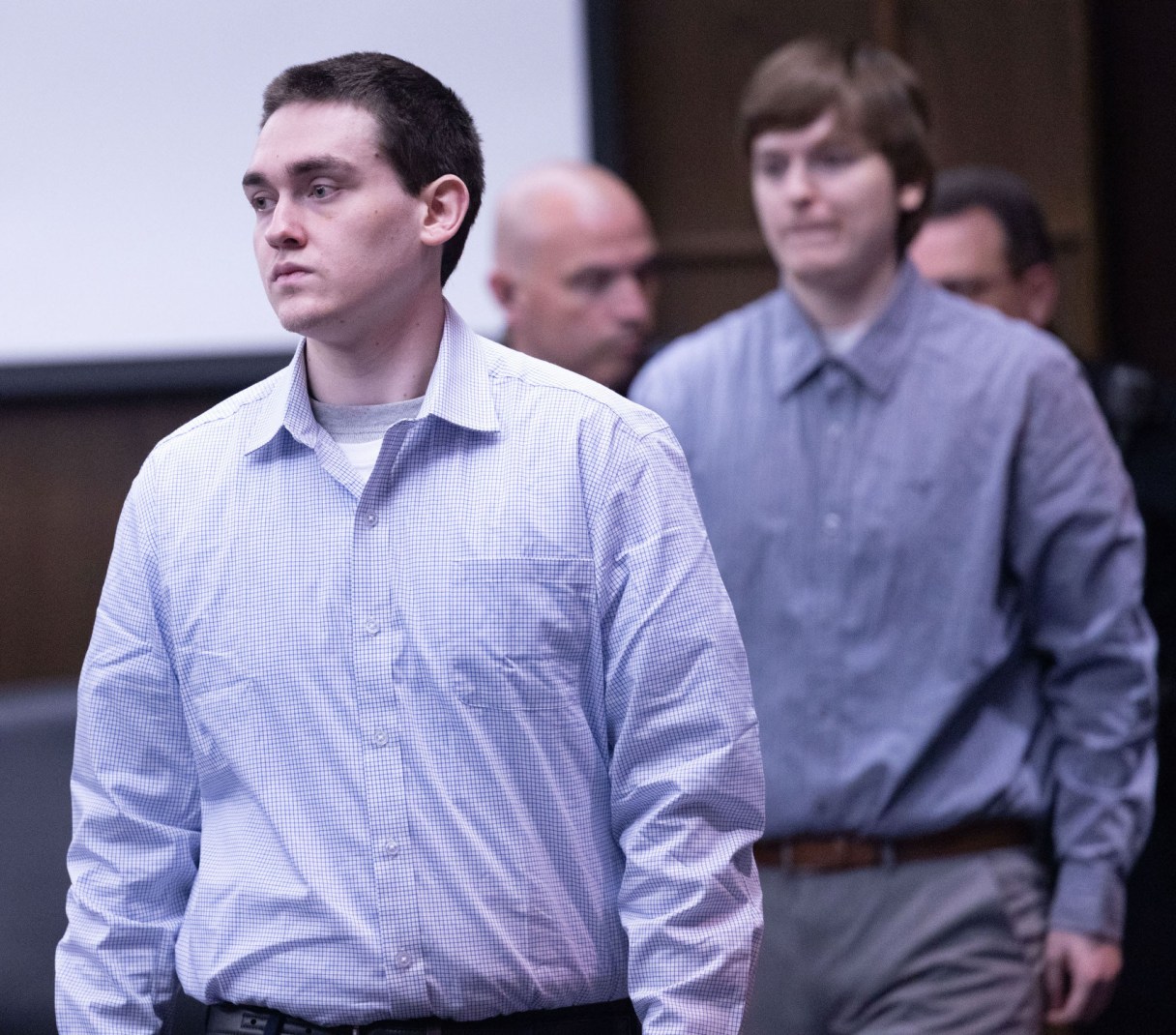
A Hamilton County jury found two brothers guilty, on different charges, after they were accused of arming a gang of juveniles and coordinating a night of drive-by shootings at three houses, officials said, resulting in a man’s murder.
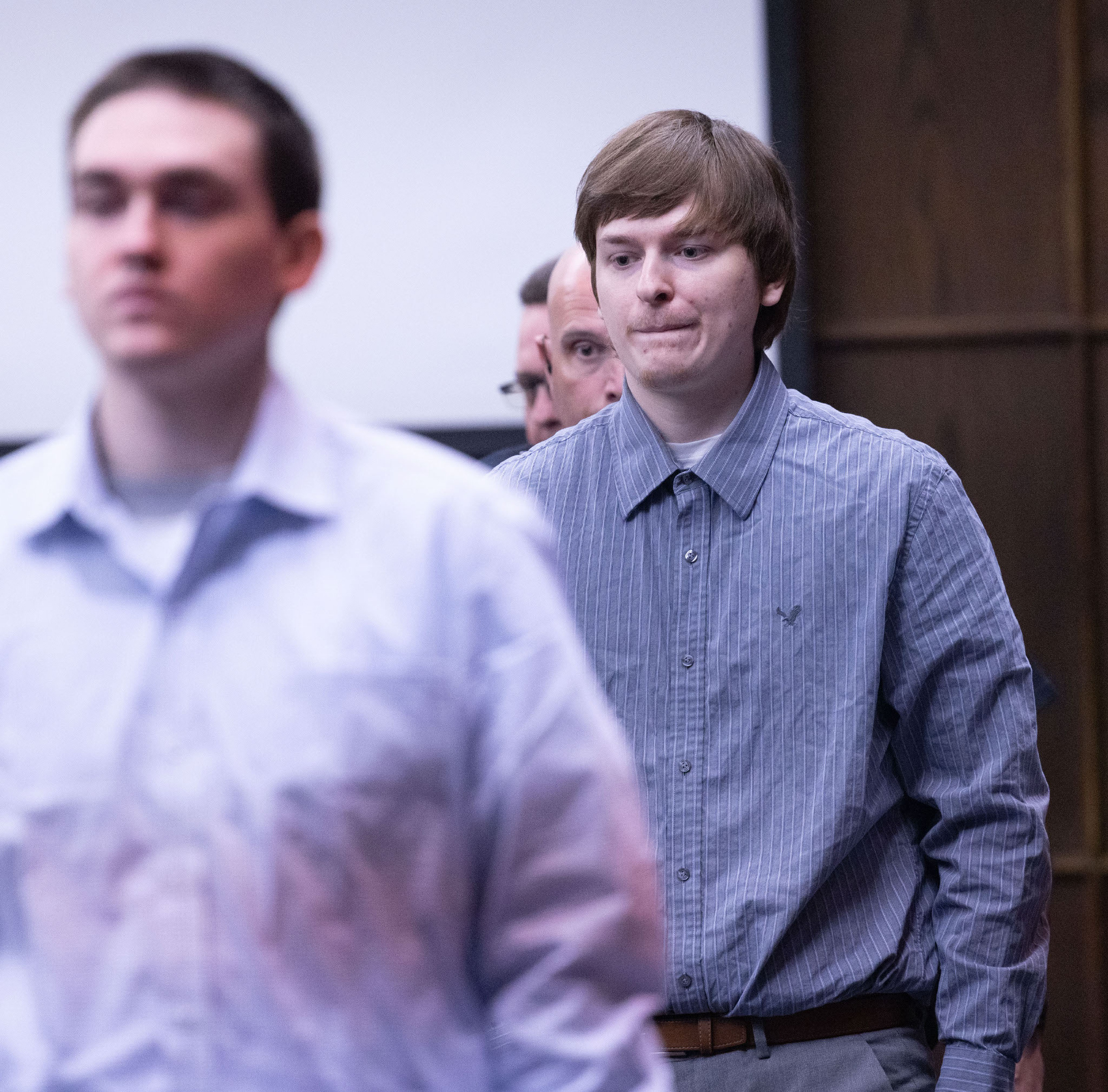
After three hours of deliberation, jurors Monday found Samuel Askins, 22, guilty of several felonies, including the first-degree premeditated murder of Warren Crutcher, 48, according to prosecutor Paul Moyle. The murder conviction carries an automatic sentence of life with the possibility of parole, and the remaining charges could carry additional decades in prison after sentencing.
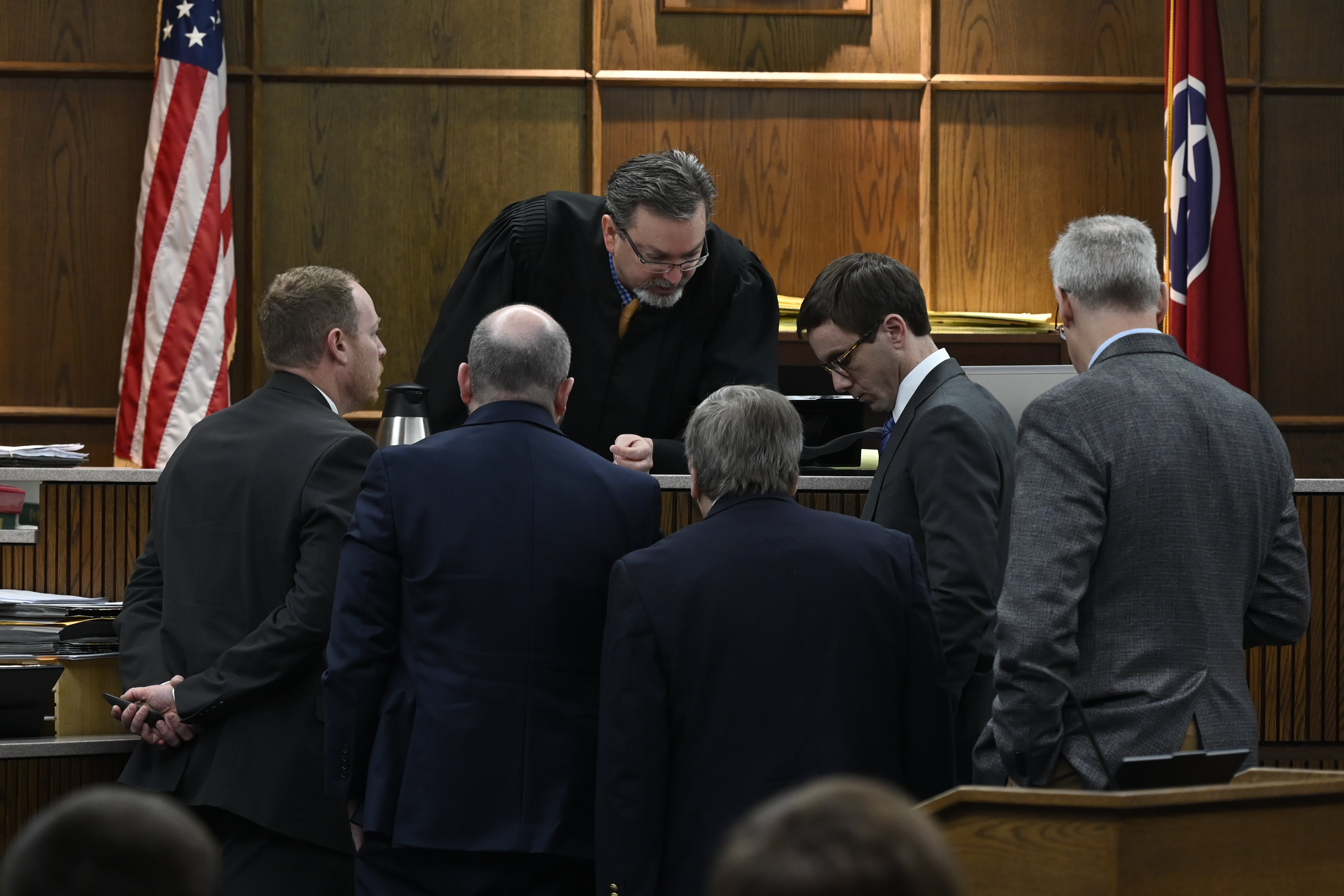
Caleb Askins, 23, who stayed home but was accused of helping from afar, was found guilty of facilitation of aggravated assault — which was reduced after a rarely-granted court motion — among other charges, in Hamilton County Criminal Court Judge Boyd Patterson’s courtroom. Moyle said that at a minimum, Askins faces three years’ probation, but his convictions could carry more than 2o years.
The inciting incident leading to the shooting wasn’t exceedingly clear, Moyle said by phone.
Brothers found guilty after 2023 Chattanooga drive-by shooting spree ended with murder
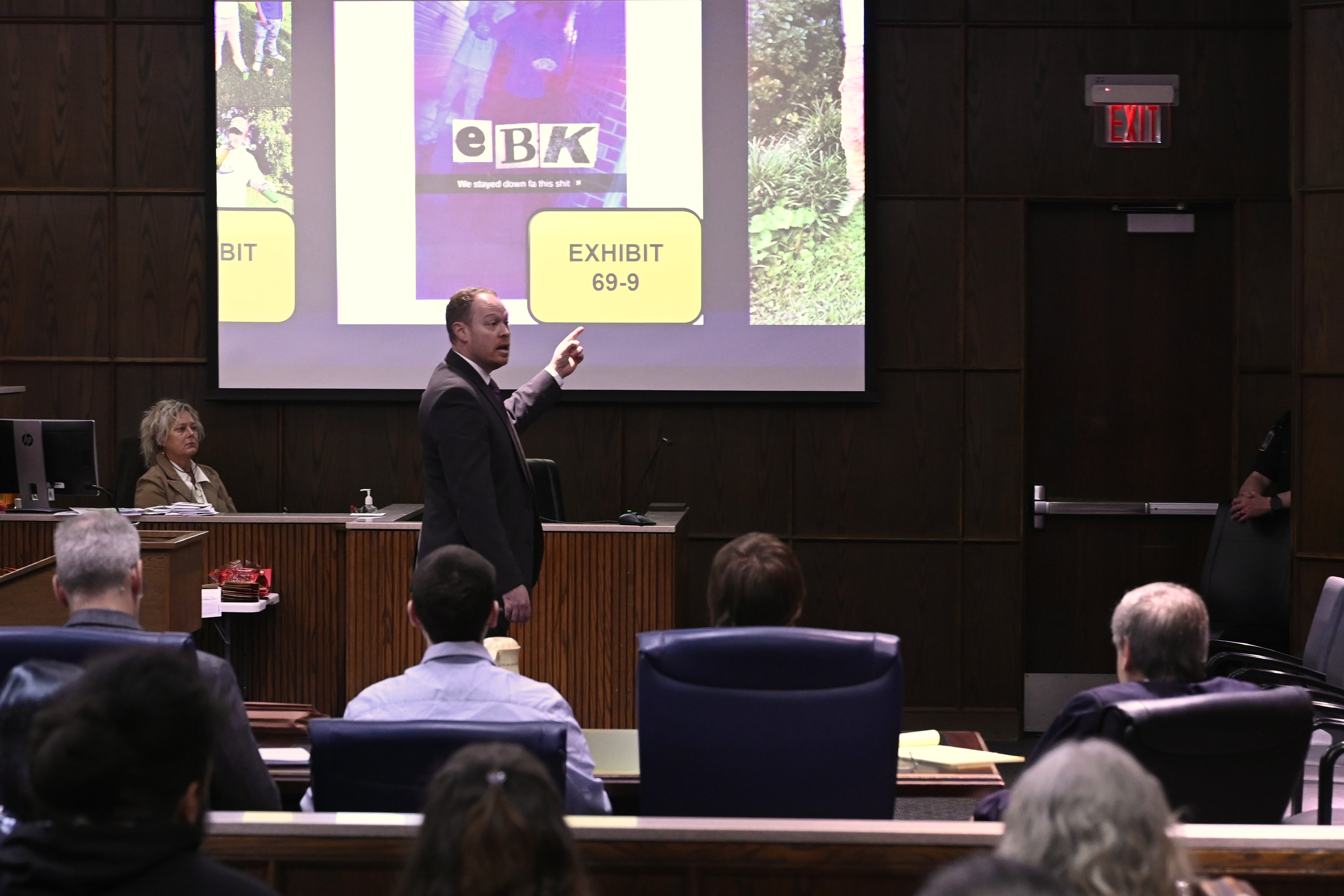
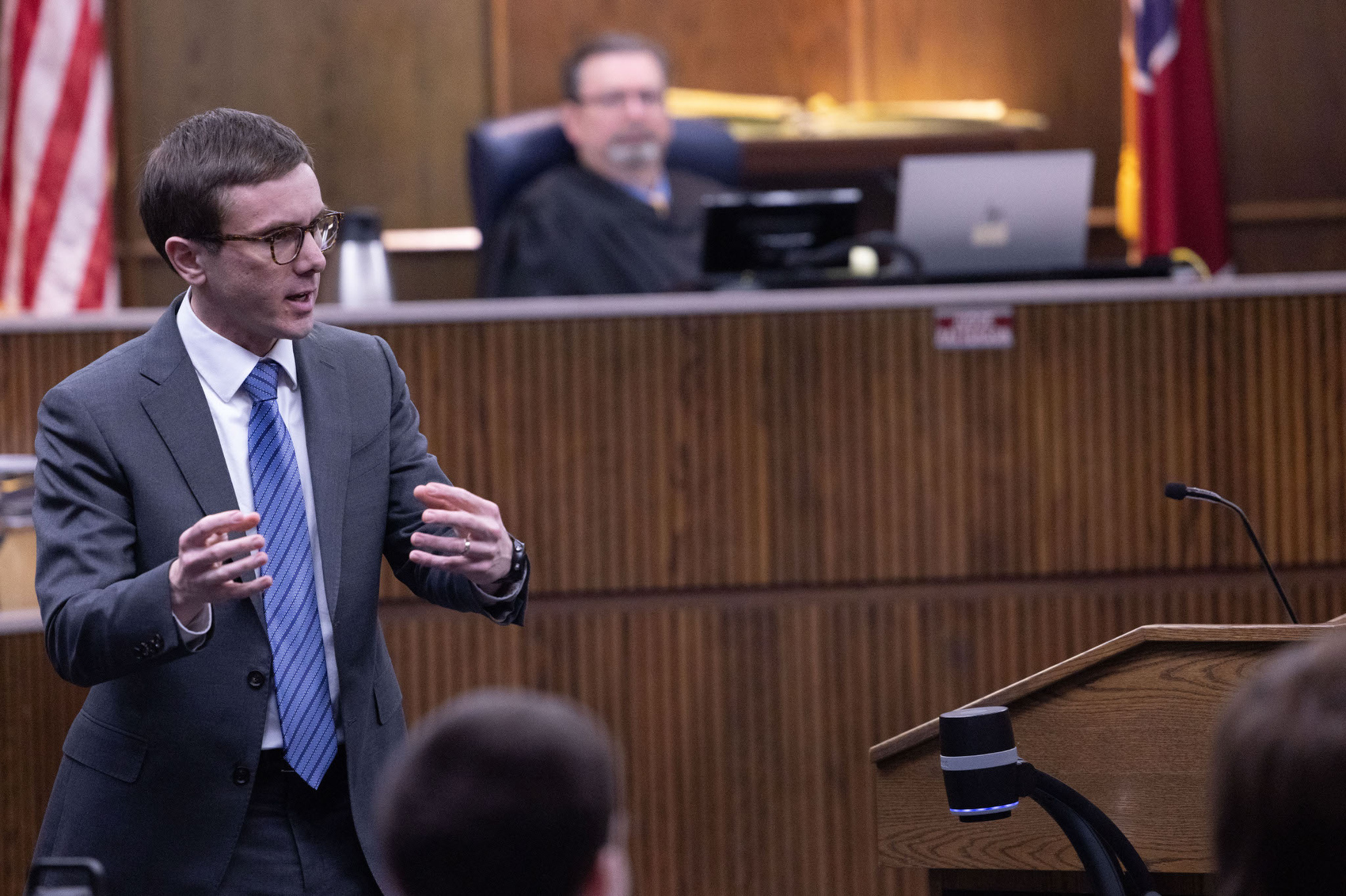
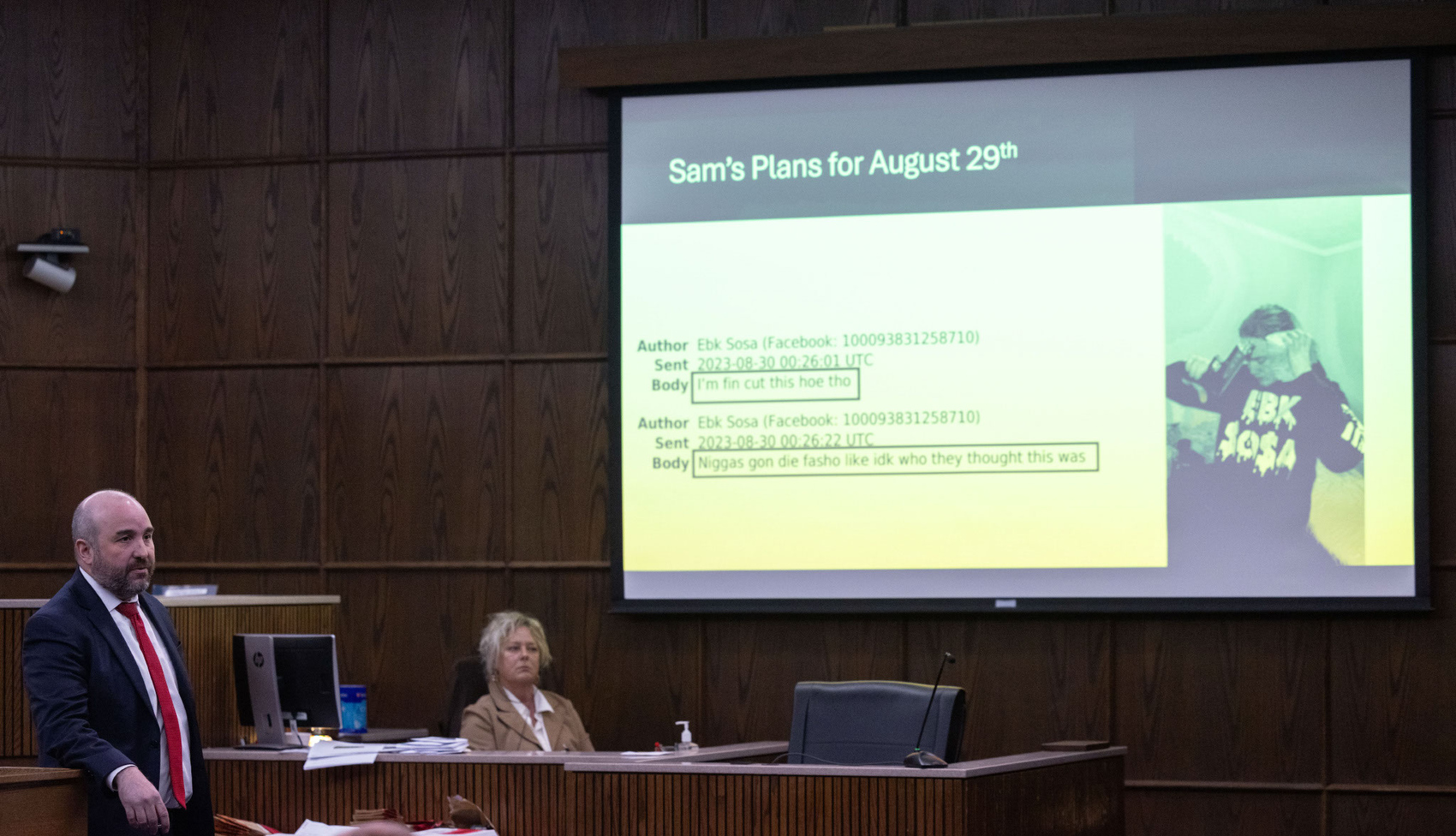
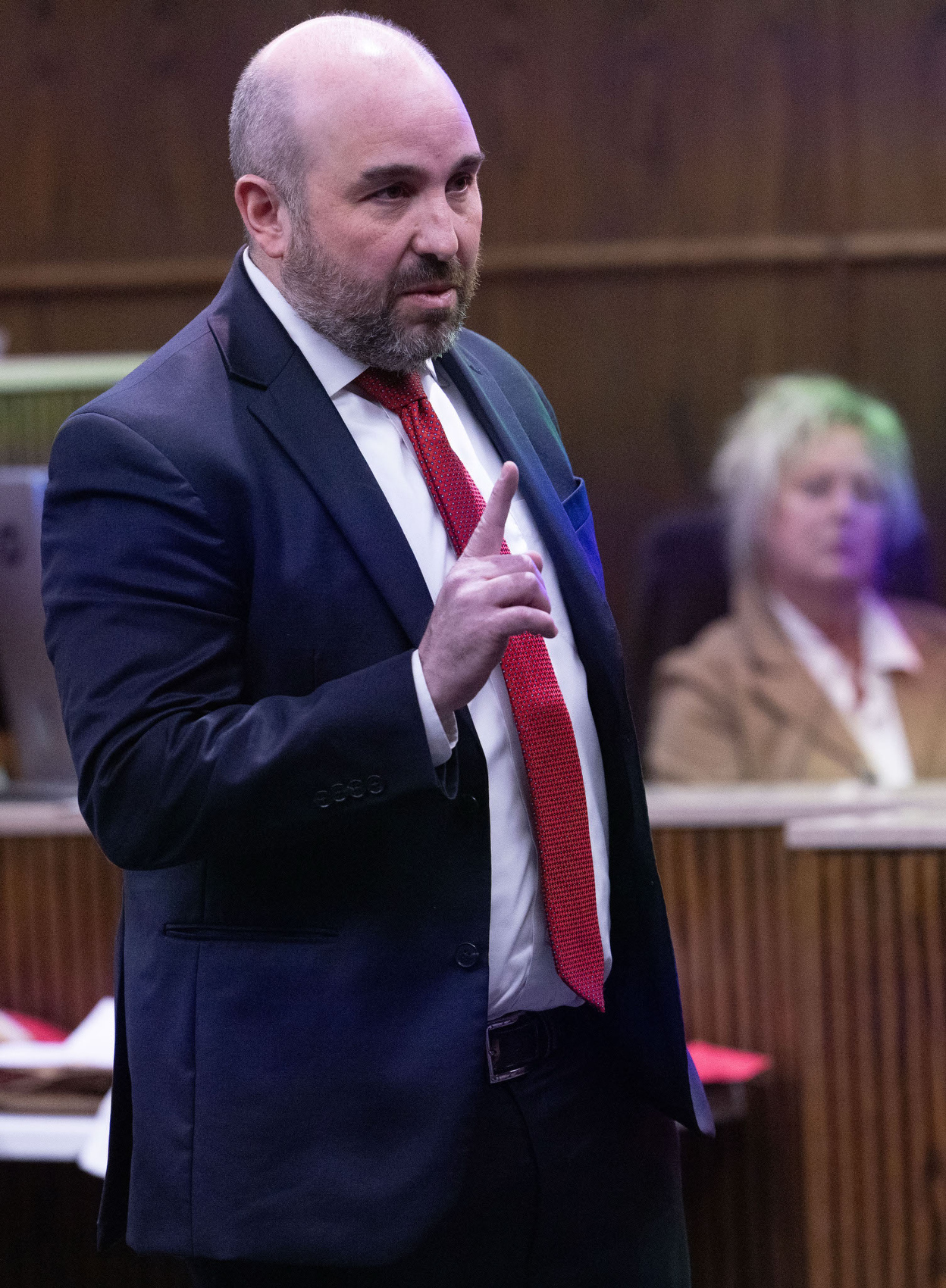
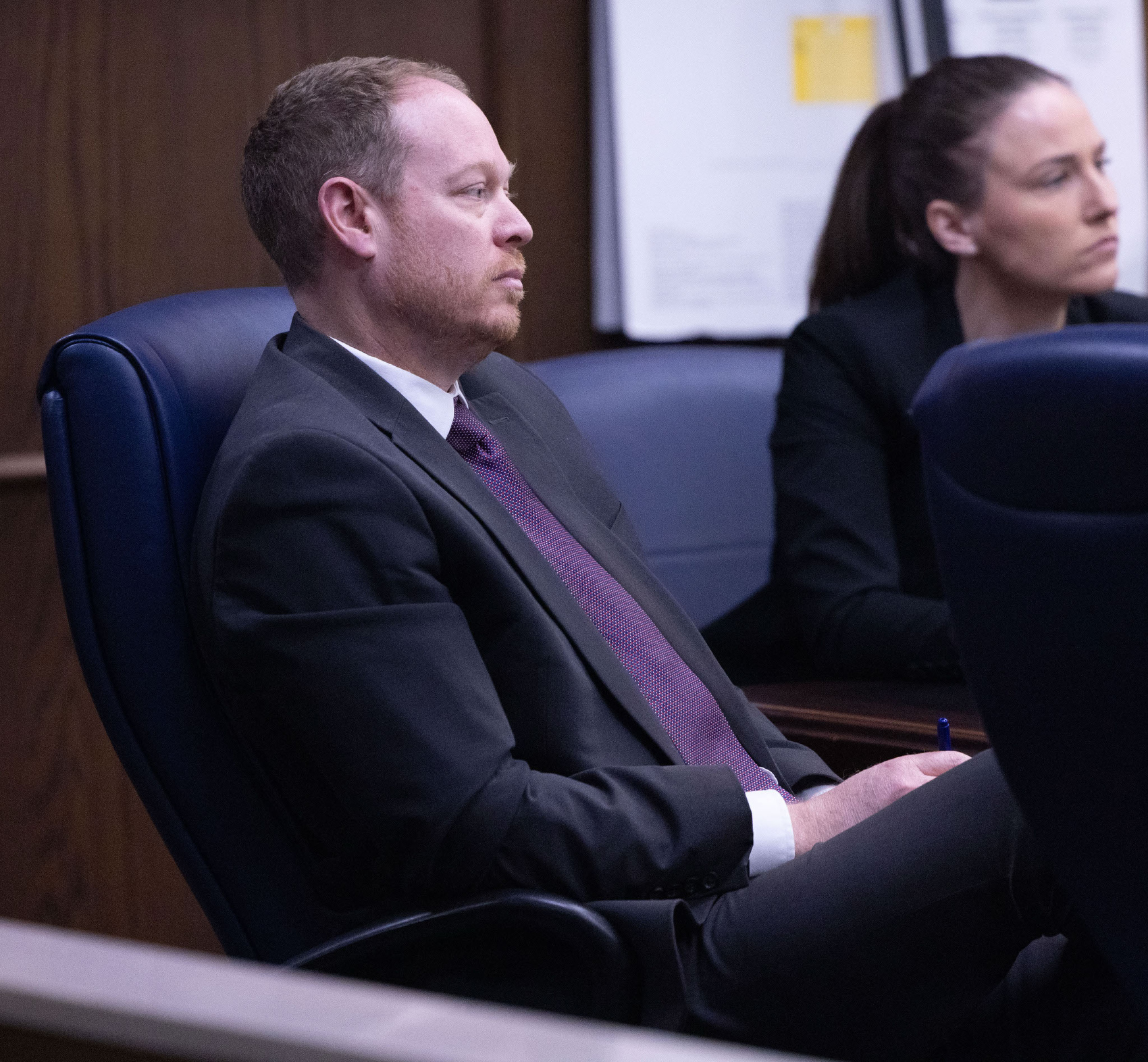
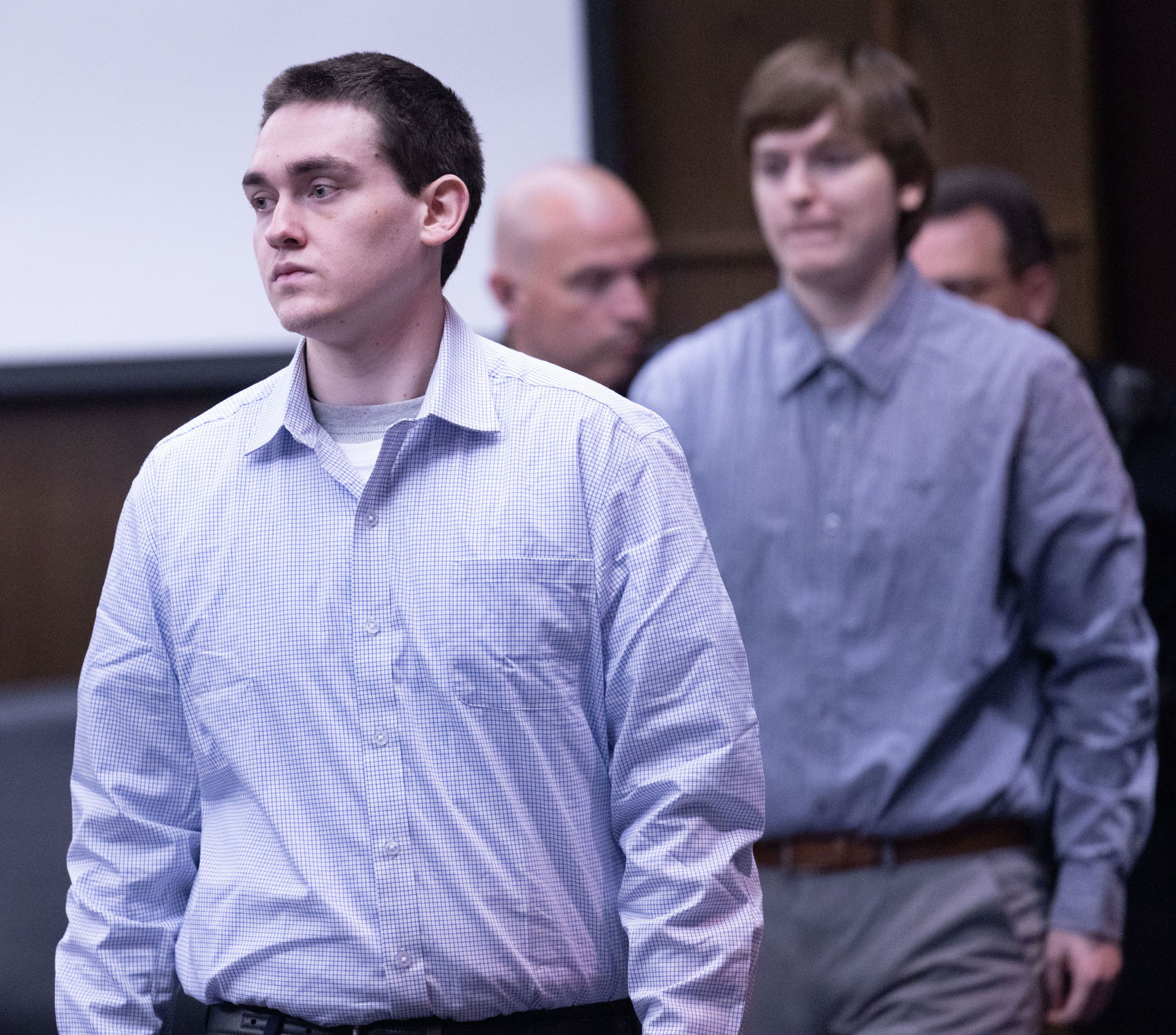
There was a falling out with a woman Samuel Askins was dating. That led to conflict between her extended family and Askins. Before his arrest, the Askins’ mother was shot in her own home as part of a drive-by incident, Moyle said. He said Askins returned from the hospital the night of Crutcher’s death, armed the juveniles, removed his GPS tracker and went on a shooting-spree.
“By my estimation, that’s one of the most heinous aspects of the case beyond the murder itself,” the prosecutor said. “The use of juveniles as, in essence, child soldiers, I guess, in some sort of a gang war, is particularly egregious.”
Hamilton County Deputy Public Defender Mike Little said by email that the office had no comment as of Tuesday.
(READ MORE: Teens shot at 2 other houses before shooting, killing man outside Chattanooga home)
GANG VIOLENCE
Earlier Monday morning, the state began closing arguments by describing the way dust scattered in the air as bullets tore through an occupied house around 10:22 p.m Aug. 23, 2023. An hour later, Moyle said, there was a volley of gunfire at a different address with a woman clutching an infant inside.
“He’s targeting women and children in the dead of night,” Moyle said.
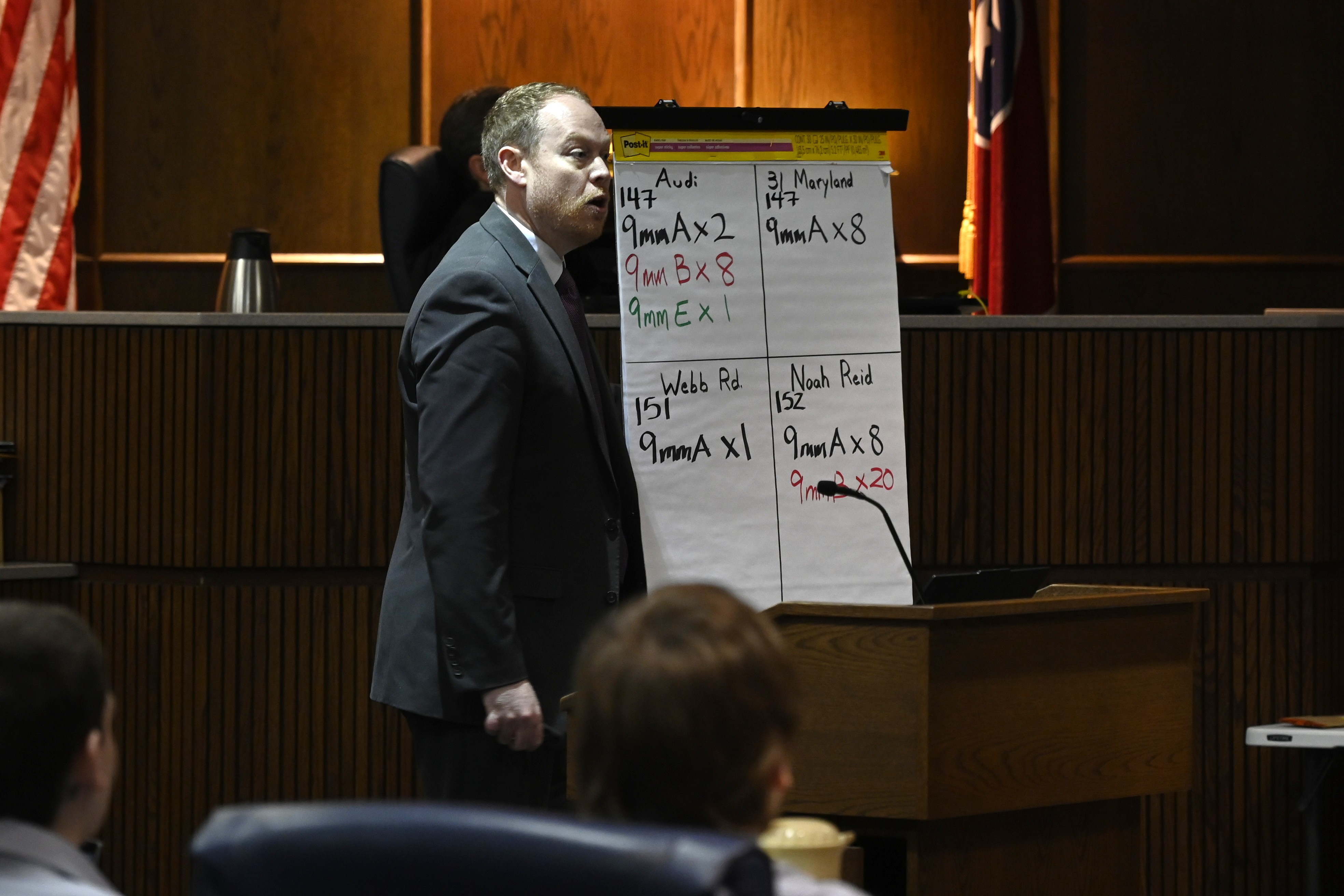
Fifteen minutes later, he said, at 31 Maryland St., there were at least 10 more gunshots. The woman at that house woke up with dust in her face after a bullet pierced her house, bounced off a wall and landed in her bed, inches away from where she and her grandchild were sleeping.
Crutcher was on the porch of the last house when he died. The same gang attacked all the addresses, the prosecutor said.
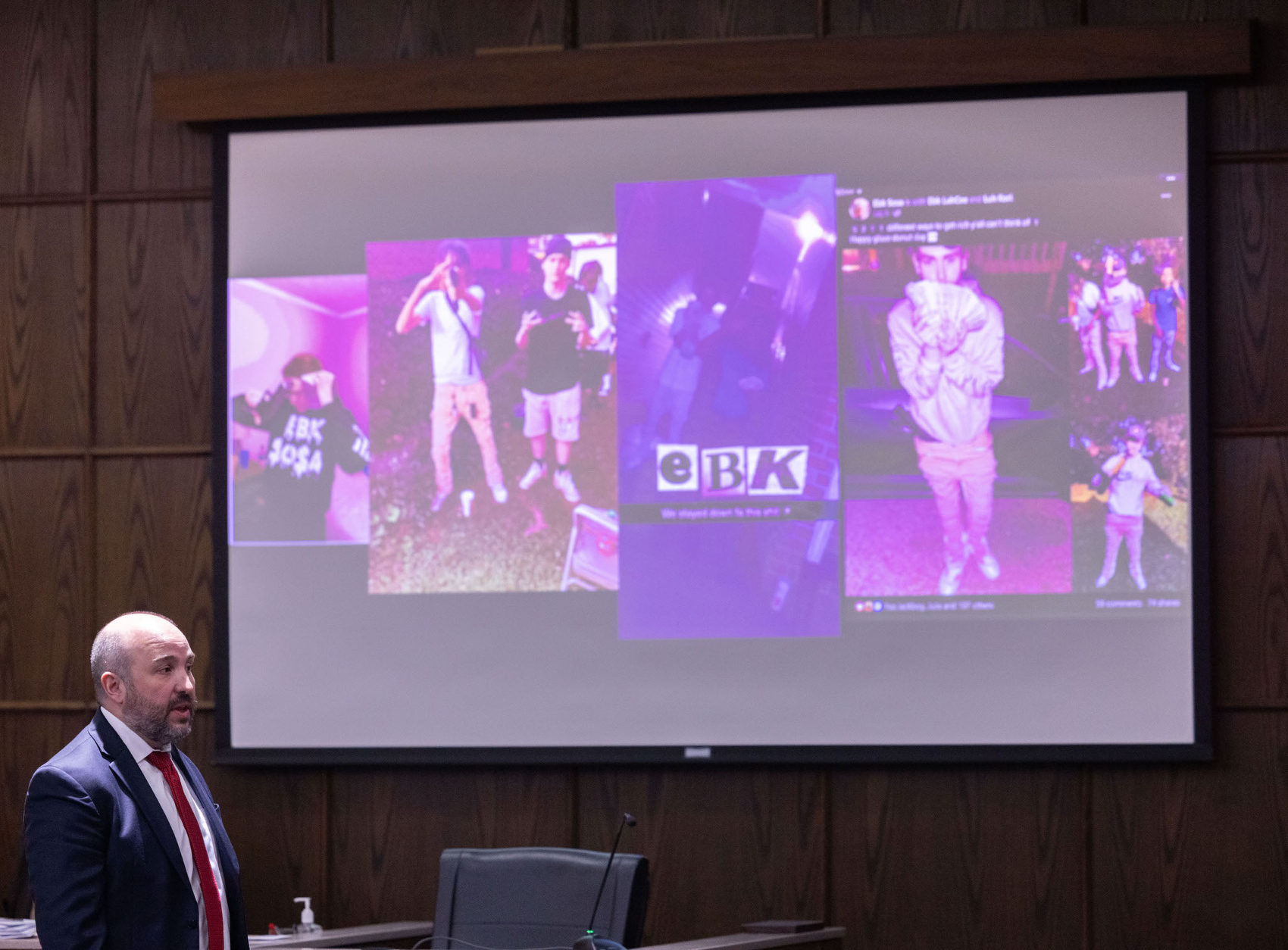
“To the police, they’re supposed to say that they’re the East Brainerd Kids,” Moyle said. “Amongst each other, everybody killers.”
Askins or one of the juveniles could have fired the fatal bullet, but it doesn’t matter who did, according to the theory of criminal responsibility for the conduct of another. Askins is responsible, regardless, Moyle said, for assisting or promoting the criminal conduct.
On the night of the shooting, Askins posted on Facebook that people were going to die, Moyle said. Askins also tried to delete messages from his phone.
“There is no question that this was their plan, their plan and that they wanted to kill somebody,” Moyle said.
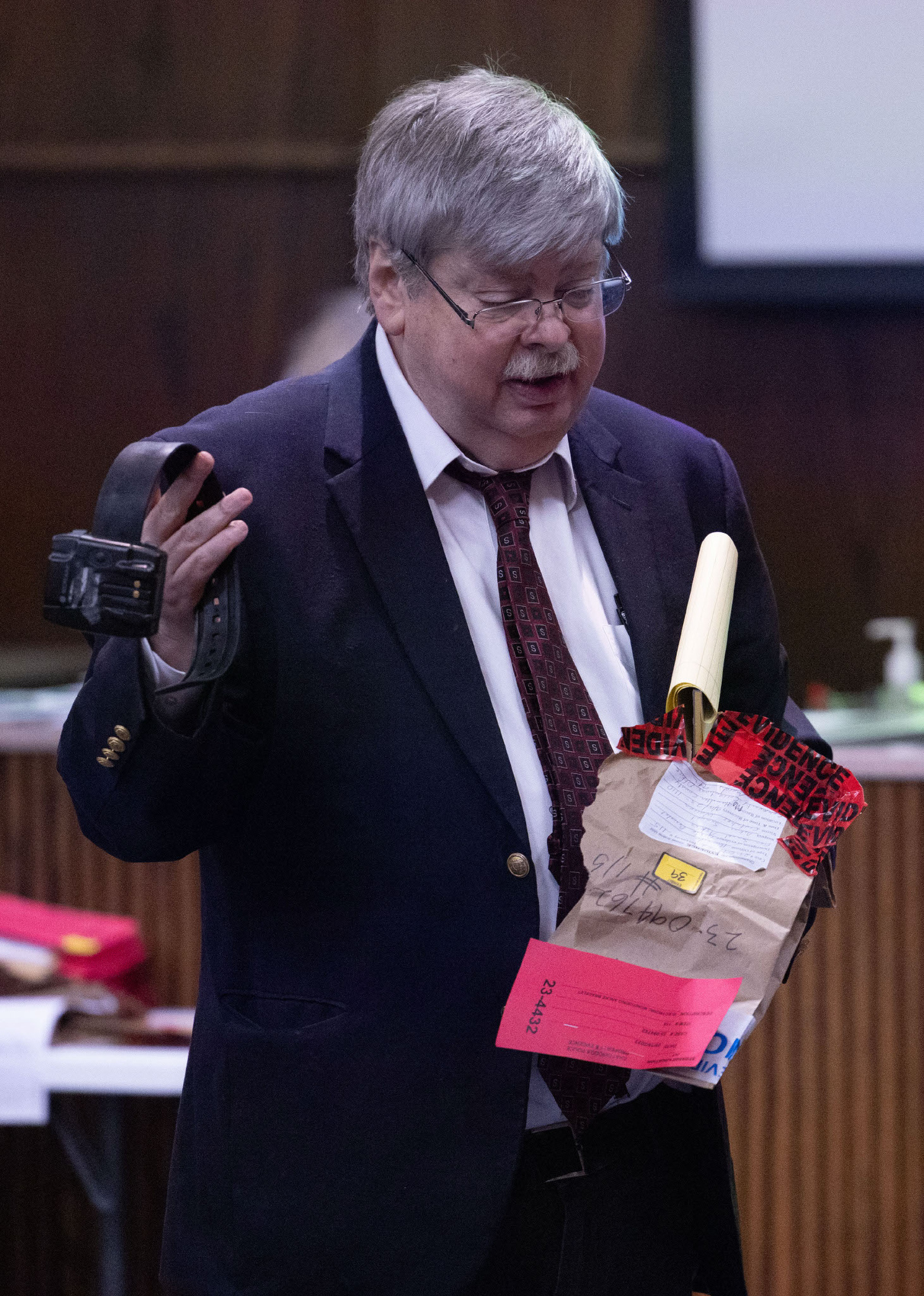
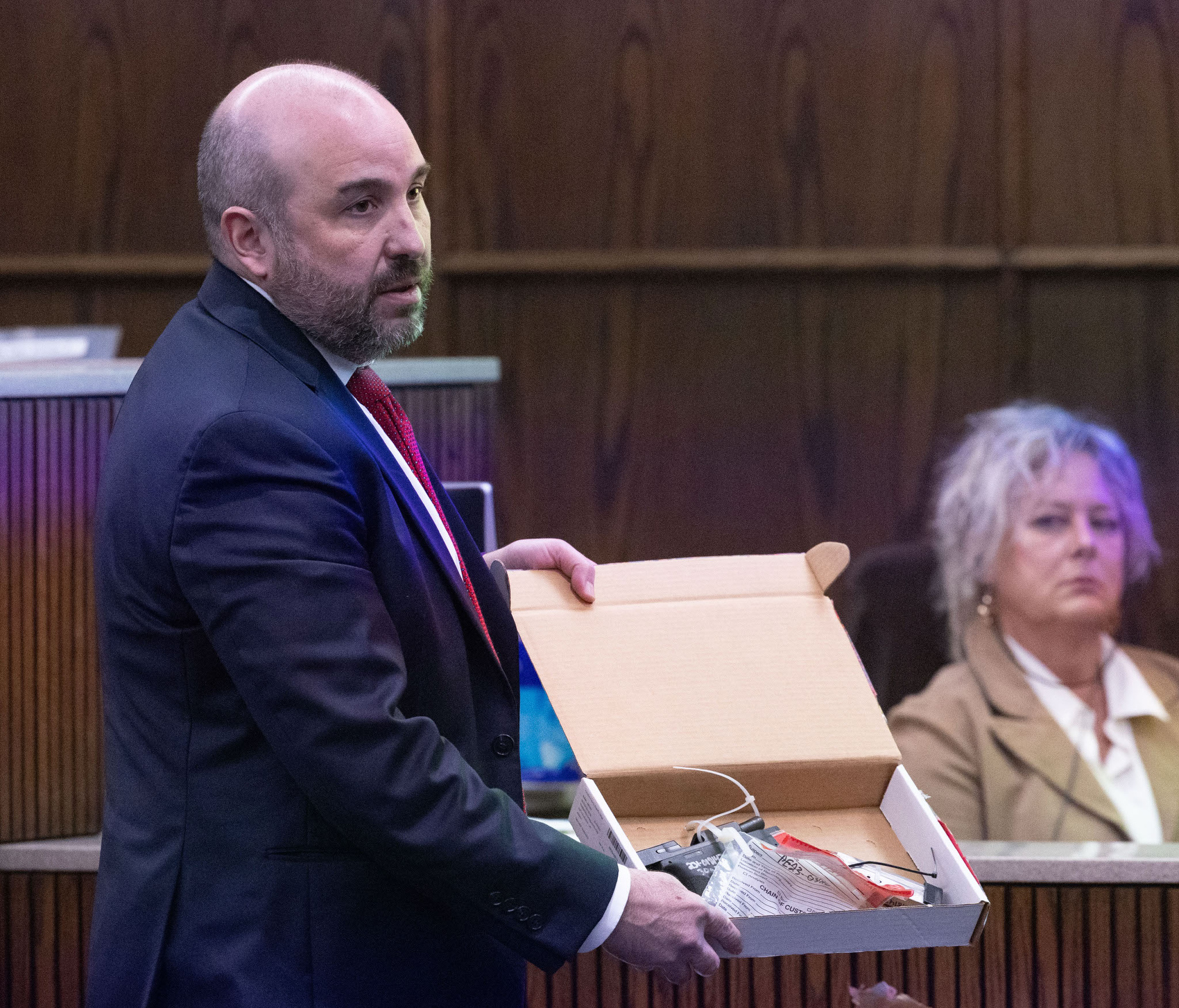
The state also reviewed bullet trajectories and reminded the jury about the ankle monitor that Askins’ brother, Caleb Askins, moved around while allegedly providing updates on police activity.
(READ MORE: Brothers accused in shooting death face jury in Hamilton County)
“MUD DOESN’T HOLD”
Samuel Askins’ public defender, Alex Shoaf, said the jury hadn’t heard much about the Askins’ mother, who was shot and hospitalized. In his argument, Shoaf asked the jurors to find his client not guilty if they had a reasonable doubt about any of the evidence or testimony in the case.
“It’s a shiny tower of proof that is built on a foundation of mud,” he said. “Mud doesn’t hold. When something sinks into that mud, you can’t make heads or tails of it.”
He said Corey Palmer, the state’s witness and participant in the crime who is also charged with first-degree murder, was the foundation for the prosecution’s case. Shoaf questioned the motivations of Palmer, who had made a deal with prosecutors in the hope of a better outcome at sentencing.
“They told this desperate, 16-year-old boy, if it was Sam’s idea and you were just getting pulled into it, just tell us,” Shoaf said.
When Samuel Askins and the juveniles left that night, Shoaf said, their intent wasn’t to kill anyone, but to shoot houses.
“This is immature, dangerous, young people shooting at houses and mostly missing,” the attorney said.
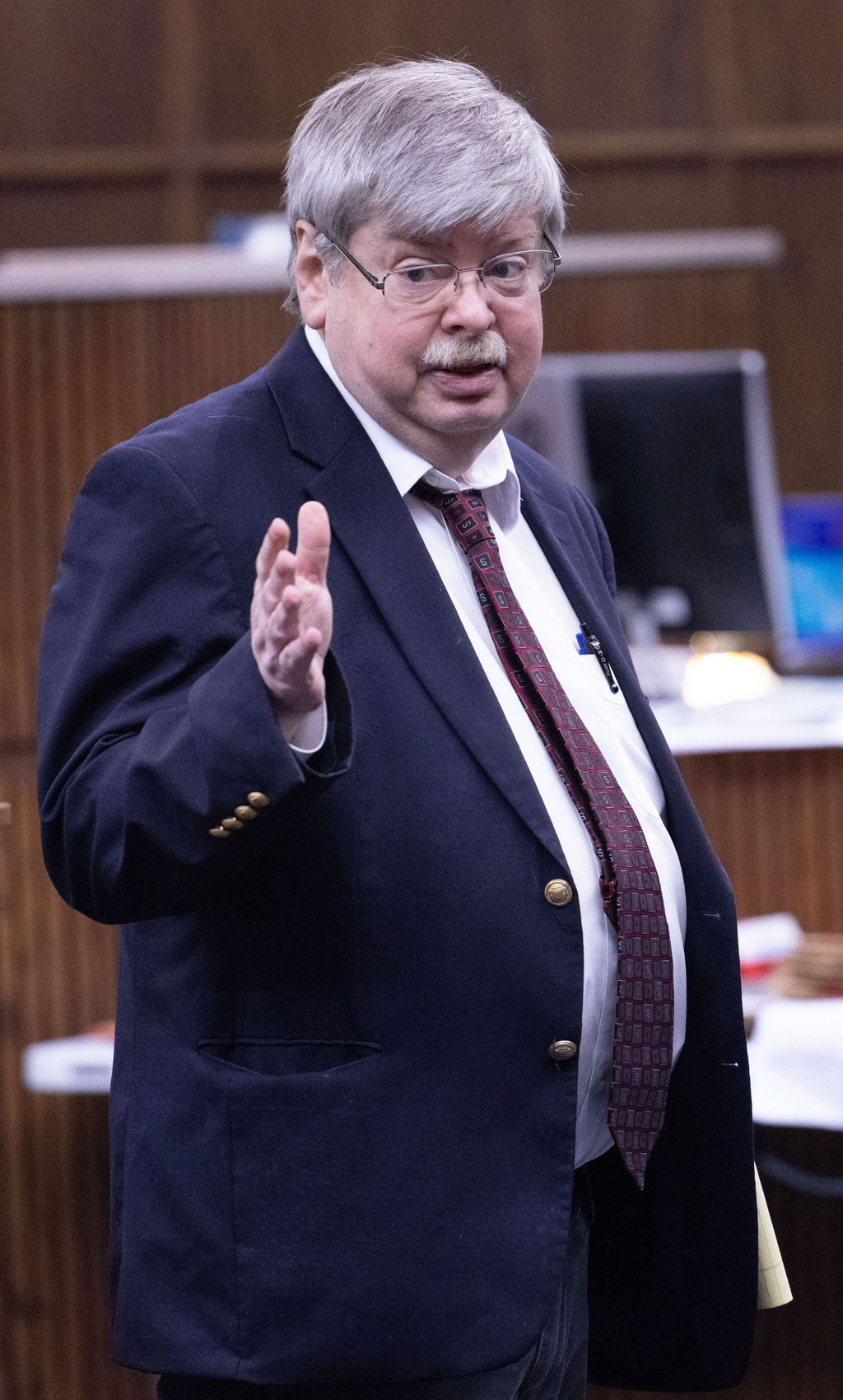
Caleb Askins’ defense attorney, John McDougal, said there was no evidence to show his client aided the others in shooting at the houses or that his client knew what would happen. Testimony revealed that his client was supposed to move the tracker, but there were two people in the house, and there was no proof that Askins had moved the tracker.
“Look at his messages, his messages don’t give any help,” McDougal said. “Basically, he just tells them to come home and be safe.”
The lawyer said the state had no proof that his client knew of the conspiracy before the fatal shooting, and he also cast doubt on Palmer’s testimony.
(SIGN UP: Get our top headlines in your inbox every evening by going to timesfreepress.com/evening)
SENDING ‘THE CHEESE’
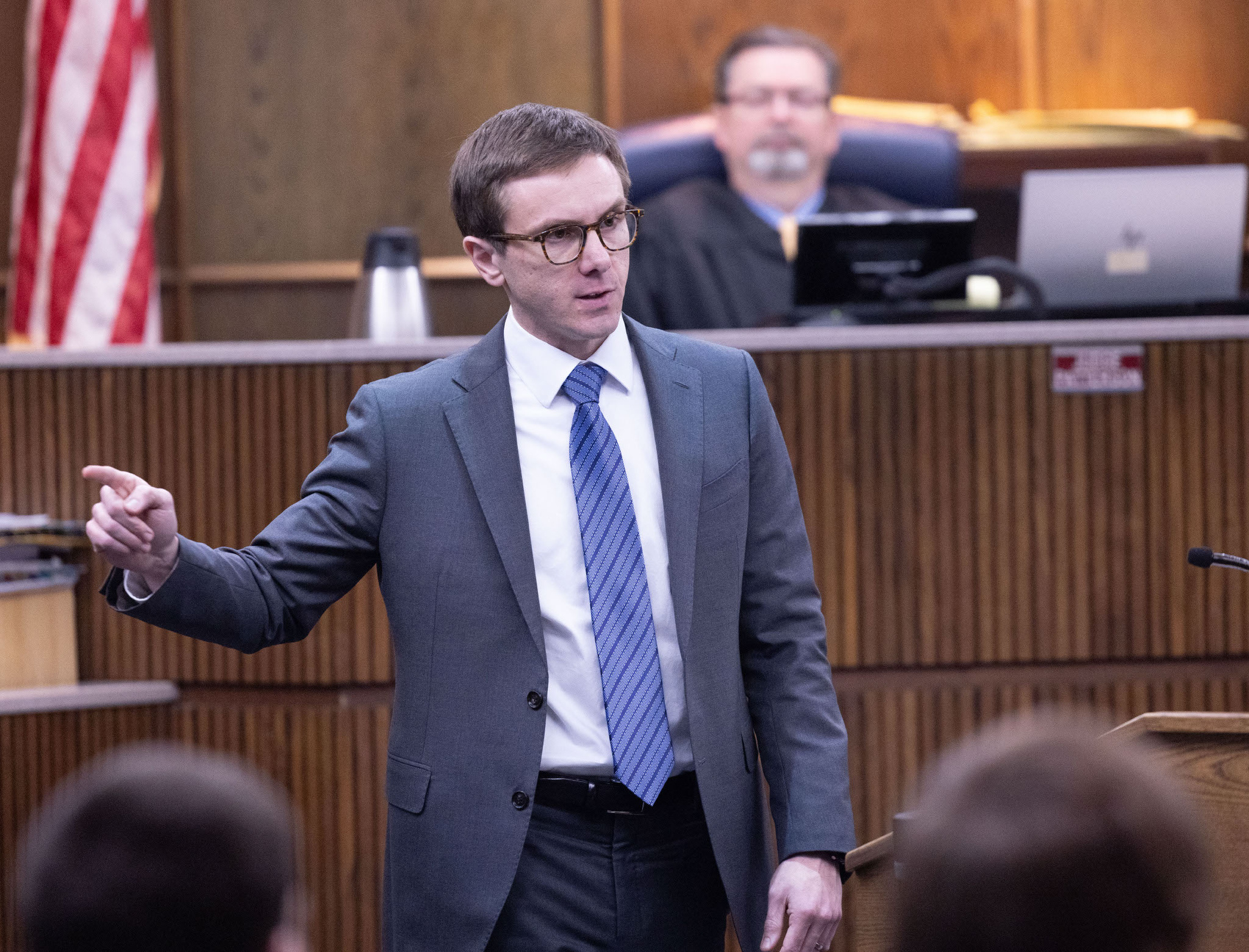
In response to the defense, prosecutor Austin Scofield said the evidence and details matched Palmer’s testimony. If Palmer intended to protect himself, he did a bad job, as Palmer admitted firing a gun at the murder scene.
“They don’t want you to believe anything Corey Palmer says when it’s bad for them,” the prosecutor said. “But, failed, utterly, to point out any lies he told about this case, not for lack of trying.”
He said the defense wanted the jury to believe this was a case of a kids-being-kids act of recklessness. Scofield said Samuel Askins knows shootings put lives at risk, as his mom was injured after a shooting.
Scofield accused the gunmen of deliberately aiming at where Crutcher stood. Two of the three houses had gunshot holes on the broad facing side, impacting the middle of the houses, Scofield said. The house where Crutcher was standing had bullet impacts concentrated along the porch.
Caleb Askins knew about the shootings from the beginning, the prosecutor said. Askins received a message asking him to remain on point after a gunman sent “the cheese.” Scofield said that Palmer testified that sending the cheese meant shooting up houses.
McDougal said by phone Tuesday that he was disappointed with the verdict for Askins. His client was originally charged with facilitation of first-degree murder, which was reduced to facilitation of aggravated assault after McDougal successfully argued there was no evidence, before the text message, that Askins was signing up for first-degree murder.
There were several causes for appeal, McDougal said, one of which was that his client was tried alongside his brother, who the attorney said prosecutors “definitely had dead to rights.”
The state had opposed separating the two, and the judge went along with it, he said. McDougal said more information will come out after the brothers’ sentencing, which is scheduled for May 18.
Contact courts reporter Mason Edwards at medwards@timesfreepress.com or 423-757-6409.