
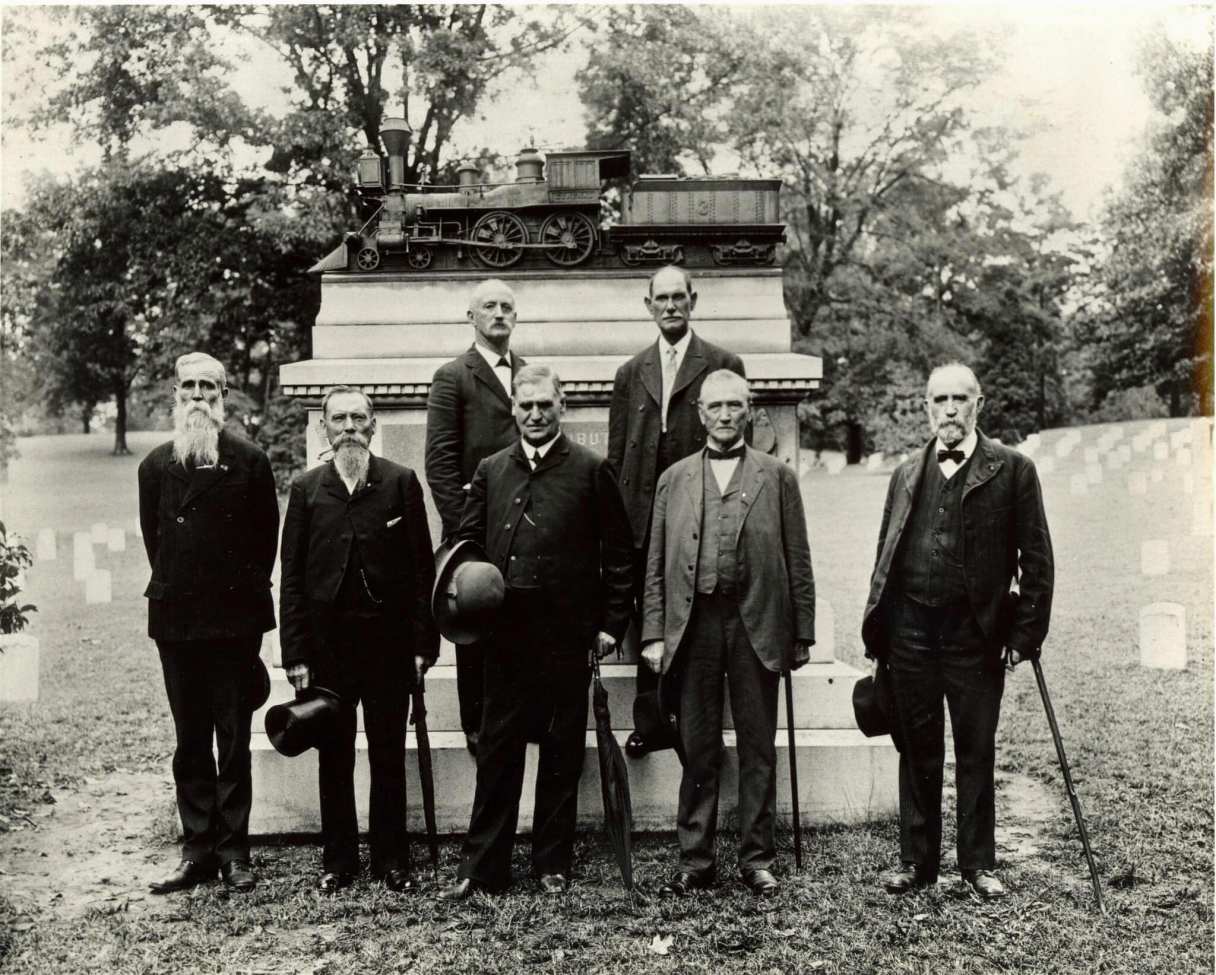
In October 1906, Chattanooga hosted the 34th reunion of the Society of the Army of the Cumberland, a large gathering of Union veterans including Wilder’s Brigade. Many Confederate veterans attended as well. Coming more than 40 years after the guns fell silent at Chickamauga, Missionary Ridge, Wauhatchie, Brown’s Ferry, Orchard Knob and Lookout Mountain, the 1906 event also would feature the “presence of the survivors of Andrews’ Raid who had captured the engine General in April 1862.”
Those men were the first recipients of the newly minted Medal of Honor, thus giving Chattanooga the designation “Birthplace of the Medal of Honor.” The surviving members would be special guests for the week’s reunion of railroad advocate Col. J.H. Latimer and the Nashville, Chattanooga and St. Louis Railway.
The first veterans of the Army of the Cumberland were scheduled to arrive on Monday, Sept. 18. The Joint Reunion Committee, led by Capt. John W. Faxon, had entertainment featuring the Twelfth Cavalry Band, a Confederate veterans ensemble, for each arriving train. While music was woven through the entire reunion, Lon Warner had organized a special treat — a “quartette which will sing the old songs for the ‘boys’ of the blue and grey at the joint campfire of both armies.” One can imagine rousing sing-alongs of “The Battle Hymn of the Republic,” “The Bonnie Blue Flag” and “I Am Bound for the Promised Land,” as the veterans remembered their youth spent in battle.
Secretary of the organizing committee, J.W. Willingham, reported that the Chattanooga community responded with enthusiasm to his request to house the veterans and their friends during their stay. While several more “rooms and board” were needed, he felt certain that each veteran would be welcomed by a local family.
By Wednesday, Sept. 19, 1906, the “Boys in Blue” had arrived. The Chattanooga Daily Times headlined that “Wilder’s Brigade, 3,000 Strong, Has Taken City.” All the regular trains from the north and three special added trains were crowded with the veterans and friends returning for the annual reunion. Each train was “received” by members of the Grand Old Army of the Republic (GAR), the Confederate Veterans Camp and the local Chamber of Commerce. Both the GAR and the Confederate Camp kept open house throughout the day to assist the veterans with finding their assigned “homes” and other sites.