
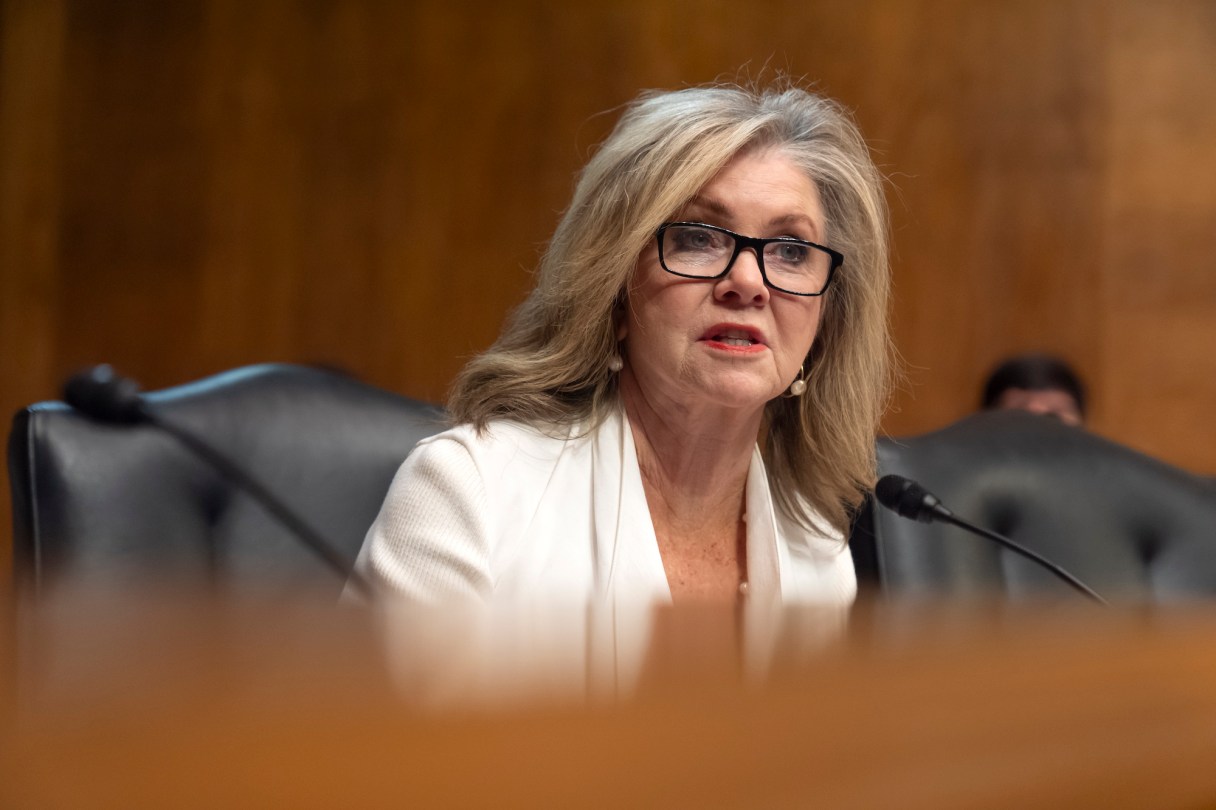
A trio of bills that target some of Tennessee’s most pressing rural health issues was announced Thursday.
The bipartisan bills, cosponsored by Sen. Marsha Blackburn, R-Tenn., target financial pressure on rural hospitals, access to urgent health care services and workforce shortages.
“Tennessee faces some of the nation’s most complex rural health challenges, from hospital closures and workforce shortages to high rates of chronic disease,” the Tennessee Department of Health said last year in a grant funding application.
(SIGN UP: Get Chattanooga area politics news weekly in your inbox at timesfreepress.com/politics)
One of the bills, the Save Struggling Hospitals Act, would adjust how Medicare reimbursements are determined with the aim of raising rates for rural hospitals.
The Rural Health Innovation Act, the second bill, would establish two grant programs for rural communities to expand urgent care and emergency triage services.
The last in slate, the Rural America Health Corps Act, would establish a pilot student loan repayment program for clinicians who agree to work full-time in a rural health professional shortage area for five years.
Tennessee House member, Rep. David Kustoff, R-Memphis, introduced the corresponding bills in the House.
“Access to health care should not depend on a person’s ZIP code,” Kustoff said in a statement. “I am proud to help advance the rural health agenda to expand access to quality care in Tennessee and across the nation. It is vital that rural hospitals, clinics, and providers remain a reliable resource for the people who depend on them every day.”
Blackburn is cochair of the Senate Rural Health Caucus and is running for governor of Tennessee in the 2026 election.
The package of bills continues legislative efforts to address Tennessee’s rural health crisis, which some health care leaders have said will be compounded by federal Medicaid cuts passed with the Republican tax and spending bill, the One Big Beautiful Bill Act.
(READ MORE: Tennessee vying for share of $50B rural health fund)
In January, state lawmakers accepted over $206 million in federal grant money awarded as part of the Rural Health Transformation Program, a one-time pot of funding distributed over five years, that was introduced during negotiations over Medicaid cuts passed in July with the Republican tax and spending bill.
(READ MORE: Tennessee, Georgia both get over $205 million in federal funds for rural health)
In Tennessee, it’s estimated that over 10 years, federal Medicaid cuts passed with the megabill could range from $5 billion to $8 billion, with $911 billion in cuts across the country, according to KFF, a health policy research nonprofit.
Additionally, it is estimated that about 200,000 Tennesseans are at risk of losing their health insurance with the loss of federal health care subsidies tied to the Affordable Care Act, which expired at the top of 2026 without congressional action, according to KFF.
(READ MORE: ‘I might die’: Subsidy loss could affect half a million Tennesseans)
STRUGGLING HOSPITALS
Tennessee has experienced the second-most hospital closures of any state, particularly in rural areas, with 15 closures since 2010, according to KFF.
Hospitals are required to provide certain services by law, regardless of insurance, and absorb the cost.
The Struggling Hospitals Act seeks to change the way the Medicare Area Wage Index formula contributes to determining hospital reimbursements for Medicare. The index, calculated annually by the U.S. Centers for Medicare and Medicaid Services, is based on an area’s average hourly wage and the national average for all hospitals.
The formula is flawed, Blackburn said in a statement by email, resulting in rural hospitals receiving lower payment rates than hospitals in urban markets.
“The Medicare Area Wage Index formula is based on outdated assumptions for labor costs, resulting in hospitals in historically high-wage urban markets continuing to receive higher payments, while lower-wage regions start from a lower-wage base and cannot easily catch up because Medicare payments themselves influence wage capacity,” Blackburn said in a statement.
The bill would change the calculation of the Medicare low-wage index hospital policy, which increases Medicare wage index values for hospitals in the bottom 25th percentile.
Sen. Mark Warner, D-Va., is also a sponsor of the bill.
The Tennessee Hospital Association has endorsed the proposal and said in a statement that the index has trained Tennessee hospitals for decades and contributed to financial instability.
“We applaud Sen. Blackburn’s leadership on the Save Struggling Hospitals Act and her broader rural health package, which together help mitigate the ongoing pressures hospitals face, level the playing field and ensure patients across Tennessee have access to the care they need,” the association said in a statement emailed to the Chattanooga Times Free Press.

HEALTH INNOVATION
The two grant programs aimed at expanding urgent care and emergency services in rural areas would distribute a combined $50 million over five years.
The grants are administered by the U.S. Health Resources and Services Administration and prioritize already operational federally qualified health centers or rural health clinics, according to the bill text.
Tennessee has two rural emergency hospitals, 326 rural health clinics, 100 rural federally qualified health centers and 42 small rural hospitals, according to a 2025 grant application by the Tennessee Department of Health.
Five counties in Tennessee have no dental provider, and nearly a third of Tennessee is a maternity care desert, with 18 Tennessee rural service areas having no obstetric providers, the funding application said.
RURAL WORKFORCE
The workforce pilot program would help repay student loans for clinicians who agree to work full-time in a rural health professional shortage area for five years. Participants could receive up to $200,000 in loan repayment.
The pilot program would award $50 million in loan repayments to participants, according to the bill text.
In Tennessee, 93 of 95 counties are designated as Health Professional Shortage Areas, according to the Tennessee Department of Health.
“Roughly 75% of Tennessee’s essential access rural hospitals are at high risk of closure because of low patient volume and financial pressures, and my Rural Health Innovation Act would remove barriers to care by establishing competitive grant programs to expand their ability to provide walk-in urgent care and emergency triage services,” Blackburn said in a statement released by her office.
(READ MORE: Feds cut funding to Tennessee school mental health project)
This week, a similarly structured loan repayment program for health care professionals was cut. The $1.5 million in federal funds were cut from the program designed to alleviate the shortage of mental health professionals in rural Tennessee schools.
Similarly, the cut program pays the tuition of participants pursuing degrees in school psychology, school counseling or school social work if they commit to working in Tennessee for two years, including one year in a rural county.
Contact politics reporter Ruby Rayner at rrayner@timesfreepress.com or 423-757-6556.