
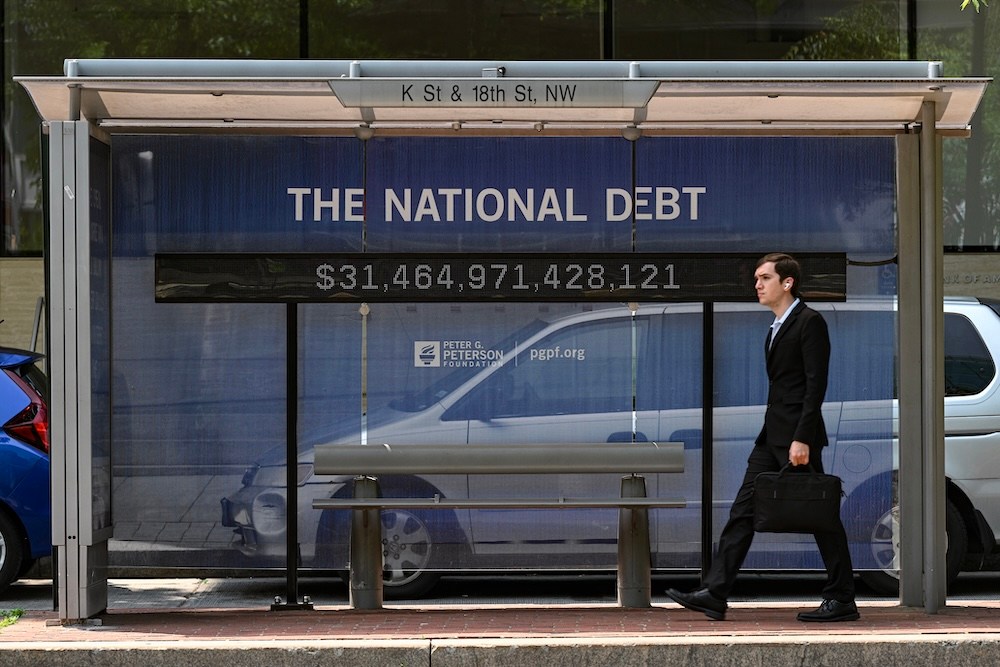
WASHINGTON — The U.S. government learned last week that it may have reached an unfortunate milestone: The size of its debt surpassed the nation’s total economic output.
It was a striking imbalance, according to early estimates, one that the country has experienced only in rare circumstances — briefly during the pandemic and in the aftermath of World War II. But the development barely seemed to register in the nation’s capital, where few policymakers bothered to acknowledge the latest warning sign about the government’s poor fiscal health.
The root of the problem is well-documented and widely known. U.S. debt has soared in recent years because of a mismatch between federal spending and tax revenue, one complicated by a rapidly aging population, which has driven up costs across government.
For economists, the fear is that these conditions are inching the United States toward a fiscal crisis, one in which its debt is so great that the country can’t easily afford to pay the rising interest on it. But their warnings have long gone unheeded in Washington, calcifying the strains on the government’s balance sheet in ways that President Donald Trump’s agenda is expected to exacerbate.
Despite winning a congressional majority, Republicans have cut little in spending over the past year. With the few savings they did achieve, they put that money toward offsetting a fraction of the cost of Trump’s tax cuts, which are still expected to add more than $3 trillion to the debt in the coming years.