
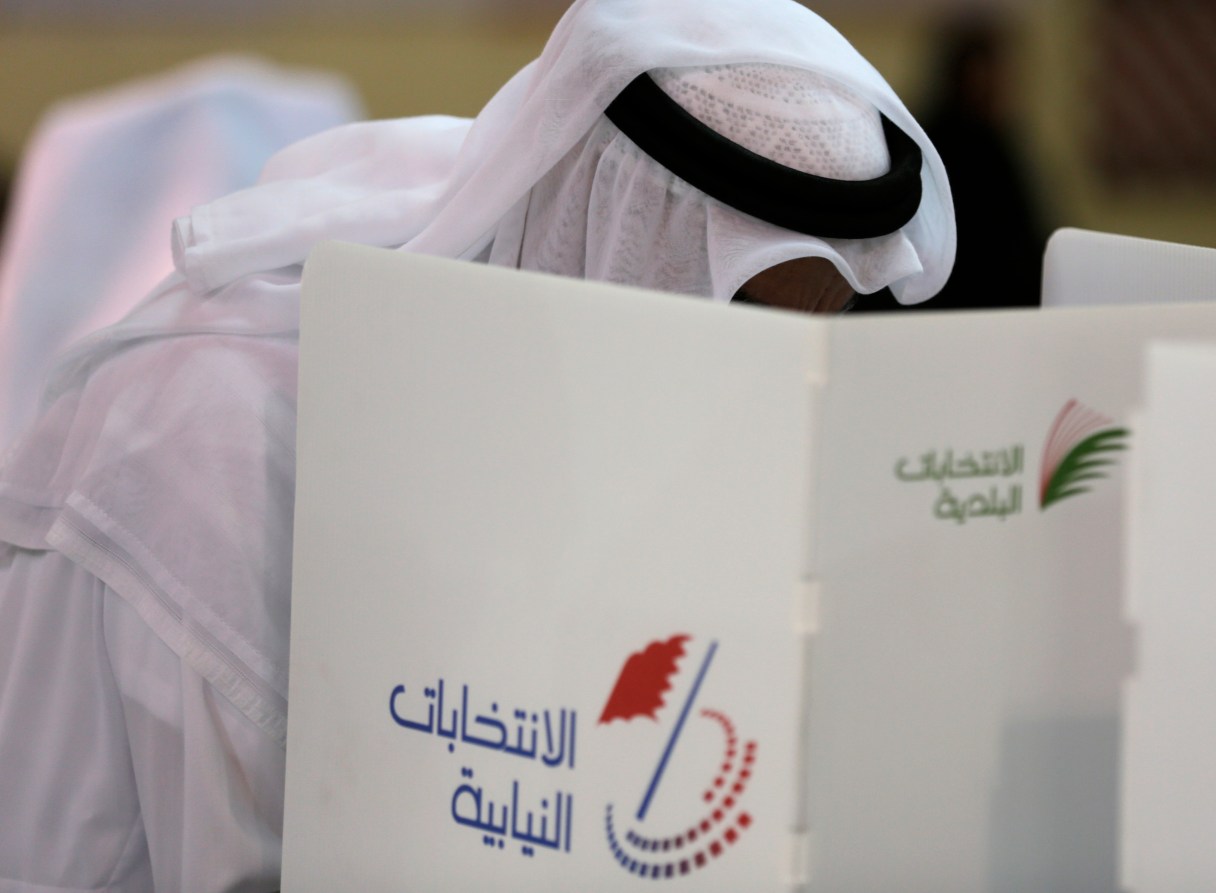
MANAMA, Bahrain (AP) – Pro-government candidates took the majority of contested seats in Bahrain’s parliamentary election on Sunday, although 13 independent Shiite candidates won mandates despite a boycott by the main opposition group, official results showed.
The Shiites, a majority in Sunni-ruled Bahrain, lost seats compared to the previous vote four years ago, in large part due to the boycott by the al-Wefaq group. In total, only five candidates from established political organizations won seats – the lowest number since elections in 2006.
It was the country’s first full parliamentary elections since Shiite-led protests against the Sunni monarchy erupted in February 2011.
Bahrain’s parliament, or National Assembly, is comprised of 80 seats – 40 royally-appointed in the upper house and 40 elected seats in the lower house. The lower house has limited powers to question ministers. Its members cannot pass laws unless the king signs off.
Among the winners were three women, all of them Shiite. Four seats also went to male candidates from Sunni Islamist blocs, including two from the Muslim Brotherhood’s Islamic Menbar group.