
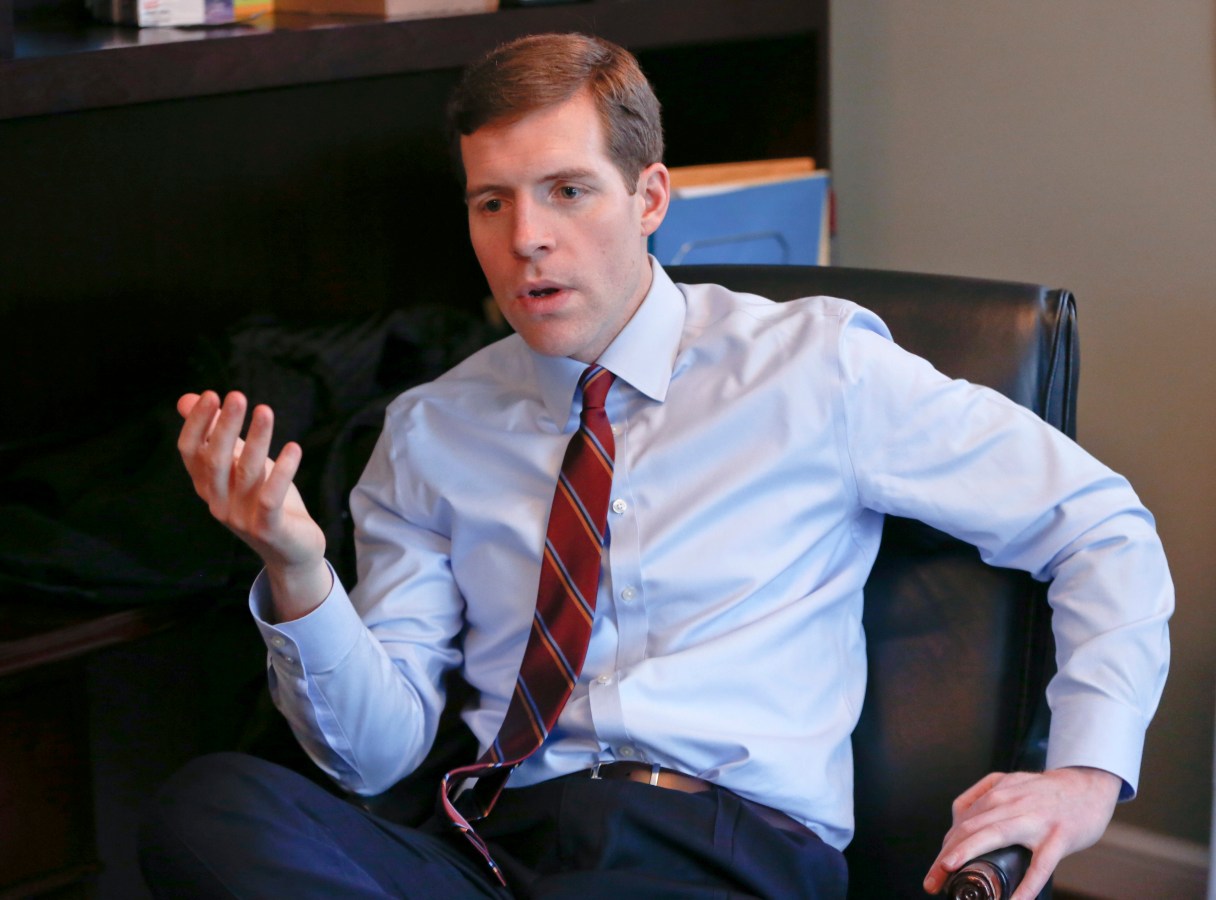
NORTH HUNTINGDON, Pa. (AP) – In southwest Pennsylvania, Democratic congressional hopeful Conor Lamb hammers the new Republican tax law as a gift to corporations and the wealthy that will add to the national debt and give the GOP-led Congress an excuse to gut Social Security and Medicare.
Rick Saccone, Lamb’s opponent in the 18th Congressional District that wraps around Pittsburgh, says the sweeping tax changes will goose the economy and give Americans bigger paychecks. National Republican groups, meanwhile, are blanketing television stations here with ads to tell voters that Lamb simply doesn’t want them to have lower taxes.
It’s a defining fault line ahead of the 2018 midterm elections, and the outcome for Lamb could serve as a guidepost for Democrats as they try to reclaim a House majority this November.
Democrats must flip at least 24 GOP-held seats to regain a majority, and the Pennsylvania seat – in a district Trump won by almost 20 points in 2016 – would be an unexpected boost.
The emphasis being placed on taxes ahead of the March 13 special election here also may remind the power players in Washington that the midterm elections will not revolve exclusively around the tempests that regularly consume the nation’s capital – the Russia investigations, a lingering immigration stalemate, the occasional government shutdown. The November outcome will turn as much or more on voters’ fundamental impressions about how Congress is affecting their wallets, now and in the future.