
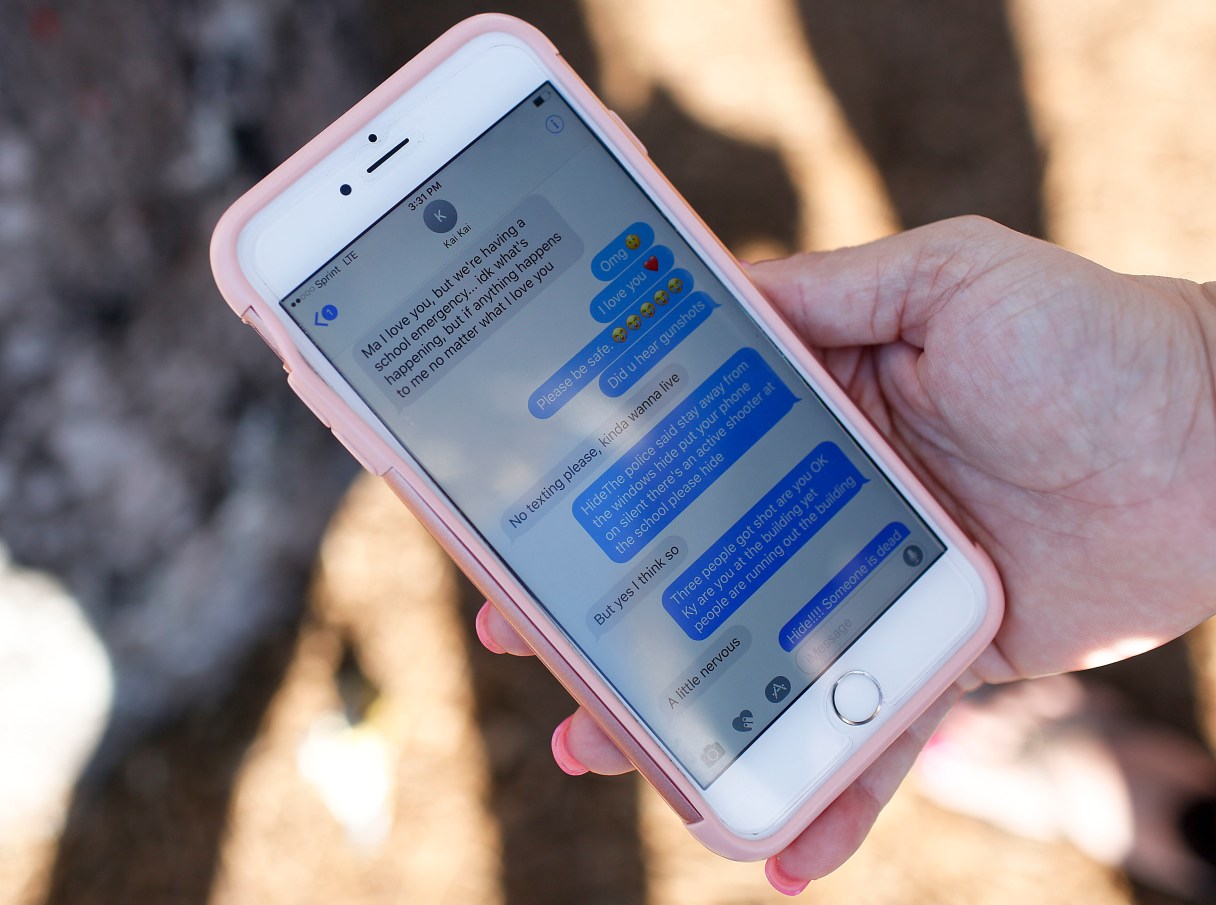
PARKLAND, Fla. – When two teenagers slaughtered 12 students and a teacher at Columbine High School in Colorado 19 years ago, young people across the country learned the news the old-fashioned way: largely on television and in newspapers. It took days, if not weeks, to process the information and discover the full, horrific story.
When a gunman killed 17 people at a Florida high school last week, youngsters around the globe watched the terrifying images and accounts unfold almost in real time. By the end of the day on Feb. 14, children with social media knew the name of the suspect, learned which classrooms the students were in and, in some cases, saw videos of the dead.
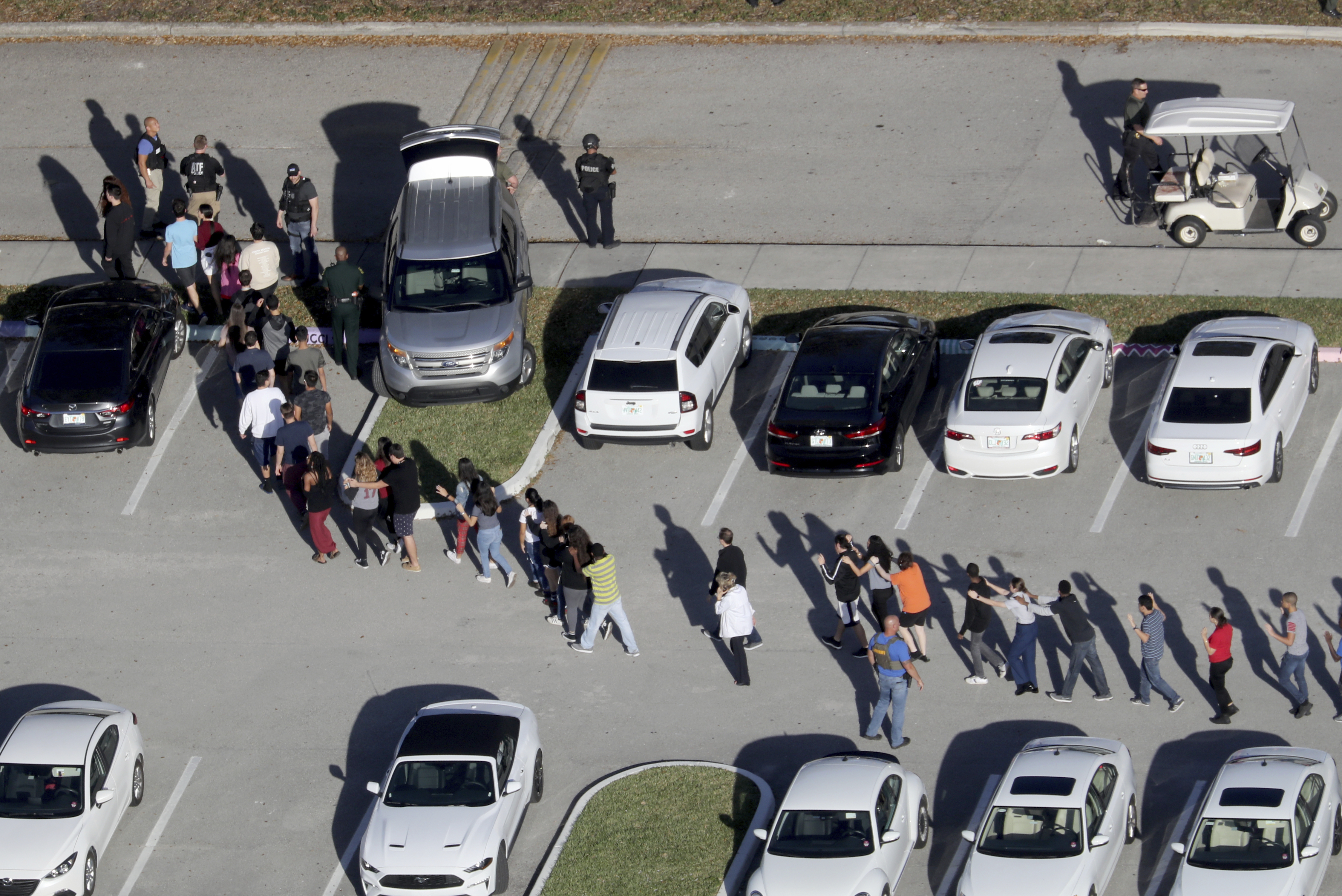 FILE – In this Feb. 14, 2018 file photo, students are evacuated by police from Marjory Stoneman Douglas High School in Parkland, Fla., after a shooter opened fire on the campus. The school shooting that left several people dead appears to be the first major tragedy of its kind in which students were sharing horrific images in near-real time with young people elsewhere. Experts say the footage could scar young people psychologically. But it could also galvanize them. (Mike Stocker/South Florida Sun-Sentinel via AP)
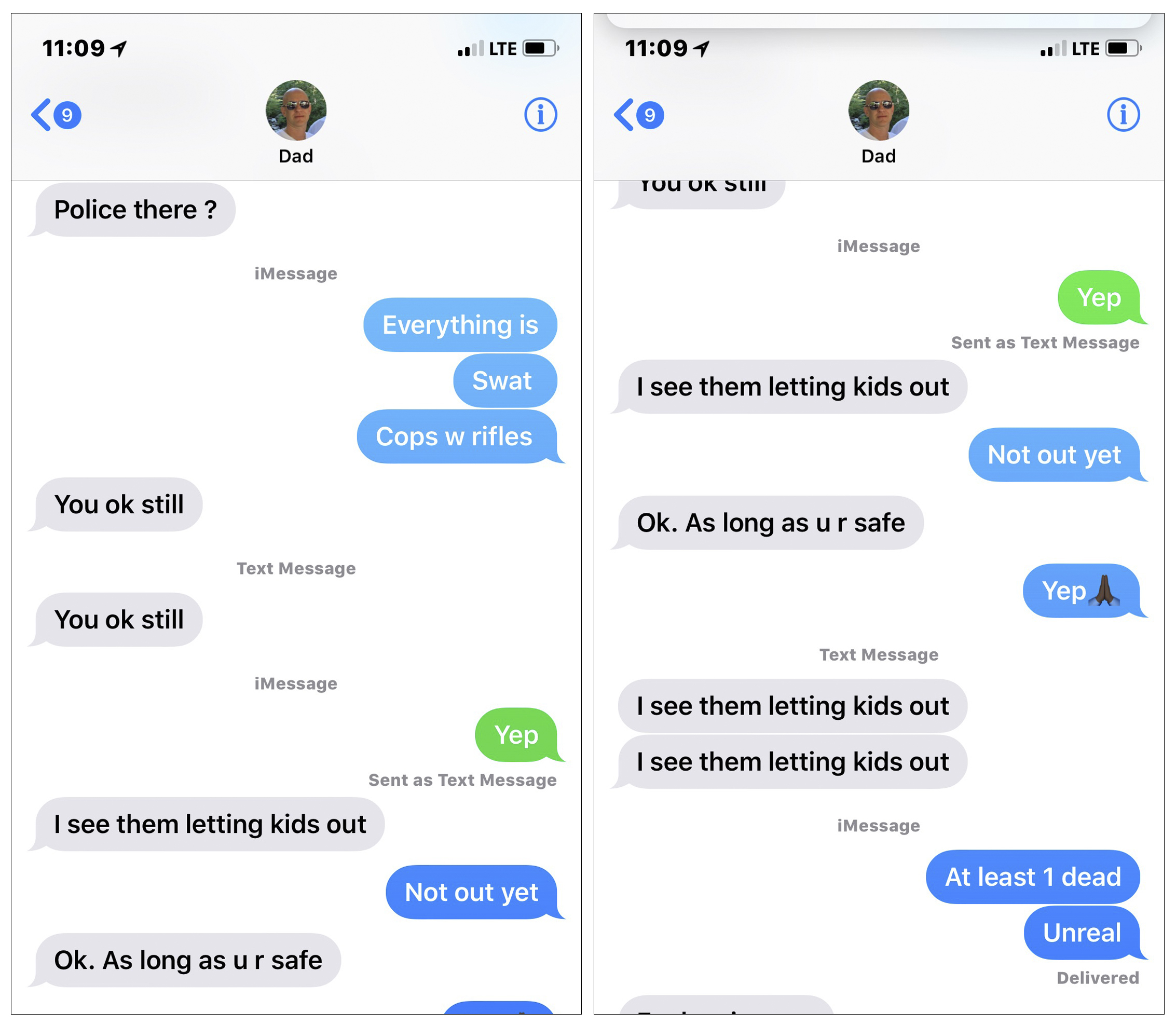 FILE – This combo image shows screenshots from a text conversation between Joey Cordover, a student at Marjory Stoneman Douglas High, and his father in the midst of the mass shooting at the school on Wednesday, Feb. 14, 2018. “At least 1 dead,” Joey texted his father. “Unreal.” The school shooting that left several people dead appears to be the first major tragedy of its kind in which students were sharing horrific images in near-real time with young people elsewhere. Experts say the footage could scar young people psychologically. But it could also galvanize them. (Courtesy of Joey Cordover via AP)
“My school is being shot up and I am locked inside. I’m f****** scared right now,” wrote one teen on Twitter.
The tragedy at Marjory Stoneman Douglas High appears to be the first major school shooting of the social media age in which students shared the shocking images in near-real time with young people elsewhere.
Experts say the images have the potential to scar kids watching from afar, potentially triggering post- traumatic stress and perhaps numbing them to the violence and causing them to fall into apathy. But the scenes might also galvanize a generation and lead young people to press for change on the political level.