
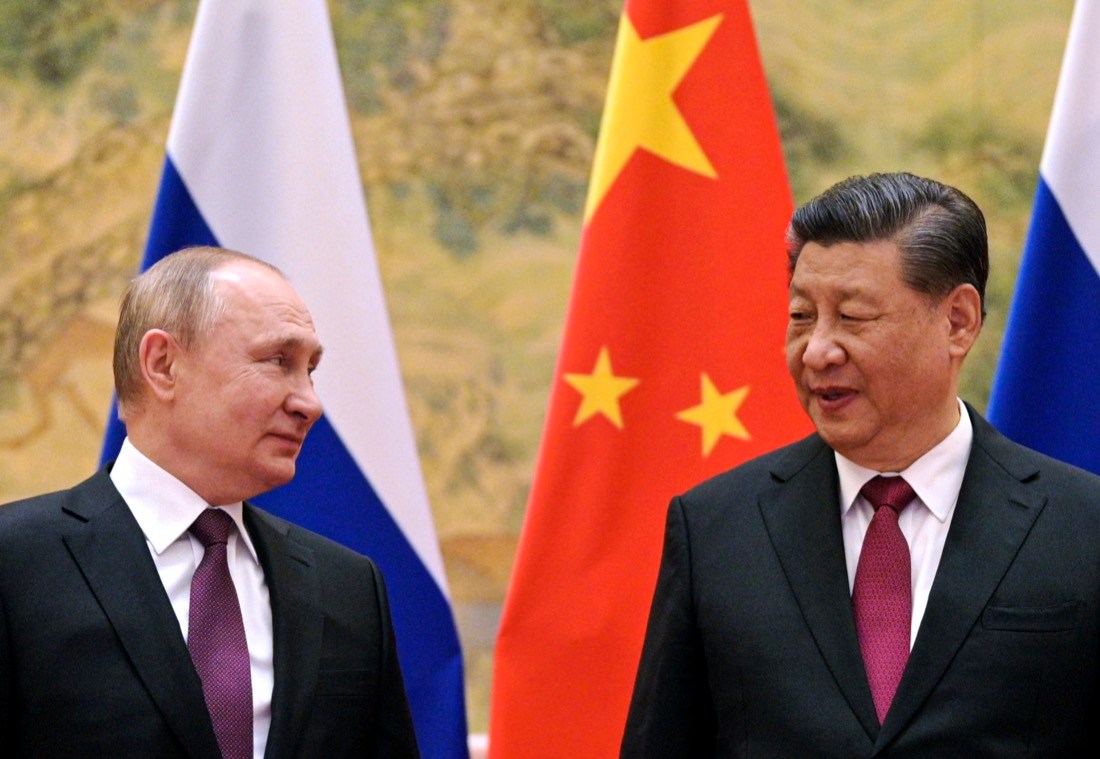
BEIJING (AP) – Three weeks ago, the leaders of China and Russia declared that the friendship between their countries “has no limits” as they met in Beijing on the eve of the Winter Olympics. But that was before Russia’s invasion of Ukraine, a gambit that is testing just how far China is willing to go.
The nuclear-armed neighboring giants have grown closer in recent years, raising the specter of an alliance of authoritarian states that could challenge a U.S.-led democratic West in a new Cold War. Yet China has much to lose in such a scenario, and President Xi Jinping has spoken out against the “Cold War mentality” of those who portray his country’s rise as a threat.
The emergence of a China-Russia axis is far from a foregone conclusion. Trade with Europe and the United States is a major driver of China’s economic growth, even as its estrangement with the U.S. and its appetite for energy have led it to deepen ties with Russia.
“The ongoing conflict in Ukraine will reveal whether there is a deeper bond or whether the relationship is essentially transactional,” Anthony Saich, a China expert said in a Q&A posted on the website of Harvard University’s Ash Center for Democratic Governance and Innovation.
He outlined three possible actions that would indicate “China has thrown its lot in with Russia.” These include Beijing using a veto, rather than an abstention, of any U.N. resolution to criticize Russia’s actions; recognition of a puppet regime in Ukraine put in place by Russia; and a refusal to call the attack an invasion even after civilian deaths are clearly confirmed.