
Wednesday, November 11, 2026Nov 11

Congressional GOP plans to continue health law subsidies

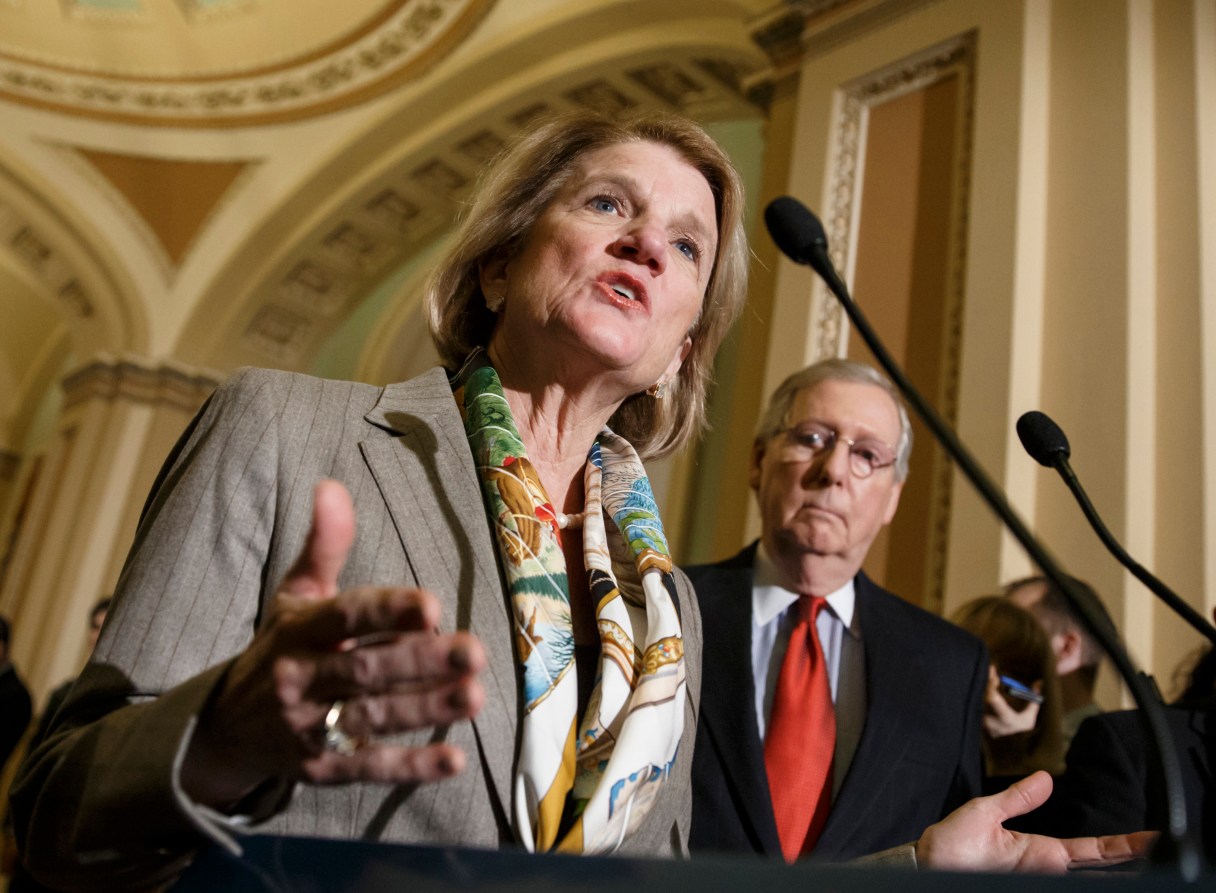
FILE - In this Jan. 20, 2015 file photo, Sen. Shelley Moore Capito, R-W.Va., accompanied by Senate Majority Leader Mitch McConnell of Ky., speaks during a news conference on Capitol Hill in Washington. Senate Republicans discussed a proposal Wednesday to temporarily help millions of people who could lose federal health care subsidies should the Supreme Court annul the aid, which has been a pillar of President Barack Obama’s health care law.  (AP Photo/J. Scott Applewhite, File)
FILE - In this Jan. 20, 2015 file photo, Sen. Shelley Moore Capito, R-W.Va., accompanied by Senate Majority Leader Mitch McConnell of Ky., speaks during a news conference on Capitol Hill in Washington. Senate Republicans discussed a proposal Wednesday to temporarily help millions of people who could lose federal health care subsidies should the Supreme Court annul the aid, which has been a pillar of President Barack Obama’s health care law. (AP Photo/J. Scott Applewhite, File) FILE - In this Jan. 20, 2015 file photo, Sen. Shelley Moore Capito, R-W.Va., accompanied by Senate Majority Leader Mitch McConnell of Ky., speaks during a news conference on Capitol Hill in Washington. Senate Republicans discussed a proposal Wednesday to temporarily help millions of people who could lose federal health care subsidies should the Supreme Court annul the aid, which has been a pillar of President Barack Obama’s health care law. (AP Photo/J. Scott Applewhite, File)

WASHINGTON (AP) – House Republican leaders are laying out a plan to temporarily continue health care subsidies for millions of people should the Supreme Court annul the aid.

The approach would allow states to obtain block grants to continue the aid. If states turn down the grants, individuals could receive tax subsidies directly as they do now.

The money would be used to shop for health insurance in a reordered marketplace without requirements for most people to carry insurance and most employers to offer it.

The plan would sunset after no more than two years, according to Republican Congressman Dennis Ross of Florida.

The plan was presented in a closed-door meeting Wednesday.