
Wednesday, November 11, 2026Nov 11

UN: Women in Zika countries should breastfeed their babies

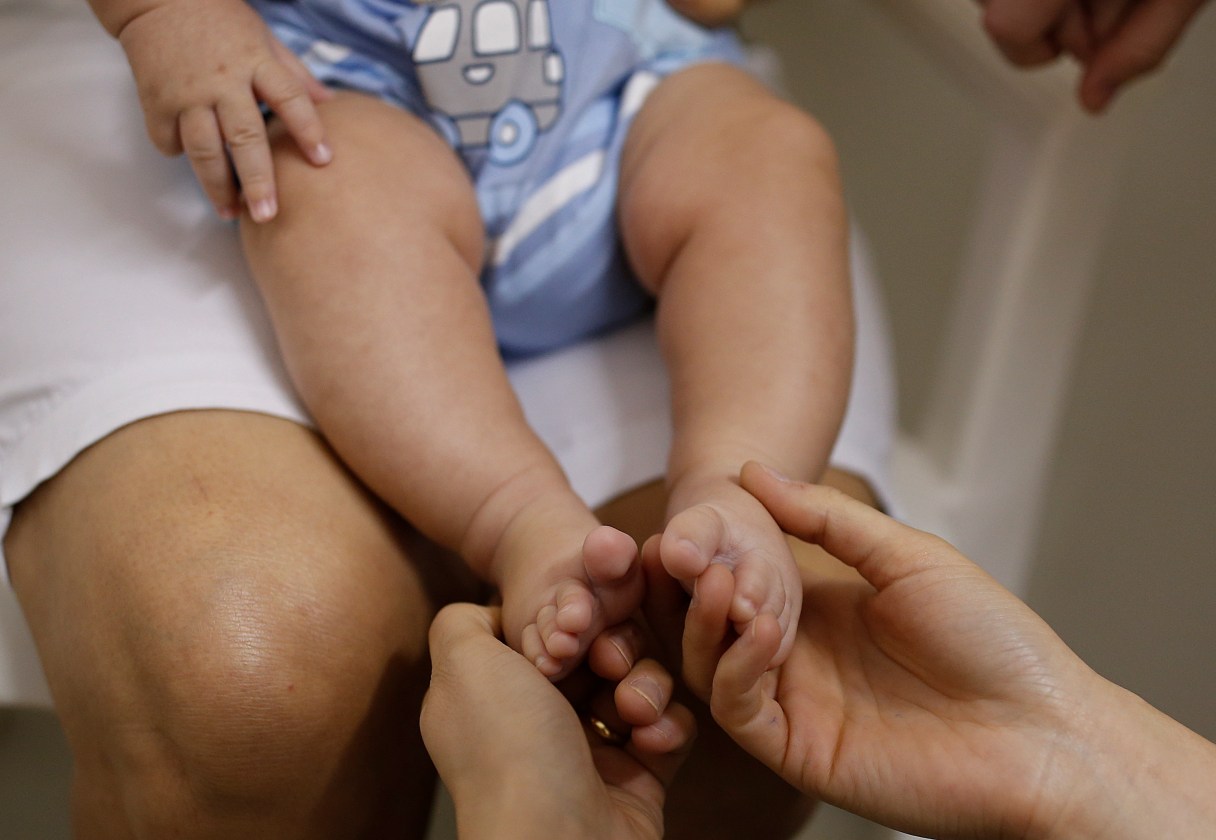
A health worker gives foot massage to 3-month-old Pedro Henrique in a hospital in Joao Pessoa, Brazil, Wednesday, Feb. 24, 2016, during an examination that's part of a study to determine if the Zika virus is causing babies to be born with a birth defect affecting the brain. Their goal is to persuade about 100 mothers of infants recently born with the defect as well to enroll in the study. They also need participation as controls of two to three times as many mothers from the same areas who delivered babies without microcephaly at about the same time. (AP Photo/Andre Penner)
A health worker gives foot massage to 3-month-old Pedro Henrique in a hospital in Joao Pessoa, Brazil, Wednesday, Feb. 24, 2016, during an examination that's part of a study to determine if the Zika virus is causing babies to be born with a birth defect affecting the brain. Their goal is to persuade about 100 mothers of infants recently born with the defect as well to enroll in the study. They also need participation as controls of two to three times as many mothers from the same areas who delivered babies without microcephaly at about the same time. (AP Photo/Andre Penner) A health worker gives foot massage to 3-month-old Pedro Henrique in a hospital in Joao Pessoa, Brazil, Wednesday, Feb. 24, 2016, during an examination that's part of a study to determine if the Zika virus is causing babies to be born with a birth defect affecting the brain. Their goal is to persuade about 100 mothers of infants recently born with the defect as well to enroll in the study. They also need participation as controls of two to three times as many mothers from the same areas who delivered babies without microcephaly at about the same time. (AP Photo/Andre Penner)

LONDON (AP) – The World Health Organization says women in countries hit by the Zika virus should breastfeed their babies and there is no proof the virus can spread to their infants that way.

Zika has been declared a global emergency because of its possible links to a spike in babies born with abnormally small heads in Brazil. The country has more than 1 million infections and the virus is spreading explosively across the Americas.

In guidance issued Thursday, WHO said while Zika has been detected in breast milk from two mothers sickened by the virus, there are no reports of Zika being transmitted to babies via breastfeeding.

WHO said there have been no cases of babies suffering severe neurological problems or brain damage after being infected with Zika after birth.