
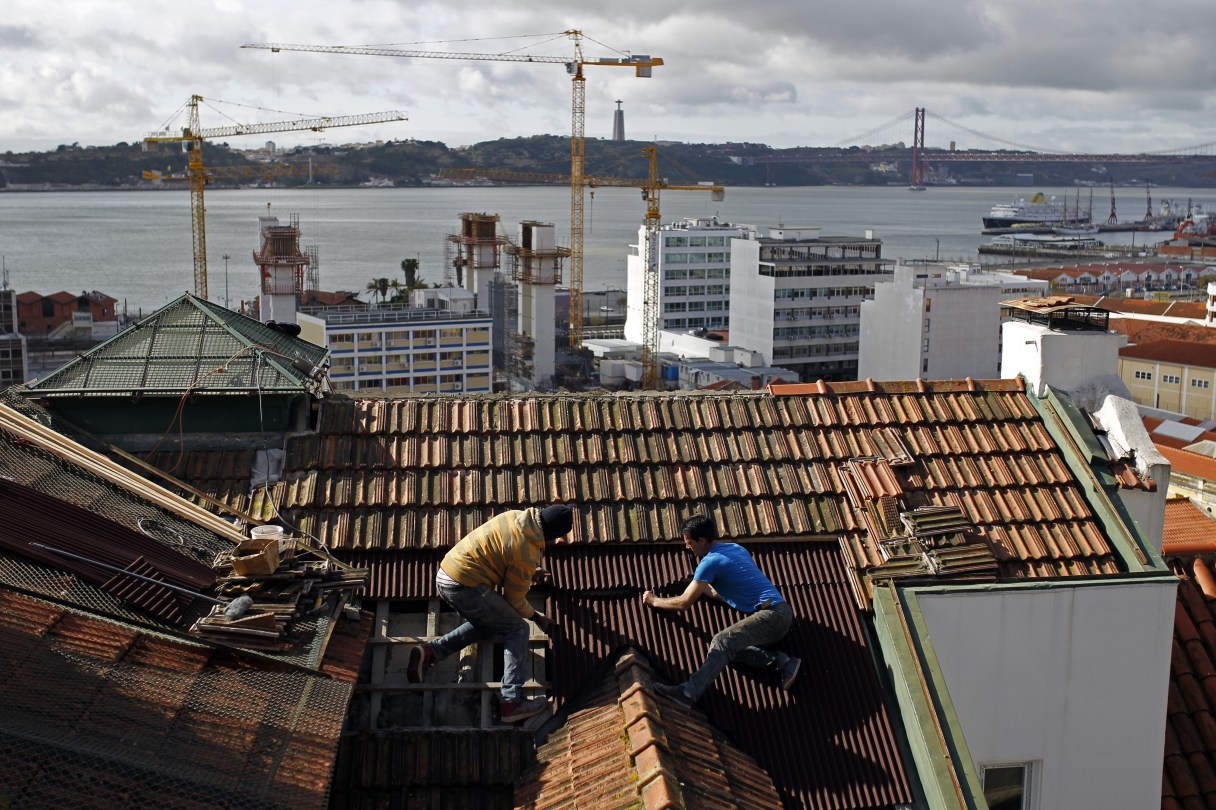
LISBON, Portugal (AP) – The construction cranes poking up from the jumble of terracotta roofs on Lisbon’s skyline can be counted on one hand – a dismal reminder for Ricardo Gomes of how little work there is for his construction company.
The Portuguese Socialist government has promised to change that, advocating an end to Europe’s years of budget austerity by increasing spending and cutting taxes. Even respected independent policymakers, like the president of the European Central Bank, have said governments should do more to support growth.
But there’s a catch: despite an easing in Europe’s focus on austerity, countries like Portugal or Italy that need to increase spending to boost economic growth can’t afford to do so without breaking the bloc’s rules. And those that can, mainly Germany, are still penny-pinching.
“There are obvious limitations” in Portugal’s ability to finance its economy, says Gomes, CEO of construction company SETH.
The country’s construction sector collapsed amid the financial crisis, which saw the state take a 78 billion-euro ($87 billion) bailout in 2011. The number of construction workers has more than halved from 612,000 in 2005 to roughly 277,000.