
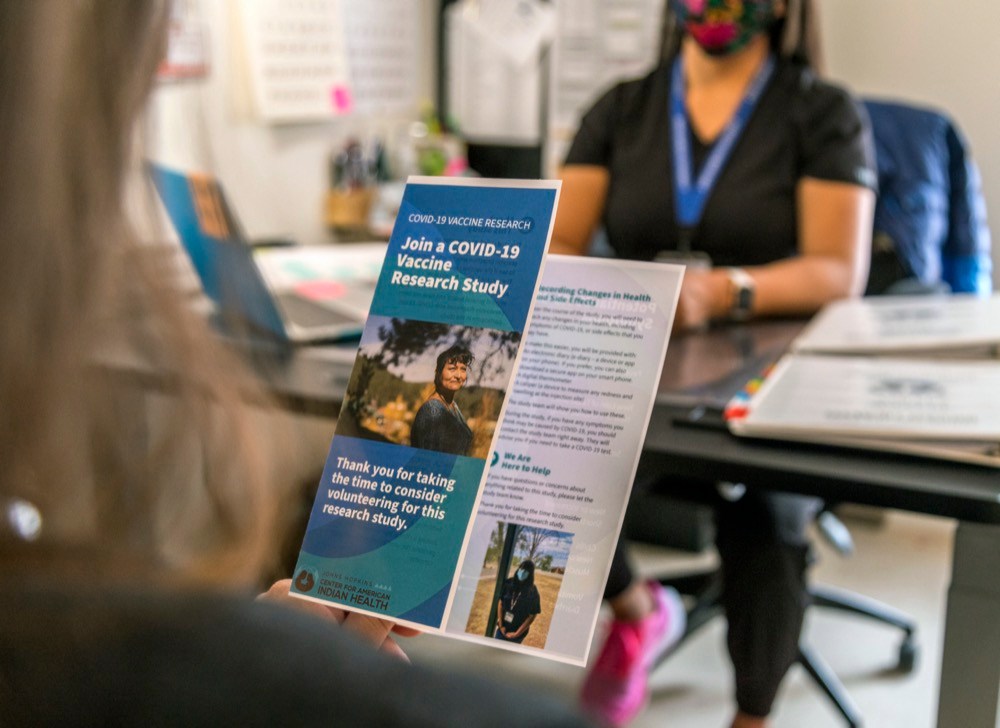
FLAGSTAFF, Ariz. (AP) – The news came during a hopeful time on the largest Native American reservation.
Daily coronavirus cases were in the single digits, down from a springtime peak of 238 that made the Navajo Nation a U.S. hot spot. The tribe, wanting to ensure a COVID-19 vaccine would be effective for its people, said it would welcome Pfizer clinical trials on its reservation spanning Arizona, New Mexico and Utah.
Right away, tribal members accused their government of allowing them to be guinea pigs, pointing to painful times in the past when Native Americans didn’t consent to medical testing or weren’t fully informed about procedures.
A Navajo Nation review board gave the study quicker approval than normal after researchers with Johns Hopkins University’s Center for American Indian Health made the case for diversity. Without Native volunteers, how would they know if tribal members responded to vaccines the same as others?
“Unfortunately, Native Americans have effectively been denied the opportunity to participate in these clinical trials because almost all of the study sites are in large, urban areas that have not done effective outreach to Native Americans,” said Dr. Laura Hammitt of Johns Hopkins.