
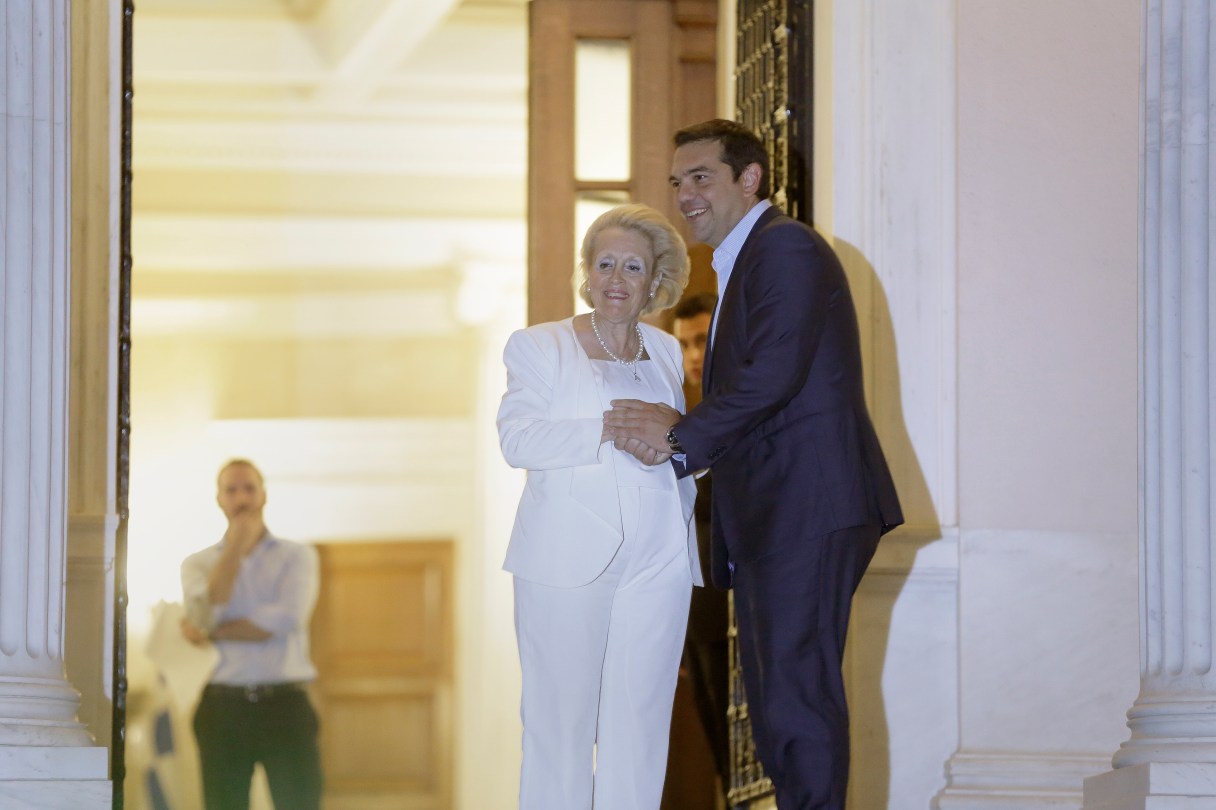
ATHENS, Greece (AP) – Greece’s outgoing prime minister, Alexis Tsipras, is banking on his popularity to win a national election next month and strengthen his grip on power after purging his radical left Syriza party of dissenters.
But as the political jostling heats up ahead of the Sept. 20 vote, it appears increasingly likely that Tsipras will have to form a new, more unwieldy coalition government – possibly with as many as three other parties.
Tsipras called the election last week to rid his party of rebels who had refused to back the bailout deal he agreed upon with Greece’s international creditors. The hardliners accused Tsipras of reneging on their party’s promises to fight the budget cuts and tax increases demanded by creditors. Their defections came thick and fast, trimming Syriza’s presence in parliament.
Now, as Tsipras weighs his options, experts say he may have to strike an alliance with the opposition, creating a so-called “grand coalition.”
“The most likely outcome is a coalition government with two, three or four parties taking part,” said Theodore Couloumbis, a political scientist at the University of Athens.