
Wednesday, November 11, 2026Nov 11

Jerusalem Palestinians find voice through prayer protests

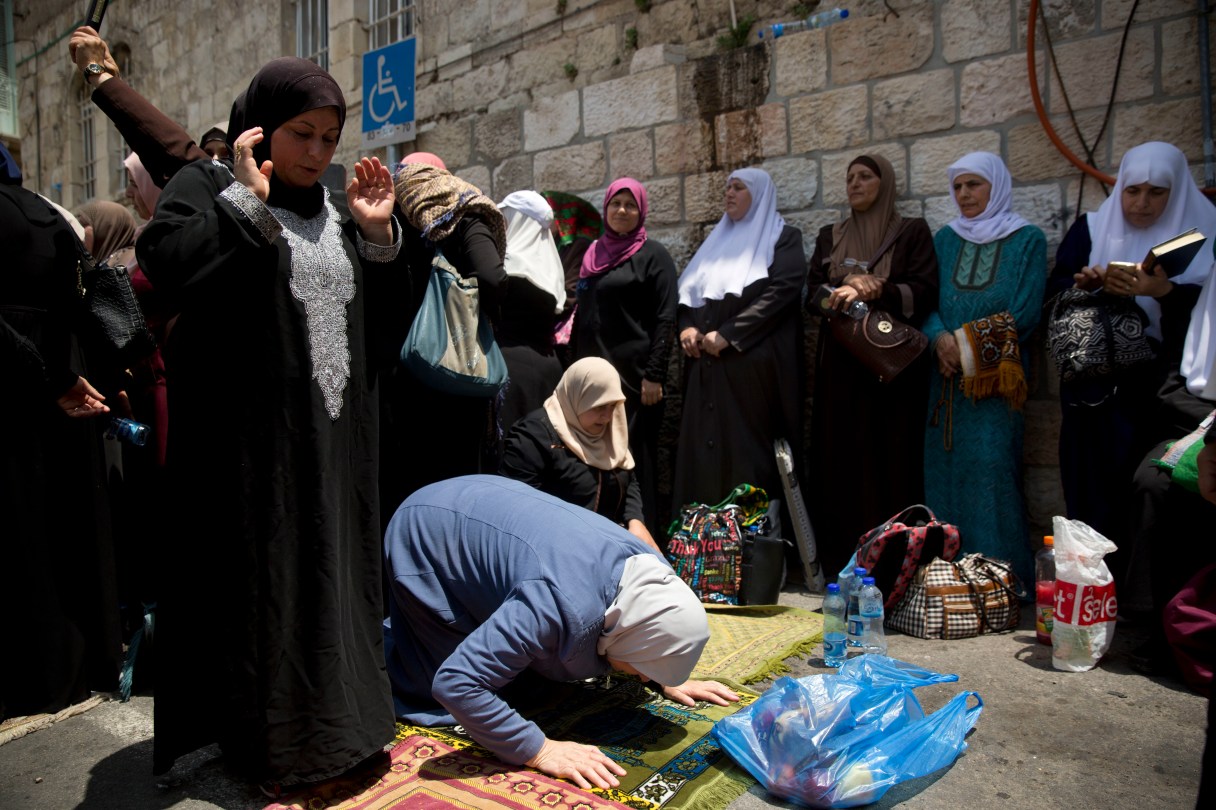
Palestinian women pray at the Lion's Gate following an appeal from clerics to pray in the streets instead of the Al Aqsa Mosque compound, in Jerusalem's Old City, Tuesday, July 25, 2017. Dozens of Muslims have prayed in the street outside a major Jerusalem shrine, heeding a call by clerics not to enter the site until a dispute with Israel over security arrangements is settled. This comes after Israel removed metal detectors earlier on Tuesday. (AP Photo/Oded Balilty)
Palestinian women pray at the Lion's Gate following an appeal from clerics to pray in the streets instead of the Al Aqsa Mosque compound, in Jerusalem's Old City, Tuesday, July 25, 2017. Dozens of Muslims have prayed in the street outside a major Jerusalem shrine, heeding a call by clerics not to enter the site until a dispute with Israel over security arrangements is settled. This comes after Israel removed metal detectors earlier on Tuesday. (AP Photo/Oded Balilty) Palestinian women pray at the Lion's Gate following an appeal from clerics to pray in the streets instead of the Al Aqsa Mosque compound, in Jerusalem's Old City, Tuesday, July 25, 2017. Dozens of Muslims have prayed in the street outside a major Jerusalem shrine, heeding a call by clerics not to enter the site until a dispute with Israel over security arrangements is settled. This comes after Israel removed metal detectors earlier on Tuesday. (AP Photo/Oded Balilty)

JERUSALEM (AP) – Thousands of Palestinian Muslims have been praying in the streets of Jerusalem every evening – creating a new, surprisingly effective form of protest in their long conflict with Israel.

Since the crisis over the city’s most contested shrine erupted more than a week ago, they have set up neat rows of prayer rugs after sundown, kneeling and bowing on the hard asphalt in the set rituals of worship.

The evocative scenes reflect a newfound unity among Jerusalem’s Palestinians, who make up almost 40 percent of the city’s residents. The protesters say they have found their voice after years of being sidelined or ignored by Israel as well as Palestinian President Mahmoud Abbas’ self-rule government in the West Bank.

The protests were triggered by Israel’s decision to install new security measures, including metal detectors and cameras, at a major shrine in Jerusalem’s Old City in response to a July 14 attack by Arab gunmen who killed two Israeli police guards.

The 37-acre compound – the third holiest site of Islam and the most sacred one of Judaism – has served as the emotional centerpiece of rival religious and national narratives of Muslims and Jews, Palestinians and Israel.