
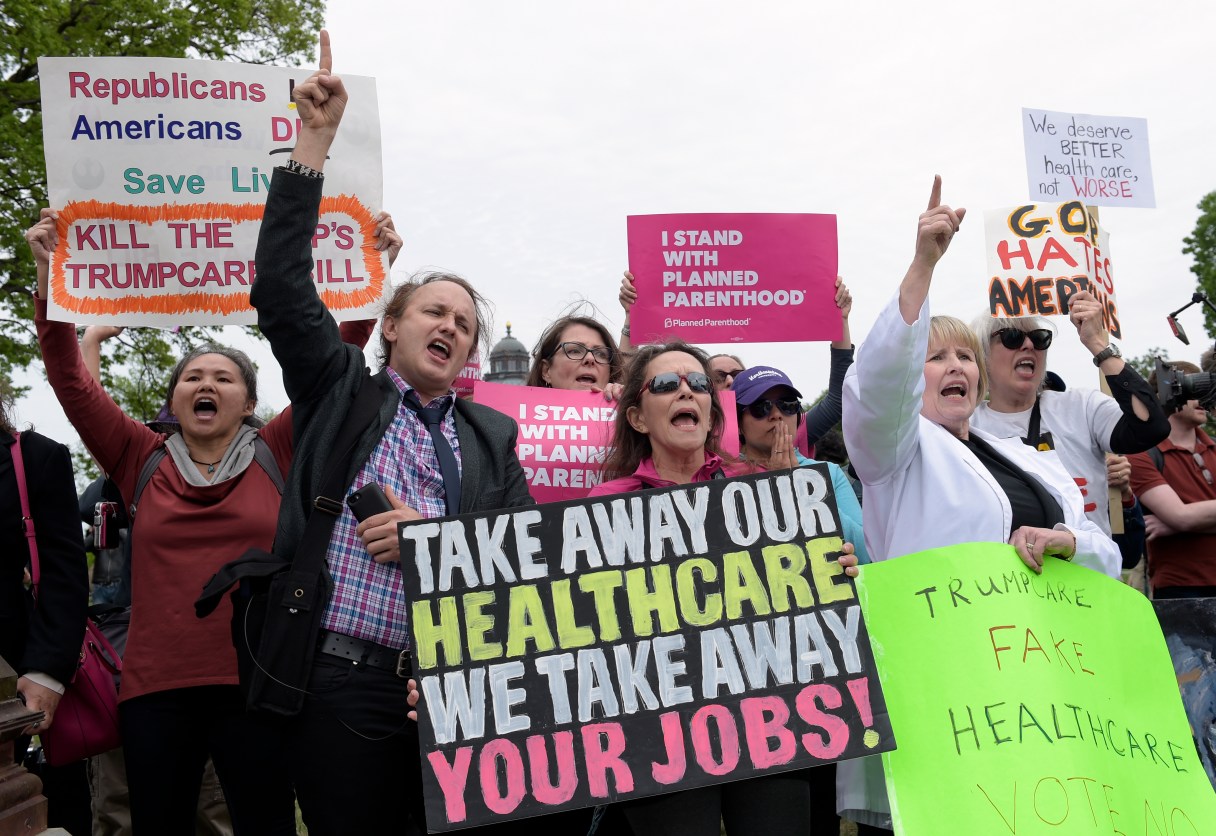
A handful of Republicans in the Senate is making a mockery of what normally passes for transparency in our government. A group of 13 senators is drafting a health care reform bill in secret that the Senate is expected to vote on in a couple of weeks.
This is not just any legislation. This is life-or-death legislation that will affect tens of millions of Americans and an industry that makes up one-sixth of the world’s largest economy.
Why the secrecy? The Senate bill is being kept under wraps because if there were transparency about the health care plan that the GOP wants to replace the Affordable Care Act with, some might criticize the GOPcare or Trumpcare legislation – aptly and correctly.
“It is deeply disturbing,” said Erika Sward, assistant vice president of the American Lung Association, told the Los Angeles Times last week. “Patients groups like ours need to make sure that our patients’ needs for health care will be met. … We can’t do that if we can’t see what is being proposed.”
The lung association is among 120 patient groups that recently sent a letter to senior Republican senators expressing deep concerns about GOP proposals to fundamentally restructure Medicaid, which provides health coverage to more than 70 million poor Americans.