
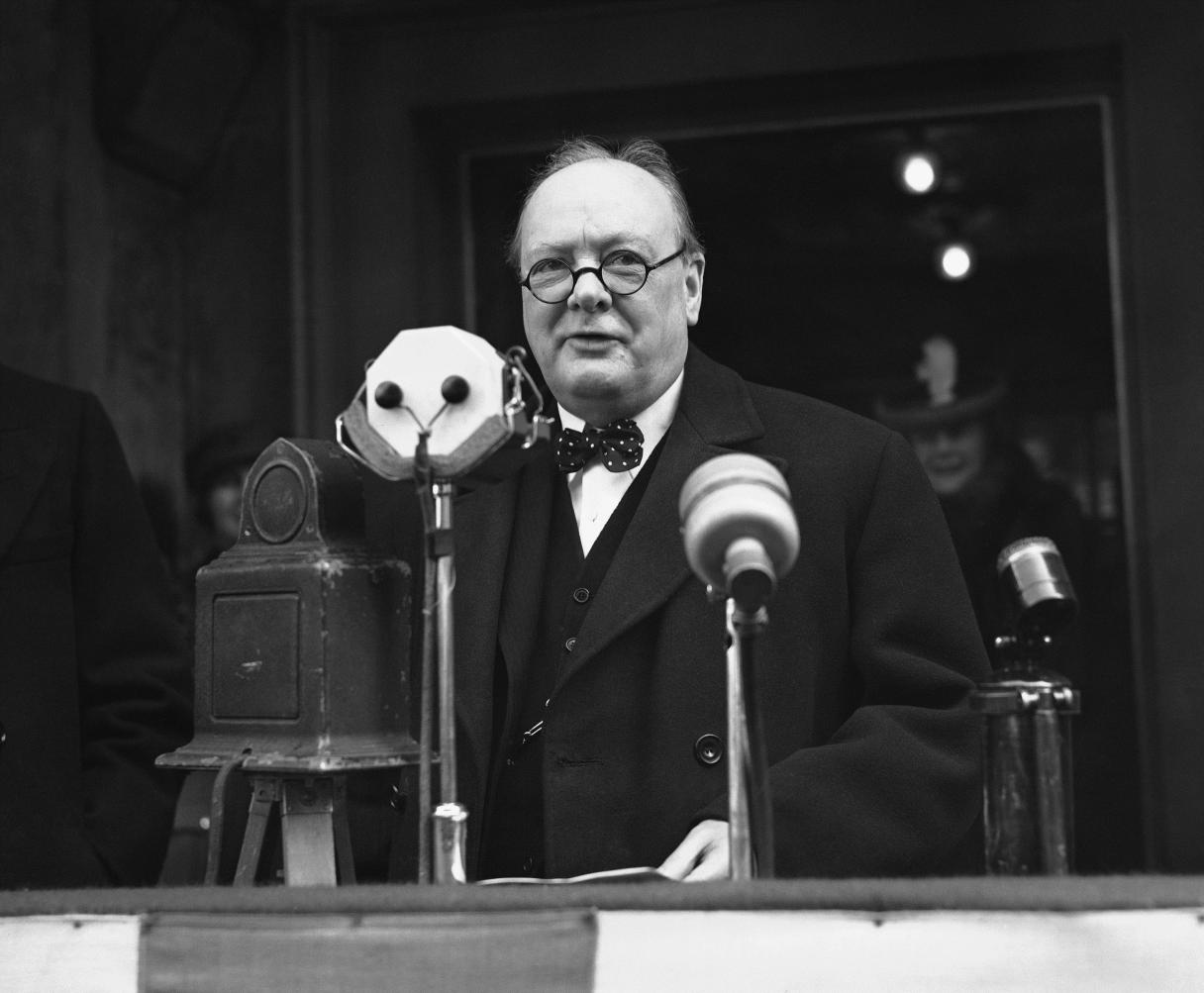
The future of Great Britain and Western democratic tradition hung in the balance in late September 1940 as Parliament debated next steps in the war with Germany.
On May 10, Winston Churchill became prime minister, succeeding Neville Chamberlain, who had resigned after losing support of his majority Conservative Party in Parliament. Lord Halifax, the foreign secretary, declined the premiership before it was offered to Churchill, who accepted without hesitation. Churchill had been appointed First Lord of the Admiralty and a member of the War Cabinet upon Great Britain’s declaration of war against Germany in September 1939.
Churchill presided over a five-member War Cabinet, which included Conservatives Chamberlain and Lord Halifax and Labor members Clement Atlee and Arthur Greenwood. Chiefs of military services often met with the War Cabinet. In this small council, conflicts over how the war would be waged could be hashed out before a unified plan was submitted to the larger Cabinet and from there to the full Parliament.
The outlook was bleak. Denmark and Norway had fallen to Hitler’s forces in April. On the morning of May 10, Germany invaded and quickly subdued The Netherlands, Belgium and Luxembourg. German forces rapidly advanced across France and would reach the English Channel by May 22. France’s ability to continue fighting was uncertain. Half a million members of the British Expeditionary Force and French army were trapped at Dunkirk with unclear prospects for rescue.
Neither the U.S. nor Soviet Russia were engaged in the war at that time. Public opinion in the U.S. was split between intervention and isolation. Russia had signed a non-aggression treaty with Germany in 1939.