
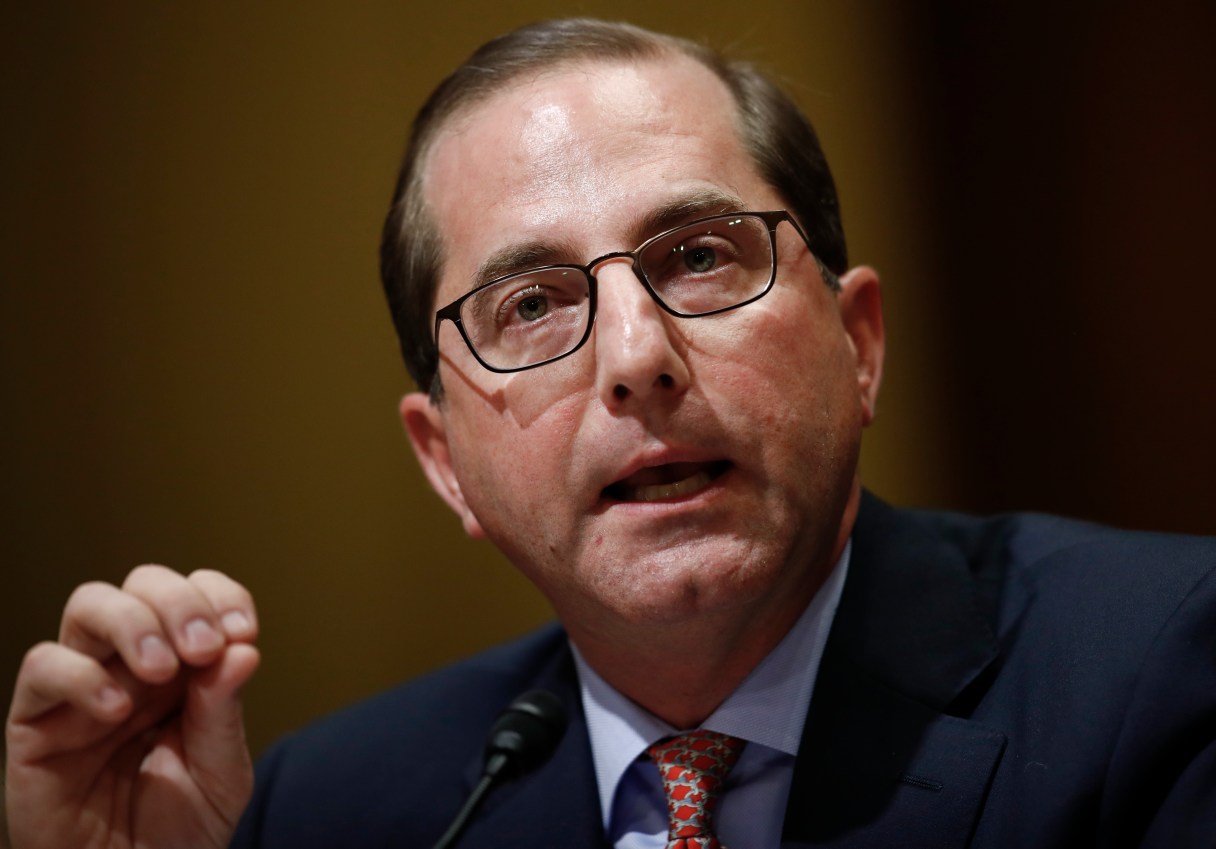
WASHINGTON (AP) – The number of U.S. drug overdose deaths has begun to level off after years of relentless increases driven by the opioid epidemic, health secretary Alex Azar said Tuesday, cautioning it’s too soon to declare victory.
“We are so far from the end of the epidemic, but we are perhaps, at the end of the beginning,” Azar said at a health care event sponsored by the Milken Institute think tank.
Confronting the opioid epidemic has been the rare issue uniting Republicans and Democrats in a politically divided nation. A bill providing major funding for treatment was passed under former President Barack Obama. More money followed earlier this year under President Donald Trump. And on Wednesday Trump is expected to sign bipartisan legislation passed this month that increases access to treatment, among other steps.
More than 70,000 people died of drug overdoses last year, according to preliminary numbers released by the Centers for Disease Control and Prevention this summer- a 10 percent increase from 2016. Health and Human Services – the department Azar heads – is playing a central role in the government’s response.
In his speech Azar suggested that multi-pronged efforts to bring the epidemic under control are paying off. He ticked off statistics showing an increase in treatment with medications such as buprenorphine and naltrexone. There’s solid evidence backing medication-assisted treatment, when used alongside counseling and ongoing support. He also noted much broader access to the overdose-reversing drug naloxone, and a documented decline in the number of people misusing prescription opioids as doctors take greater care in prescribing.