
Tuesday, November 10, 2026Nov 10

Accumulating questions: What’s a blizzard? Is this El Nino?

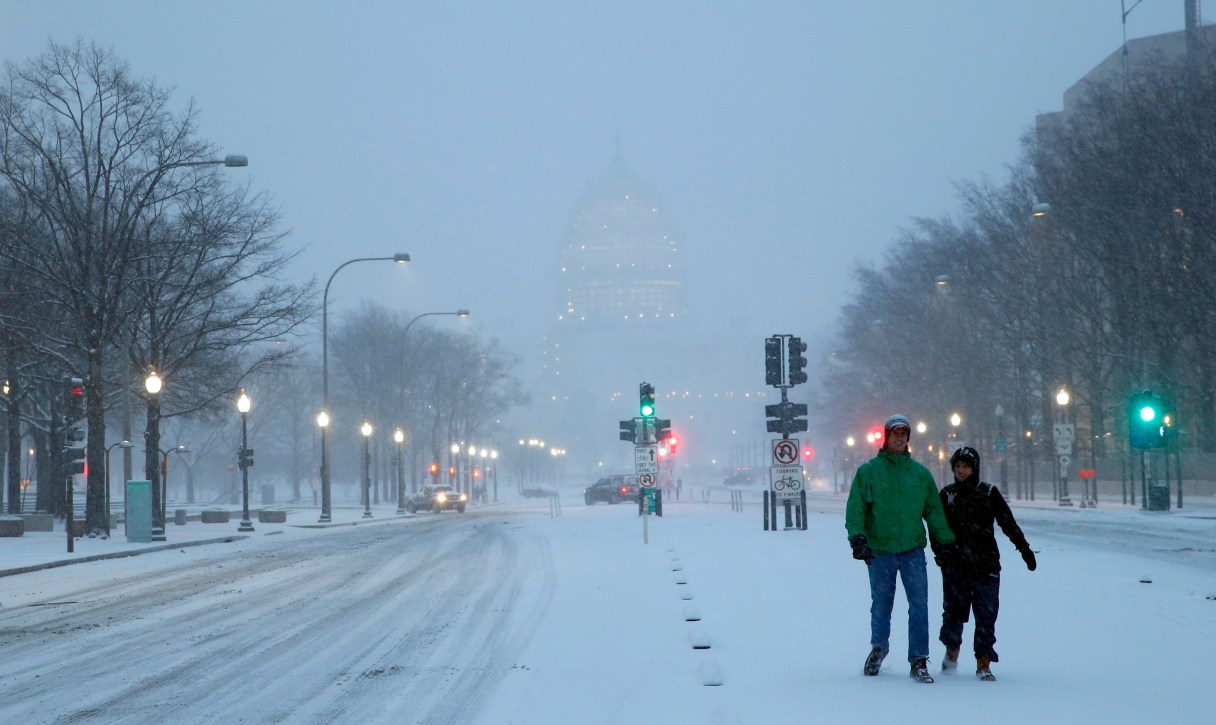
Madison Riley, left, and Katie Lantuh walk down the middle of Pennsylvania Avenue with the U.S. Capitol behind them, as the snow falls, Friday, Jan. 22, 2016 in Washington. One in seven Americans will get at least half a foot of snow outside their homes when this weekend's big storm has finished delivering blizzards, gale-force winds, whiteout conditions and flooding to much of the eastern United States. (AP Photo/Alex Brandon)
Madison Riley, left, and Katie Lantuh walk down the middle of Pennsylvania Avenue with the U.S. Capitol behind them, as the snow falls, Friday, Jan. 22, 2016 in Washington. One in seven Americans will get at least half a foot of snow outside their homes when this weekend's big storm has finished delivering blizzards, gale-force winds, whiteout conditions and flooding to much of the eastern United States. (AP Photo/Alex Brandon) Madison Riley, left, and Katie Lantuh walk down the middle of Pennsylvania Avenue with the U.S. Capitol behind them, as the snow falls, Friday, Jan. 22, 2016 in Washington. One in seven Americans will get at least half a foot of snow outside their homes when this weekend's big storm has finished delivering blizzards, gale-force winds, whiteout conditions and flooding to much of the eastern United States. (AP Photo/Alex Brandon)

KENSINGTON, Md. (AP) – Oh, the weather outside is frightful. Winds will soon turn spiteful. The East has no place to go. Let it snow, let it snow, let it snow.

The massive snowstorm promising more than a foot of snow for a wide swath of the eastern U.S. is all people can talk about. But is it a blizzard? And how did it get so big? Just like the snow, questions pile up. Here are some answers.

___

Q: Is there a difference between a snowstorm and a blizzard?

A: Yes. The National Weather Service says a snowstorm becomes a blizzard when it meets a couple of conditions for at least three hours: Sustained wind or gusts of 35 mph or greater, and heavy falling and blowing snow, the type that reduces visibility to less than one-quarter of a mile.