
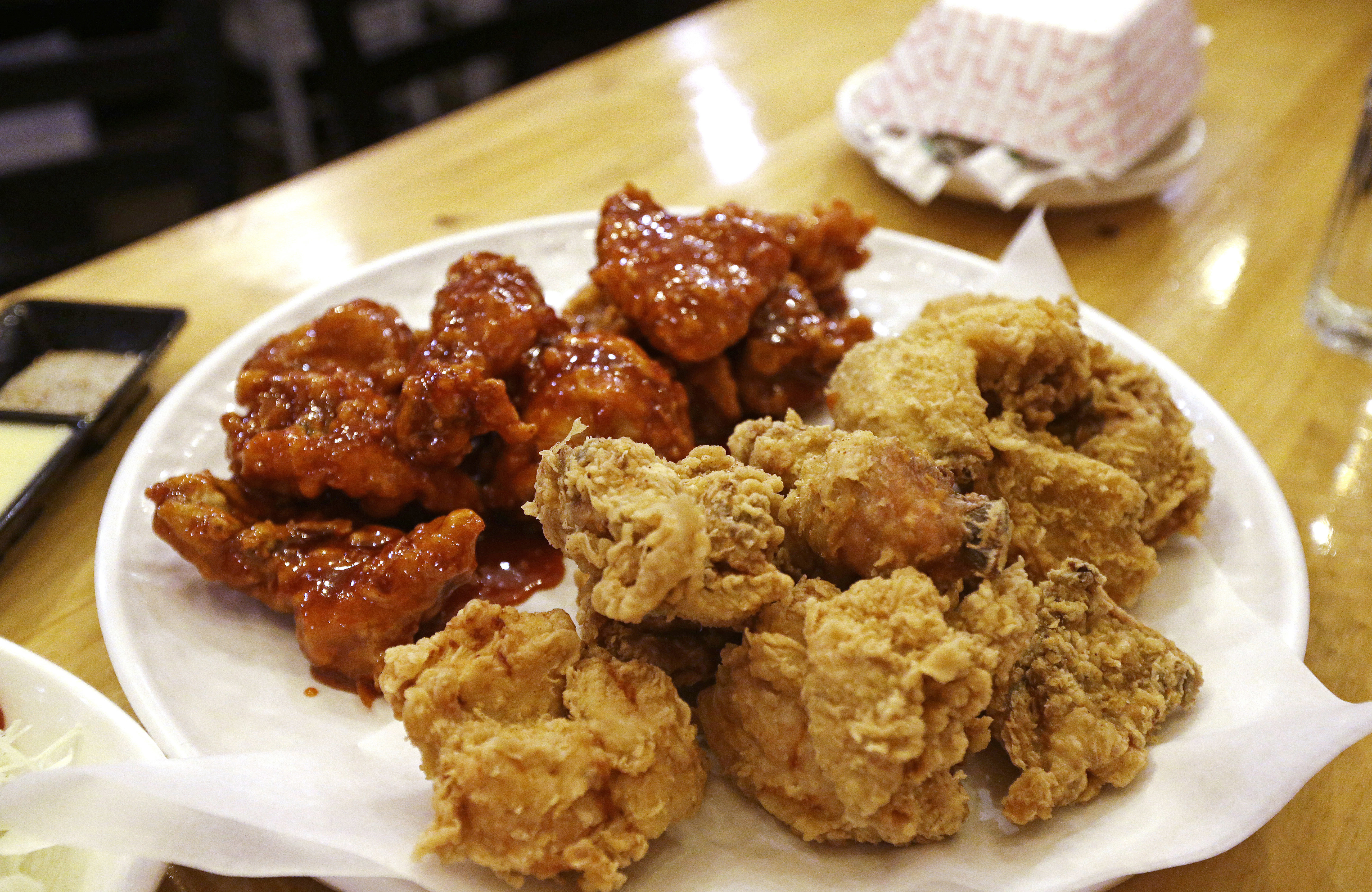
 In this photo taken Dec. 12, 2017, Korean-style fried chicken sits waiting to be eaten at a restaurant in Edmonds, Wash. Southern foods such as fried chicken and moon pie have made lasting impressions on the Korean diet, just as the U.S. military has historically included a large percentage of its recruits from the Southern U.S. (AP Photo/Elaine Thompson)
SEATTLE – Spam, trout, fried chicken, MoonPies and anything slathered in mayonnaise – those are some of the flavors of South Korea’s home cooking that might seem just a bit familiar to the U.S. athletes and hordes of Westerners who have descended upon the small Asian country for the 2018 Olympic Winter Games.
But within those bites is a story of South Korea’s resilience, pride and adaptability, which fueled its rise from a poverty-stricken country torn apart by the Korean War, to a world power set to host the glittering Olympics for the second time, all in a matter of just a few generations.
“They would recognize things that were of great use, and they would take them and adapted it with what they wanted out of it,” says Michael Pettid, a Korea history expert and author. “The things that came to them, they have another existence in Korea. It just didn’t stay the same.”
Korean eats like kimchi, barbecued meats and bibimbap bowls have likewise become ubiquitous in urban areas of the U.S., with nearly 1.8 million people in America identifying as Korean, according to Census data from 2015.
With the world’s most elite athletes now ensconsed in the 21st-century Olympic village, there are echoes of the war that tore apart that land decades ago. Organizers in Pyeongchang say some of the 450 items on the menu at their 24-hour dining facility during the Games will include traditional Korean dishes, including local specialties.