
Thursday, November 12, 2026Nov 12

AP PHOTOS: Devout Hindus celebrate the birth of god Ganesha

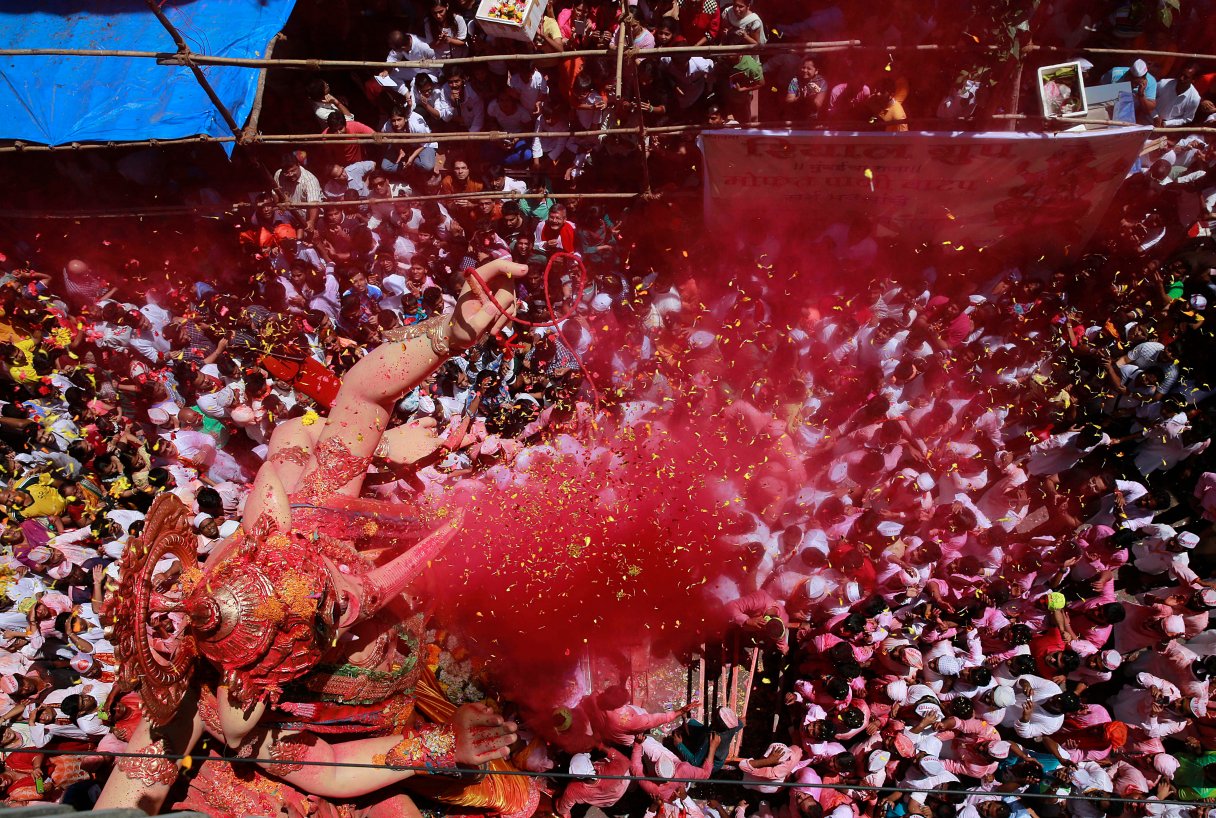
Devotees shower flower petals and colored powder as an idol of elephant-headed Hindu god Ganesha is taken through the streets prior to its immersion in the Arabian Sea in Mumbai, India, Sunday, Sept. 27, 2015. The immersion of idols marks the end of ten-days long Ganesha Chaturthi festival that celebrates the birth of the Hindu god. (AP Photo/Rafiq Maqbool)
Devotees shower flower petals and colored powder as an idol of elephant-headed Hindu god Ganesha is taken through the streets prior to its immersion in the Arabian Sea in Mumbai, India, Sunday, Sept. 27, 2015. The immersion of idols marks the end of ten-days long Ganesha Chaturthi festival that celebrates the birth of the Hindu god. (AP Photo/Rafiq Maqbool) Devotees shower flower petals and colored powder as an idol of elephant-headed Hindu god Ganesha is taken through the streets prior to its immersion in the Arabian Sea in Mumbai, India, Sunday, Sept. 27, 2015. The immersion of idols marks the end of ten-days long Ganesha Chaturthi festival that celebrates the birth of the Hindu god. (AP Photo/Rafiq Maqbool)

MUMBAI, India (AP) – Every year, after months of pouring monsoon rains, millions of devout Hindus across western India step out to joyfully celebrate the birthday of Ganesha, the elephant-headed god.

Elaborate idols of the god are purchased and brought home, where they are worshipped. After a few days – every family has its own tradition – the idols, made either from Plaster of Paris or clay, are carried to a large body of water and ceremonially immersed. The beautiful ritual, however, leaves rivers, lakes and even the sea polluted with a mix of toxic paints and materials.

Over the past few years, people like Anand Pendharkar, a maker of Ganesha idols, have been experimenting with creations that are less damaging to the environment.

He’s tried edible paints and biodegradable materials before, but this year Pendharkar has gone a step further.

His Ganesha idols now contain fish food made of corn, spinach and flour that can be consumed after the outer shell of clay has dissolved.