
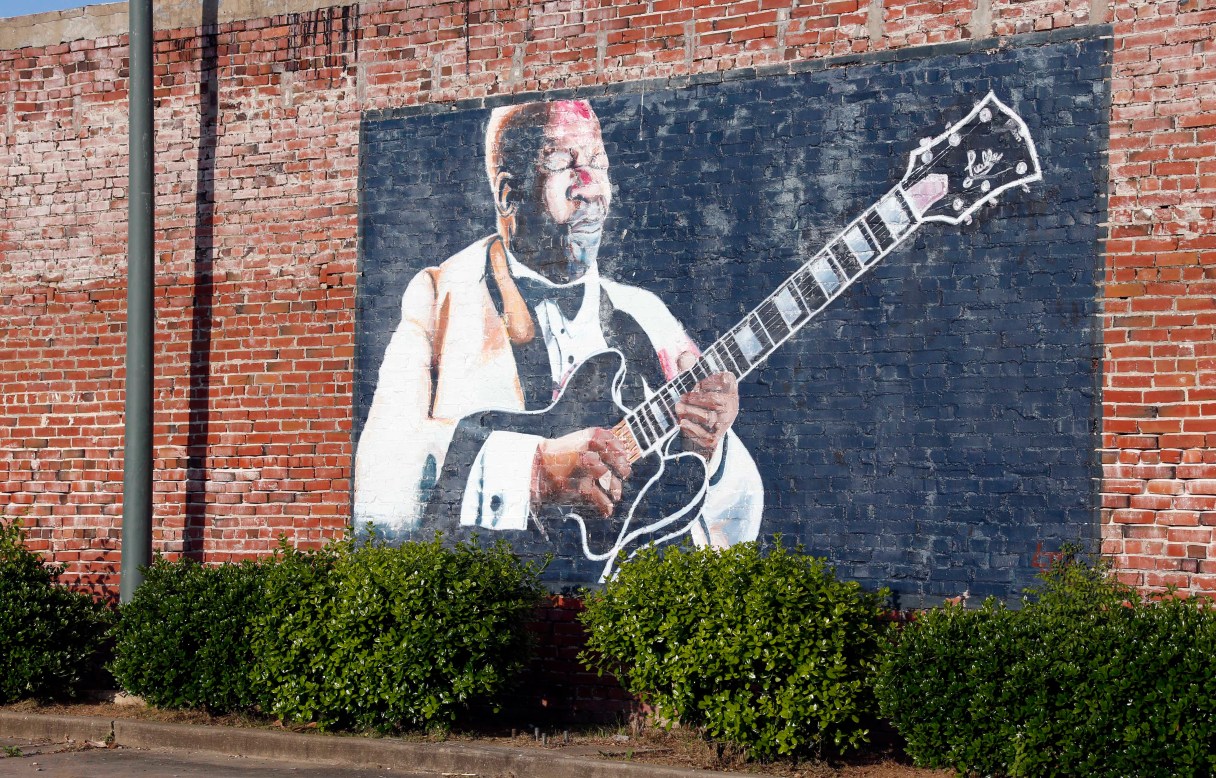
INDIANOLA, Miss. (AP) – Blues legend B.B. King grew up as poor as could be, alone and in debt at 14, living in primitive cabins and sharecropping cotton in Mississippi.
His natural talent with a guitar enabled him to escape grueling poverty and manual labor. He became a millionaire, and played for presidents, the pope and the Queen of England. But glittering wealth and international fame never kept him from his roots in the Delta, and friends say he showed no bitterness about his rough start.
King died at 89 Thursday at his home in Las Vegas, but his impact is still deeply felt in small towns along the Mississippi Blues Trail, where he came of age before the industrialization of agriculture and other factors prompted the descendants of slaves to migrate in huge numbers out of the Deep South.
“I think he never considered himself as having left,” author Charles Sawyer, who wrote “The Arrival of B.B. King” in 1980, explained Friday. “And he was very conscious about how he presented himself to the world, and he didn’t want to present himself as an angry man.”
The future King of the Blues was born as Riley B. King in 1925 to sharecropper parents in a long-gone cabin along a creek in Belclair, a community near the tiny town of Itta Bena. His parents soon split, his mother died young and his grandmother then died as well, leaving him to raise and pick an acre of cotton by himself in the even smaller town of Kilmichael.