
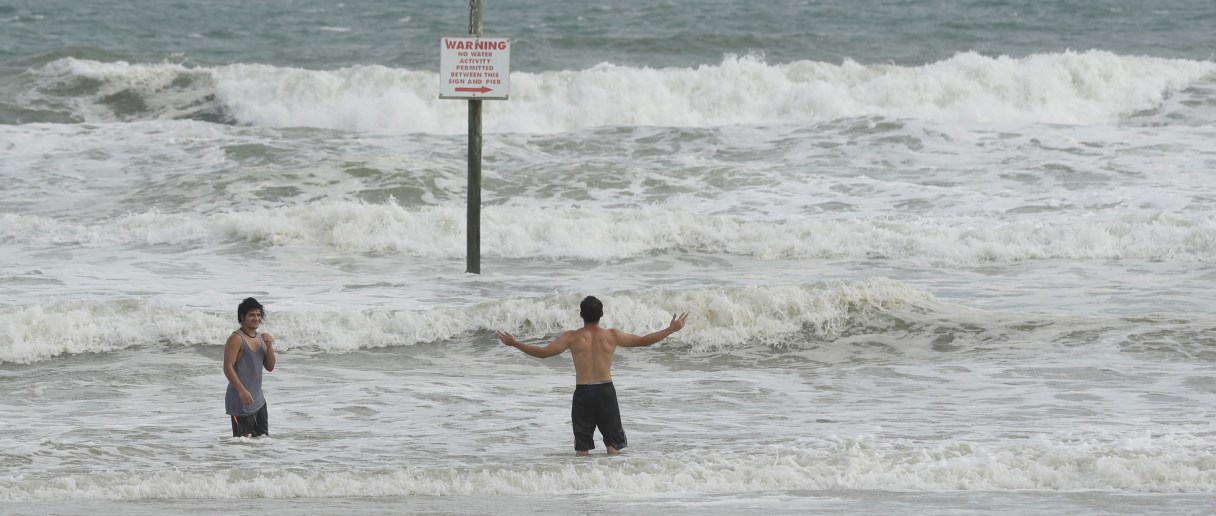
MIAMI (AP) – The major threat to the Southeast U.S. won’t be Hurricane Matthew’s pummeling winds, which newer buildings have been constructed to withstand. It will be water – the deadly storm surge churned up by such a massive and powerful hurricane.
That surge could threaten lives and property long before its eye nears shore, so the Miami-based National Hurricane Center has issued experimental storm surge watches and warnings for life-threatening flooding for some 500 miles of coastline from Boca Raton in South Florida all the way up to the area of Charleston, South Carolina. Matthew already has left more than 100 dead in the Caribbean.
Storm surge and rainfall flooding have combined for three-quarters of U.S. deaths from hurricanes, tropical storms and cyclones over the last half-century – including at least 1,500 deaths during Hurricane Katrina, according to the hurricane center.
These prototype watches and warnings are among forecasting changes made after Superstorm Sandy revealed how often the public failed to understand the flooding risks from tropical storms. Forecasters changed their vocabulary to explain how flooding can occur far from the coastline, and they now publish interactive graphics illustrating risks from the ocean as well as sounds, bays and lakes.
Water levels were rising as far north as Jacksonville on Thursday morning as a strengthening Matthew tore through the Bahamas toward Florida, said Jamie Rhome, leader of the hurricane center’s storm surge team.