
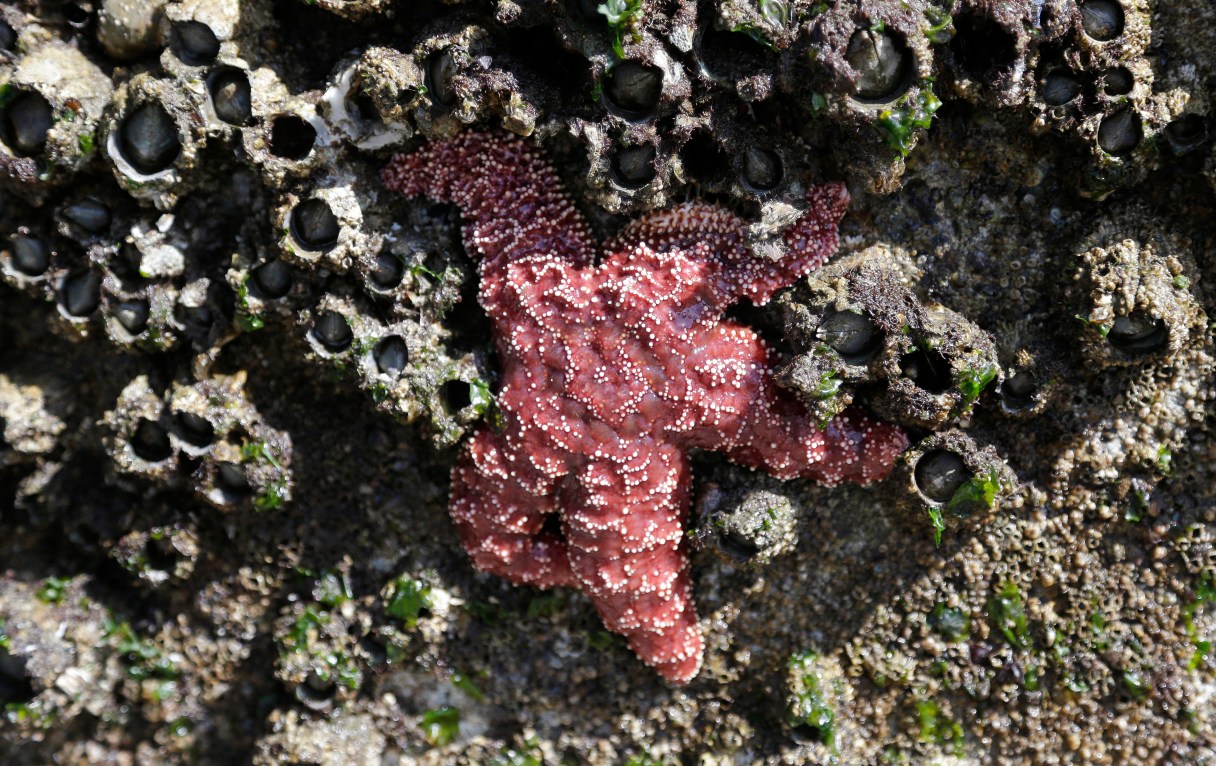
LOPEZ PASS, Wash. (AP) – Emerging from a recent dive 40 feet below the surface of Puget Sound, biologist Ben Miner wasn’t surprised by what he found: The troubling disease that wiped out millions of sea stars up and down the West Coast had not spared this site along the rocky cliffs of Lopez Island.
He and another diver tallied the grim count on a clipboard he had taken underwater. Only two dozen adult sea stars were found in an area where they were once abundant.
But Miner’s chart also revealed good news – a few baby sea stars offered a glimmer of hope for the creature’s recovery.
In scattered sites along the Pacific Coast, researchers and others have reported seeing hundreds of juvenile sea stars, buoying hopes for a potential comeback from sea star wasting disease that has caused millions of purple, red and orange sea stars to curl up, grow lesions, lose limbs and disintegrate into a pile of goo.
“Babies. That’s what we hope for,” said Miner, associate professor of biology at Western Washington University. “If you’re hoping for sea star populations to recover, it’s the best news you can get to be able to go to sites and see that there are babies.”