
Thursday, November 12, 2026Nov 12

Moscow-led trade bloc begins in troubled times

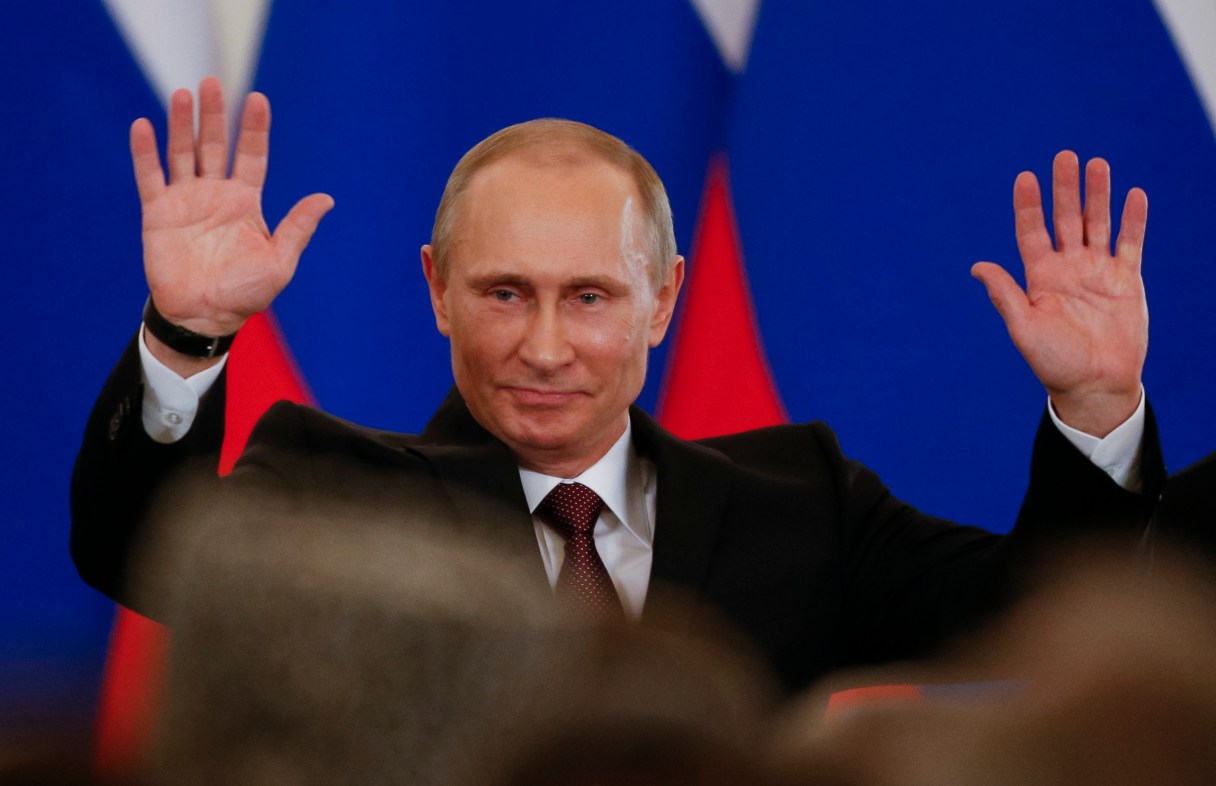
FILE - In this Tuesday, March 18, 2014 file photo, Russian President Vladimir Putin gestures after signing a treaty to incorporate Crimea into Russia in the Kremlin in Moscow, Russia. The chances of that appear unpromising. In his New Year’s Eve televised message to the nation, Putin hailed the annexation of Crimea as a historic achievement and the rightful return of the peninsula’s people to the bosom of Russia. (AP Photo/Alexander Zemlianichenko, file)
FILE - In this Tuesday, March 18, 2014 file photo, Russian President Vladimir Putin gestures after signing a treaty to incorporate Crimea into Russia in the Kremlin in Moscow, Russia. The chances of that appear unpromising. In his New Year’s Eve televised message to the nation, Putin hailed the annexation of Crimea as a historic achievement and the rightful return of the peninsula’s people to the bosom of Russia. (AP Photo/Alexander Zemlianichenko, file) FILE - In this Tuesday, March 18, 2014 file photo, Russian President Vladimir Putin gestures after signing a treaty to incorporate Crimea into Russia in the Kremlin in Moscow, Russia. The chances of that appear unpromising. In his New Year’s Eve televised message to the nation, Putin hailed the annexation of Crimea as a historic achievement and the rightful return of the peninsula’s people to the bosom of Russia. (AP Photo/Alexander Zemlianichenko, file)

MOSCOW (AP) – The Eurasian Economic Union, a trade bloc of former Soviet states, expanded to four nations Friday when Armenia formally joined, a day after the union between Russia, Belarus and Kazakhstan began. The Russian-dominated bloc has been politically controversial and its early days are being overshadowed by the sharp deterioration of Russia’s economy in recent months.

A look at the bloc, its implications and its prospects:

WHY CREATE A UNION?

The union aims to create a single integrated market for the free movement of goods and services over a total population of more than 180 million people, something like the 28-nation European Union. Unlike the EU, the bloc does not have a single currency, but is expected to try to establish one at some point. The former Soviet republic of Kyrgyzstan is expected to join by mid-year and Tajikistan is also a prospective member.

Moscow pushed hard for Ukraine to join, hoping its 45 million people and large-scale heavy industries would be a key piece of the trading bloc. But many Ukrainians detested the idea, seeing it as Russian President Vladimir Putin’s attempt to reconstitute the Soviet Union and exert more influence on their country. The issue was key to inciting protests that eventually drove Ukraine’s Russia-friendly President Viktor Yanukovych from office in February. Ukraine has since signed an agreement to deepen ties with the EU.