
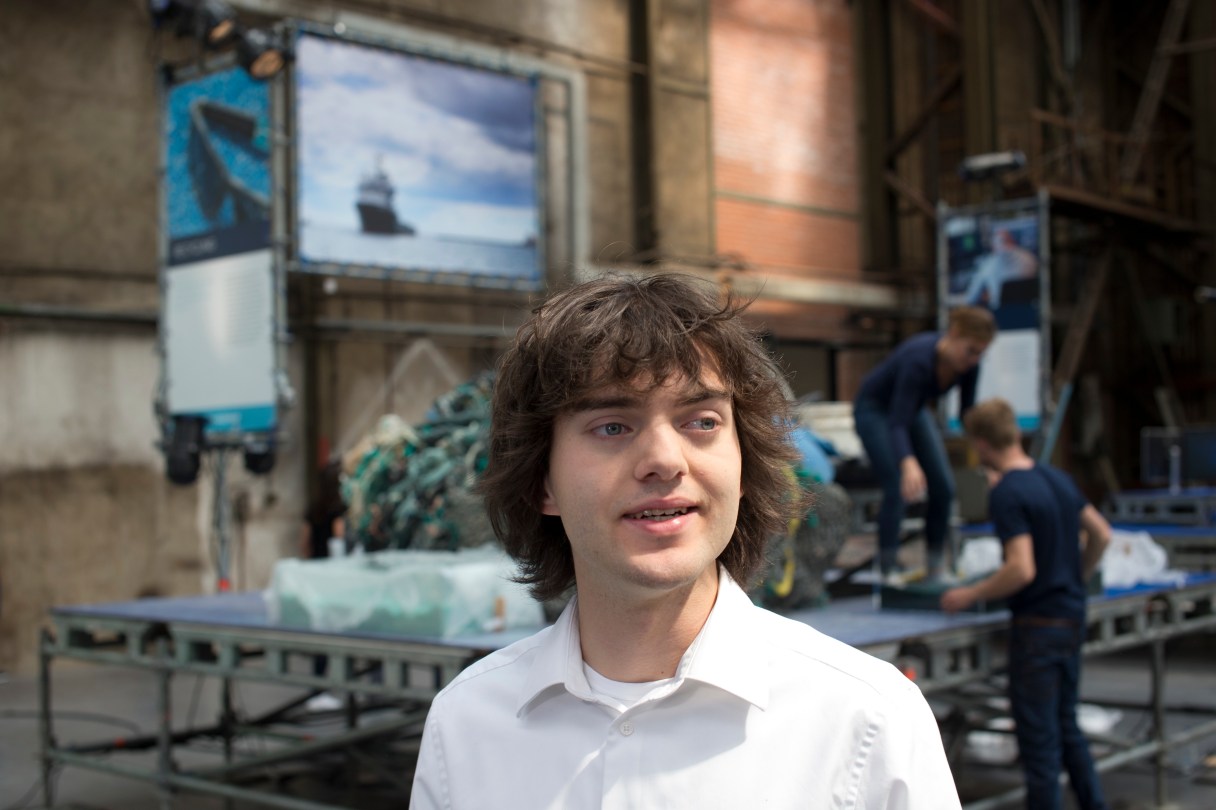
UTRECHT, Netherlands (AP) – A Dutch foundation aiming to rid the world’s oceans of plastic waste says it will start cleaning up the huge area of floating junk known as the Great Pacific Garbage Patch within the next 12 months, two years earlier than planned.
The Ocean Cleanup aims to use long-distance floating booms that act like coastlines to gather plastic as it drifts on or near the surface of the water while allowing sea life to pass underneath. The plan originally was to anchor the barriers to the sea bed with a system used by oil rigs, but the organization said Thursday it now will use anchors that float beneath the water’s surface, making it much more efficient.
The Ocean Cleanup, founded by Dutch university dropout Boyan Slat, announced that testing of the first system will start off the U.S. West coast by the end of the year and barriers will be shipped to the Great Pacific Garbage Patch between California and Hawaii in the first half of 2018, two years ahead of the organization’s earlier schedule. The patch is a huge area of the ocean where swirling currents concentrate the trash.
“At the ocean cleanup we always work with nature. So instead of going after the plastic, we let the plastic come to us, saving time, energy and cost,” Slat, a shaggy-haired 22-year-old, told The Associated Press.
Floating barriers concentrate the plastic garbage at a central point where it can be fished out of the water and shipped back to dry land for recycling.